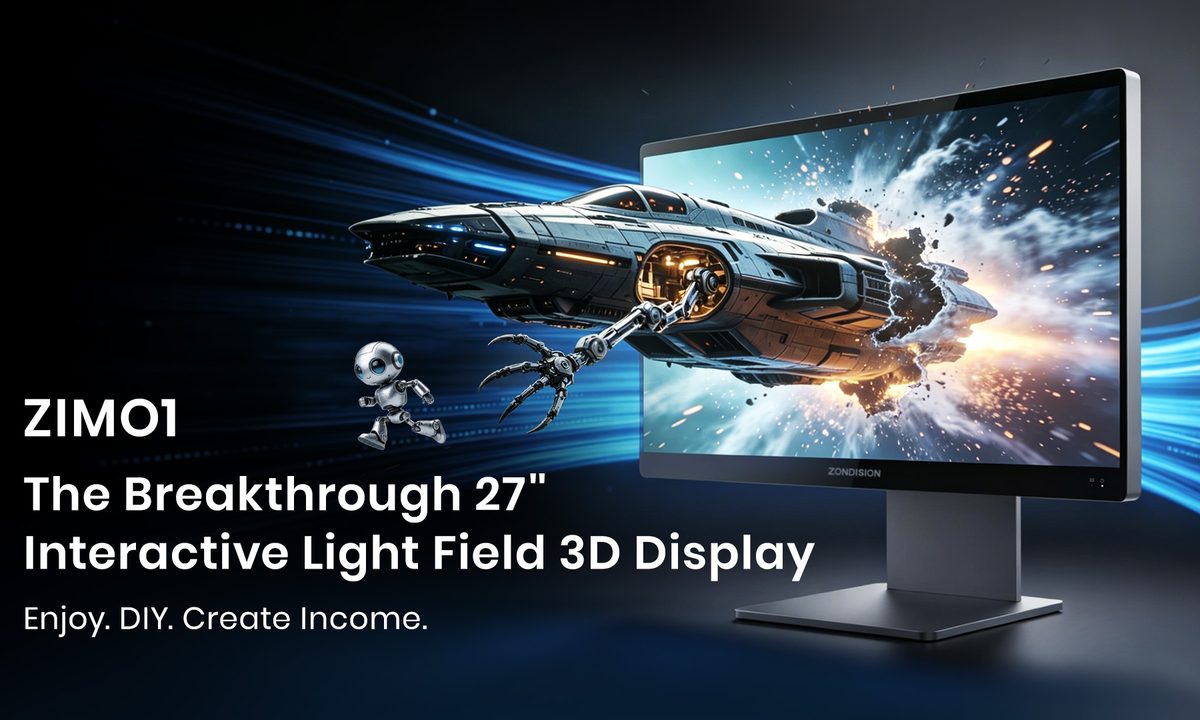
Spatial computing in gaming has been bound to head-mounted devices for the past several years. While virtual reality (VR) headsets, augmented reality (AR) glasses, and mixed-reality wearables have dominated the marketplace in virtual gaming, many continue to suffer the problems their early counterparts had, which include the complexity of setup, the comfort of the device, and the isolation one must be in when using the device.
Today’s engineers and designers in the display industry are looking to bypass wearable hardware entirely. An example of this comes from the ZIMO1 interactive light-field display by Zondision, which utilizes screen-based options for 3D visualization.
While glasses-free 3D is not a new concept, many devices have faced challenges such as limited viewing angles, image quality issues, and user fatigue.
The Technology Behind Glasses-Free 3D
There are a number of ways that hardware and software engineers can create glasses-free 3D effects. Some of the more common ways include:
- Parallax Barrier Displays, which use a layer of vertical slits to direct different images to each eye.
- Lenticular Lens Displays, which use tiny lenses to direct different images to each eye.
- Volumetric Displays, which create a true 3D image by projecting light onto rotating displays, or by using lasers or LEDs to create points of light in mid-air.
Some advanced monitors even utilize artificial intelligence to convert 2D content into 3D.

The Advantages and Disadvantages of Glasses-Free Displays
The primary advantage of a glasses-free display is that you no longer have to use a bulky headset or a pair of glasses to see content in 3D. Glasses-free displays can even offer wider viewing angles than traditional 3D glasses, which allows more people to enjoy the effects at the same time.
However, there are certain challenges that come with 3D glasses. More often than not, one has to be at a proper angle in order to see the effect. This can affect people who are watching movies, for example, when they are not in the “perfect spot” in front of the screen.
In some instances, glasses-free 3D can also result in slightly lower resolution, though designers are already working on ways to reduce the “ghosting” effects that often occur when you are not using something such as a wearable.
Future Applications for Glasses-Free Technology in Gaming
While this technology is quickly being adopted by major game developers and hardware producers, glasses-free monitors are still being refined. Like 3D glasses and headsets, many report that there are times when the 3D effects on the monitors become “too much,” and that they have to step away because of it.
Even with this said, the intensity of the 3D being produced from these monitors can be adjusted, and users can acclimate to the technology over long-term exposure to the 3D effects. As the technology continues to evolve, and people become more acclimated to its uses, glasses-free 3D technology may begin to pop up in places where 3D effects may be more desired, such as in movie theatres and even in museum exhibits