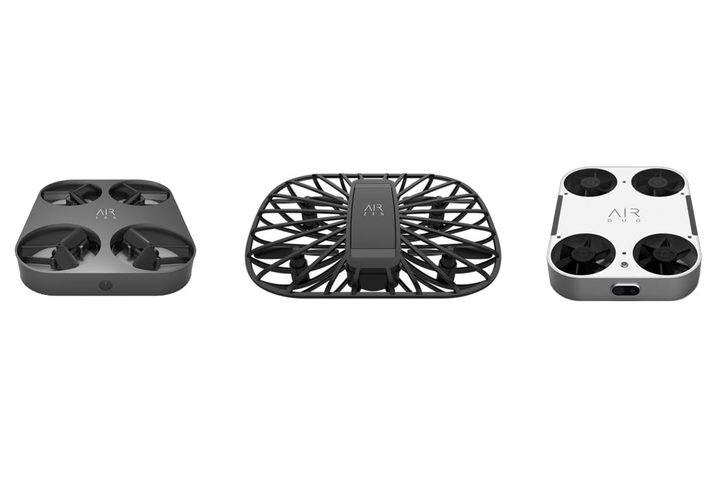
AirSelfie was one of our top drone picks from CES 2018, but the show’s a controlled environment and not always a good representation of the product itself. We found that out the hard way in our review, likening its behavior to that of a drunk hummingbird vis a vis a legitimate selfie drone at a price that was a bit obscene. AirSelfie’s back in CES 2019, though, and this time with three new drones, and price points that make a whole lot more sense that will arrive later this year.
More CES 2019 coverage
- Our CES 2019 Hub: The latest news, hands-on reviews, and more
- Huawei MatePad M5 Lite is a stylish, feature-packed smart tablet at a nice price
- LG’s roll-up OLED TV is every bit as magical as you’ve imagined
- Withings takes on Apple with ECG smartwatch, blood pressure monitor
Debuting at CES 2019 is the $100 AIR 100, the $140 Air Zen, and the $230 Air Duo. The entry-level Air 100 appears to be essentially a repackaged version of the original AirSelfie 2, with six-minute flight time and a 12-megapixel camera, although at a much more agreeable price. But where things get a whole lot more interesting is with the Zen and Duo.
The Zen is the first AirSelfie to have autonomous flight capability and sports a wide-angle 120-degree camera capable of shooting 4K video, also a first for the line. This particular model is also water-resistant thanks to a plastic carbon reinforced body, making it a bit more useful in outdoor conditions than its predecessors. The top-of-the-line Duo is one of the first drones we know to employ a dual-lens system for better picture quality. A 12-megapixel 80-degree front camera and 12-megapixel field of view 110-degree wide-angle camera are included, and the drone is made of aluminum alloy, similar to earlier models.
While the Duo still only has a comparatively short seven-minute flight time, AirSelfie has made it fly longer by making the battery removable. With previous models, you had to land and wait for the drone to recharge, which limited you on what you could do.
What we’ll be looking for are a few things. First, a better app. As our review stated, we experienced a significant amount of trouble even flying the drone with an app that seemed dated and often unresponsive. Flight control was another weak point; while we’re not asking for the capability to do aerial acrobatics, we would at least like to feel like we’re in control of the drone rather than the other way around. At least they’re starting off on the right foot with price, but we’ll report back on actual real-world experience this week, and hopefully have a full review in the coming months.