  1. Home
  2. Emerging Tech
  3. News

Radical new coffee-making method uses sound, skips hot water and reduces energy bills

UNSW reserachers brewed espresso with room-temperature water and ultrasonic sound waves, cutting energy use by 75% in blind tests that fooled 100 regular drinkers.

Add as a preferred source on Google
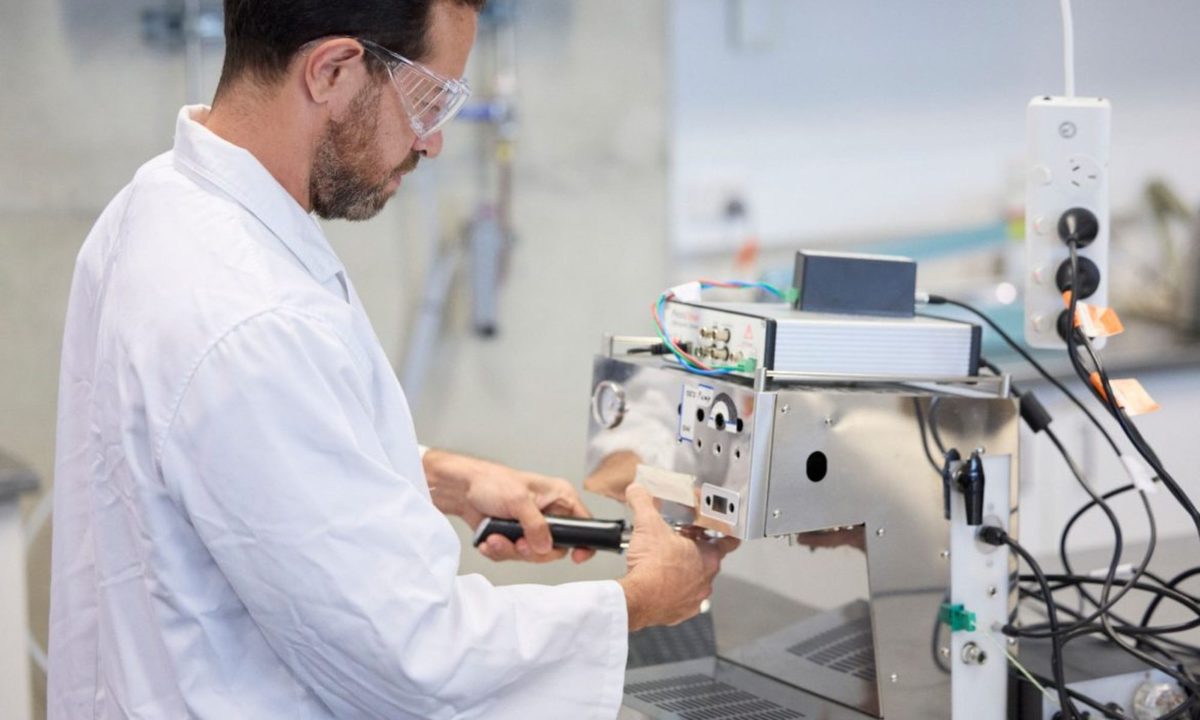
Person brewing espresso in a lab with a modified ultrasonic espresso machine
Richard Freeman / UNSW

Researchers at UNSW Sydney have figured out how to brew espresso-strength coffee without heating any water. The method replaces hot water and high pressure with ultrasonic sound waves, and in blind taste tests involving 100 regular coffee drinkers, participants could not tell the two apart.

How it works

Dr. Francisco Trujillo and his team at UNSW’s School of Chemical Engineering converted a traditional espresso machine filter basket into an ultrasonic reactor. A transducer attached to the side of the basket generates high-frequency sound waves that vibrate through the coffee grounds and water simultaneously.

Those vibrations trigger acoustic cavitation, a process where microscopic bubbles form and collapse rapidly against coffee particles, effectively fracturing them and forcing flavor compounds, oils, and caffeine into the room-temperature water. The entire process takes under three minutes.

Recommended Videos

The research, published in the Journal of Food Engineering, tested four drinks in a randomized blind evaluation: traditional espresso, ultrasonic espresso, traditional filter coffee, and ultrasonic filter coffee. For espresso, participants found no meaningful difference between the two methods. The ultrasonic coffee actually scored better than its traditional counterpart, with participants rating its bitterness as more pleasant.

Energy savings at scale

The ultrasonic brewing method cuts energy consumption by up to 75% compared to conventional espresso brewing, according to UNSW. The team says the biggest opportunity is at the industrial level, where large-scale producers of ready-to-drink coffee products could see significant reductions in both energy use and processing time. The system can also produce a concentrate that manufacturers could later dilute into cold brew and milk-based beverages.

Trujillo previously used a related ultrasound system to produce cold-brew coffee in under three minutes, though that method yielded a distinctly different, lower-caffeine result. This latest work extends the approach to full espresso strength.

The concept of ultrasonic extraction is not entirely new to the beverage world. A machine called Teamosa explored the same principle for tea brewing years ago, though it never gained mainstream traction.

Pranob Mehrotra
Pranob is a seasoned tech journalist with over eight years of experience covering consumer technology. His work has been…
This tiny sensor could help self-driving cars and robots see better in the dark
Penn State researchers have developed a light-adaptive photomemristor modeled on the human eye that achieves over 95% visual accuracy in shifting light conditions.
Waymo Jaguar I-PACE sensors close up

Penn State researchers have developed a light-adaptive sensor component that could make autonomous vehicle cameras and robots far more reliable in shifting lighting conditions. The work, published Monday in Nature Communications, takes direct cues from how the human eye adjusts between bright and dark environments.

Biology as a blueprint

Read more
A chemical bath could bring your old EV battery back to near-full strength
Cornell researchers have developed a recycling process that restores spent lithium-ion cells to 95% of their original capacity while cutting recycling costs by more than half.
Li-ion battery close up showing recycling symbol

Your next phone or EV could run on a recycled battery that performs nearly as well as a new one. Cornell University researchers have developed a new recycling technique that restores spent lithium-ion cells to up to 95% of their original capacity, while cutting recycling costs by 56%.

A bath instead of a shredder

Read more
The best new ChatGPT feature is one most people will never use
Logo, Emblem, Symbol

For years, the biggest conversation around AI has been what these tools can do. They can browse the web, analyze documents, connect to your apps, conduct research, and increasingly act on your behalf. But as AI systems become more capable, another question has become harder to ignore: what happens when an AI assistant is tricked into handing over information it shouldn’t?

OpenAI’s new Lockdown Mode is its latest answer to that problem. Available across all ChatGPT account types, Lockdown Mode is an optional security setting designed for people and organizations handling sensitive information. The trade-off is that you get stronger protection against certain forms of data theft, but you lose access to some of ChatGPT’s most powerful features.

Read more