Access to safe drinking water remains a challenge for billions of people worldwide, but a new invention from researchers in South Korea could make the process much simpler. A self-powered floating capsule that fits in the palm of a hand can reportedly test water quality and disinfect unsafe water without relying on batteries, external power, or chemical treatments.
A simple shake is all this water purification capsule needs
According to a recent paper published in Nature Water, the device, called the Floating-induced Detection-Guided Disinfection (FDGD) capsule, generates electricity when shaken. An internal magnet moves through a coil to produce enough power to activate a built-in sensor that measures the water’s electrical conductivity, giving users an indication of its quality through a connected smartphone or smartwatch.
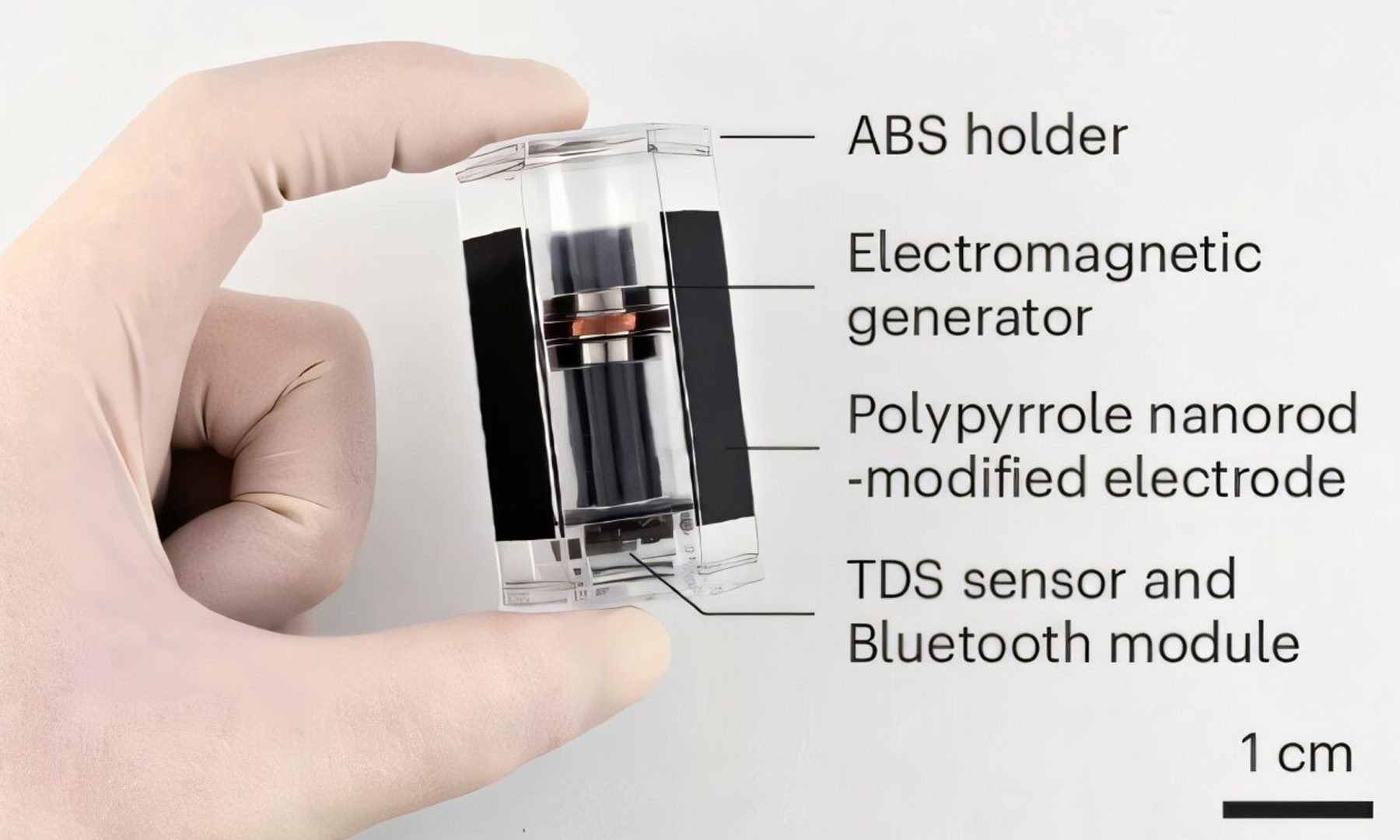
If the water passes the initial safety check, the capsule can simply be left floating inside it. Gentle movement from waves or even walking while carrying the container generates static electricity, powering microscopic nanorods on the capsule’s surface. These create strong electrostatic forces that damage the membranes of nearby bacteria and viruses through a process known as electroporation, effectively neutralizing them without adding chemicals.
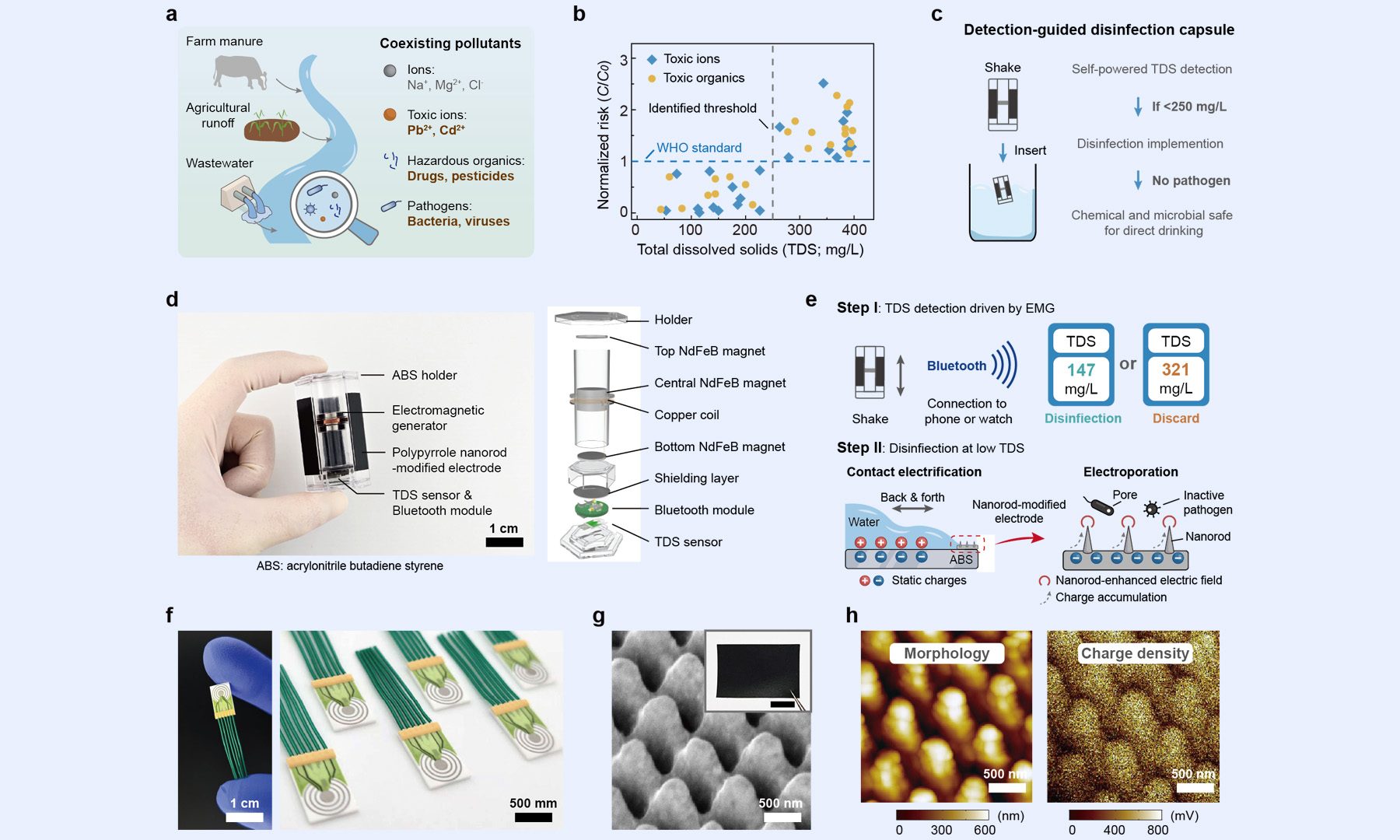
In laboratory testing involving containers holding up to four liters of water, researchers reported that the device successfully inactivated 99.9999% of bacteria and viruses, including E. coli, across multiple water samples. The technology was detailed in the journal Nature Water, with researchers describing it as an affordable, decentralized solution for regions where conventional water treatment infrastructure is unavailable.
The clever part isn’t the disinfection, it’s the lack of dependencies
Interestingly, plenty of portable water purifiers already exist, but most depend on disposable filters, chemicals, UV lamps, or rechargeable batteries. This capsule sidesteps all of those requirements by harvesting energy from simple physical movement, making it particularly attractive for disaster relief, camping, remote communities, or humanitarian deployments where electricity isn’t guaranteed.
Of course, the FDGD capsule is still a research prototype and has yet to prove itself outside controlled testing. But if it can be commercialized at the low cost envisioned by its creators, it could put a reliable water testing and purification tool into millions of hands. Sometimes, the biggest breakthroughs aren’t massive treatment plants or billion-dollar infrastructure projects. Sometimes, they’re small enough to fit in your pocket.