  1. Home
  2. Emerging Tech
  3. News

SpaceX’s Starship could be ready for launch in just a few months

Add as a preferred source on Google

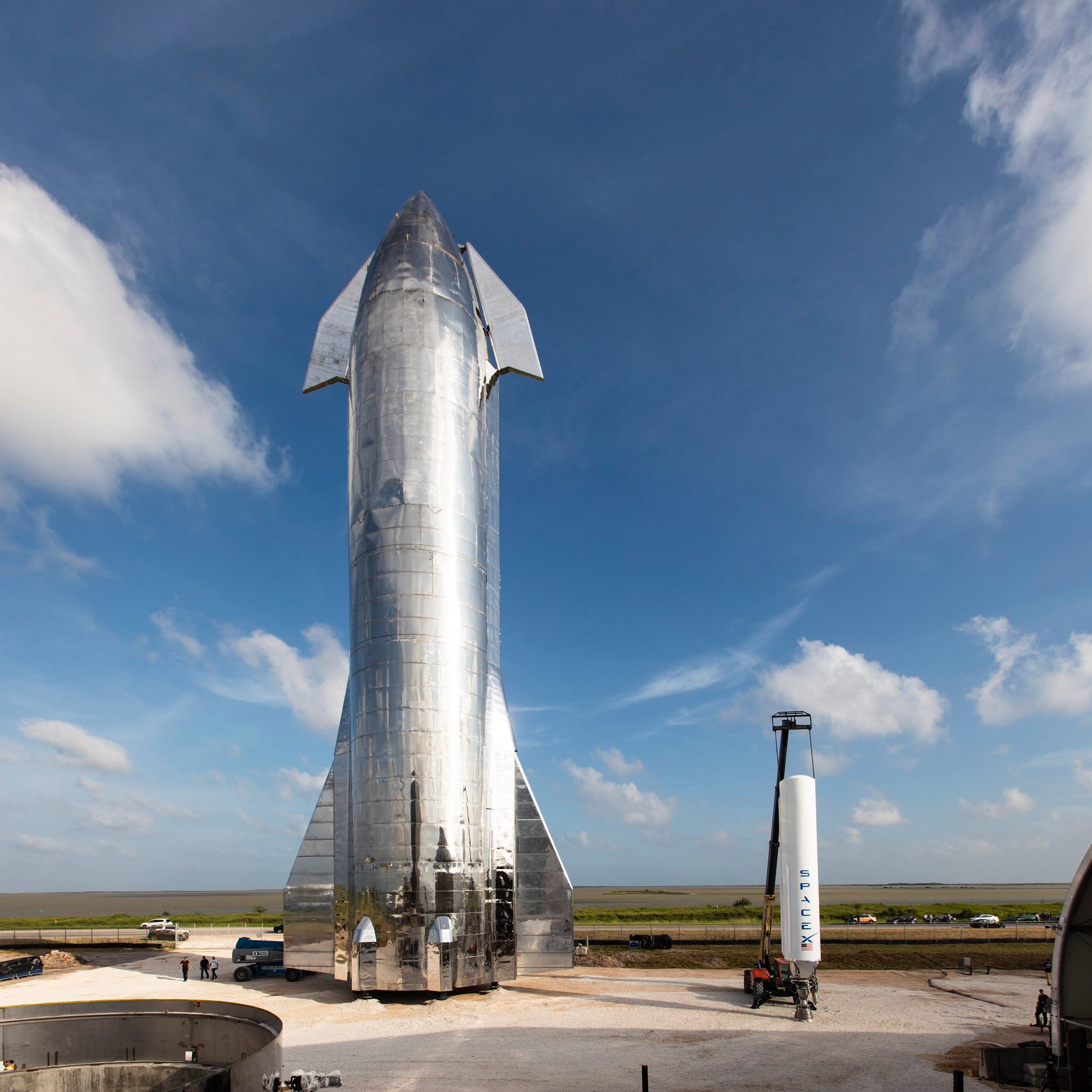
SpaceX’s new Starship rocket. SpaceX

SpaceX’s beautiful and huge Starship could be ready for launch in as little as a few months, according to CEO Elon Musk. The aim is for the Starship to haul large amounts of cargo and to eventually help humanity to colonize Mars.

Recommended Videos

In tweets by Musk highlighted by space.com, he reveals some more details about SpaceX’s plans for the Starship. He posted a short video of the SpaceX team working on the production of the dome for the Starship’s tank, which he described as the “most difficult part of [the] primary structure.” And a couple of days later, he posted another video of several of the giant domes in various stages of completion.

The attachment of the tank dome seems to have been the part of the Starship that failed when a prototype quite literally blew its top in a ground test last year. SpaceX didn’t reveal exactly what caused the problem during that test, but it could have been due to the welds which hold the dome in place failing under the extreme pressures of the test environment. That failure occurred during the testing of the Mk1 prototype, and the new domes seen in the videos are part of the new version of the test craft, called SN1.

In discussing current plans for the Starship, Musk posted that, “We’re now building flight design of Starship SN1, but each SN will have at least minor improvements, at least through SN20 or so of Starship V1.0.” In terms of specifics, in a later tweet he also discussed how the new prototype will be improved over the previous version which experienced the failure: In terms of welding techniques, “Almost everything is different,” he said. “These parts are stamped vs manually bump-formed and TIP TIG-welded vs flux core. Higher precision, stronger joints & 20% mass reduction.”

Perhaps the most surprising news is of the ambitious timeline for Starship testing. Musk revealed that “Flight is hopefully 2 to 3 months away” for the new Starship SN1, so we could expect to see a Starship take to the air before spring arrives.

This is in addition to SpaceX’s work on its Crew Dragon capsule, which will eventually ferry astronauts to the International Space Station (ISS). The Crew Dragon recently aced a parachute test and could be ready for a test flight to the ISS soon. With the Boeing Starliner capsule’s recent failure to reach the ISS, all eyes will be on SpaceX to see if it can achieve this milestone before its competitors.

Georgina Torbet
Georgina has been the space writer at Digital Trends space writer for six years, covering human space exploration, planetary…
Google wants Gemini to help build the next big scientific breakthrough
Gemini for Science pushes agentic AI deeper into real research workflows
gemini for science

Google is building Gemini deeper into the research workflow, starting with ideas, tests, and scientific literature.

At Google I/O 2026, the company announced Gemini for Science, an experimental suite built around agentic AI science. It targets the manual work behind discovery, including hypothesis building, computational testing, and literature review.

Read more
You can now walk through AI versions of real places with Google’s Project Genie
Text, Logo

Google is pushing its experimental AI world-building project into surprisingly realistic territory. The company announced that Project Genie can now use real-world imagery from Google Street View to generate interactive virtual environments, blending real locations with imaginative AI-generated styles.

At its core, Genie is what Google calls a “world model” — an AI system capable of creating explorable digital environments where AI agents, robots, or even users can interact naturally. Until now, those worlds were mostly synthetic. But with this new update, Genie can anchor itself to real places pulled directly from Street View imagery. This is actually where things start feeling like a glimpse into the future of simulation.

Read more
Google wants to reinvent your TV remote with Gemini and pointer controls
Computer Hardware, Electronics, Hardware

Google is making a bigger play for the living room, and this time, it is not just about what you watch — it is also about how you interact with your TV. At Google I/O 2026, the company revealed a fresh batch of updates for Google TV and Android TV developers, all centered around one idea: TVs are no longer passive screens sitting in the corner of your house. With more than 300 million monthly active devices across Google TV and Android TV, Google clearly sees the television as its next major AI battleground. And Gemini is now at the center of that strategy.

The company says Gemini is already helping users discover content through natural voice interactions. But Google now wants the experience to feel more dynamic and conversational, almost like searching the web — except on your couch. Instead of only surfacing static results, Gemini on Google TV can now respond with a combination of visuals, videos, and text snippets to answer queries. So if someone asks for a thriller with a strong female lead or a documentary about space exploration, Gemini pulls contextual recommendations directly from streaming apps and their metadata.

Read more