The Assassin’s Creed series has a rocky history. Although the first few entries in Ubisoft’s wildly popular action-RPG series steadily improved upon the first game, some of the later ones presented problems, particularly in the performance department. Now that the dust has settled and the day-one patches have been issued — except for the recently released Assassin’s Creed Valhalla — here’s our definitive list of the best Assassin’s Creed games.
See more
1. Assassin’s Creed IV: Black Flag (PS3, PS4, Xbox 360, Xbox One, Wii U, Nintendo Switch, PC)

Released one year after the buggy and underwhelming Assassin’s Creed III, Black Flag returned the series to its former glory despite leaning heavily on new naval combat systems that were admittedly one of the most enjoyable parts of the game. It was still an Assassin’s Creed game at its heart, with improved stealth and traversal, but what really made Black Flag feel like a step up was its pacing. There was no 10-hour prologue to get through before receiving the famous Assassin robes and weapons, and the Caribbean environments felt much more vibrant than the drab colonial villages of Assassin’s Creed III.
Read our full Assassin’s Creed IV: Black Flag review
2. Assassin’s Creed Brotherhood (PS3, PS4, Xbox 360, Xbox One, PC, Mac)

The first game in the series to carry over its protagonist from the previous game, Assassin’s Creed Brotherhood improved on its predecessor in virtually every way. The smooth, reaction-based combat returned — which allowed Ezio to cut down several enemies without making him feel overpowered — and the gorgeous Roman backdrop felt fully realized and detailed. What made the game feel unique from Assassin’s Creed II was its titular Brotherhood system, which allowed Ezio to recruit and call on fellow assassins to assist in combat. It added a whole new layer to the stealth gameplay, and made every encounter more strategic.
Read our full Assassin’s Creed Brotherhood review
3. Assassin’s Creed Valhalla (PS5, Xbox Series X/S, Xbox One, PS4, PC)

The latest in the semi-rebooted style of Assassin’s Creed titles, Valhalla takes cues from its most recent predecessors and continues to push the series in a new direction. The new setting is a surprising delight to explore, with tons of new activities to undertake, distractions to follow up on, and new vistas to admire for hours on end. However, the story may leave some fans somewhat unsatisfied, especially for those who were hoping for something fresh for the series. Despite this, the moment-to-moment gameplay has never felt better, and the RPG mechanics are more satisfying than ever before.
Read our full Assassin’s Creed Valhalla review
4. Assassin’s Creed Odyssey (Xbox One, PS4, PC)
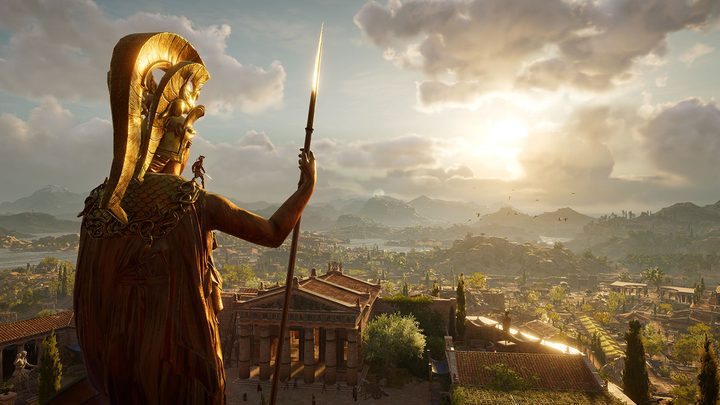
Building on the role-playing style of Origins but with more varied environments, more combat options, and the return of naval warfare, Assassin’s Creedy Odyssey felt like a smart blend of the old and new. It managed to further lean into statistics and skill trees without losing sight of the stealth and melee combat that put the series on the map, and the enormous Greek world was packed so full of secrets and missions that it could keep a dedicated player busy for hundreds of hours. Even the more fantastical elements worked in Odyssey, and it found a sense of humor that was sorely lacking in the other recent games.
Read our full Assassin’s Creed Odyssey review
5. Assassins’ Creed II (PS3, PS4, Xbox 360, Xbox One, PC, Mac)
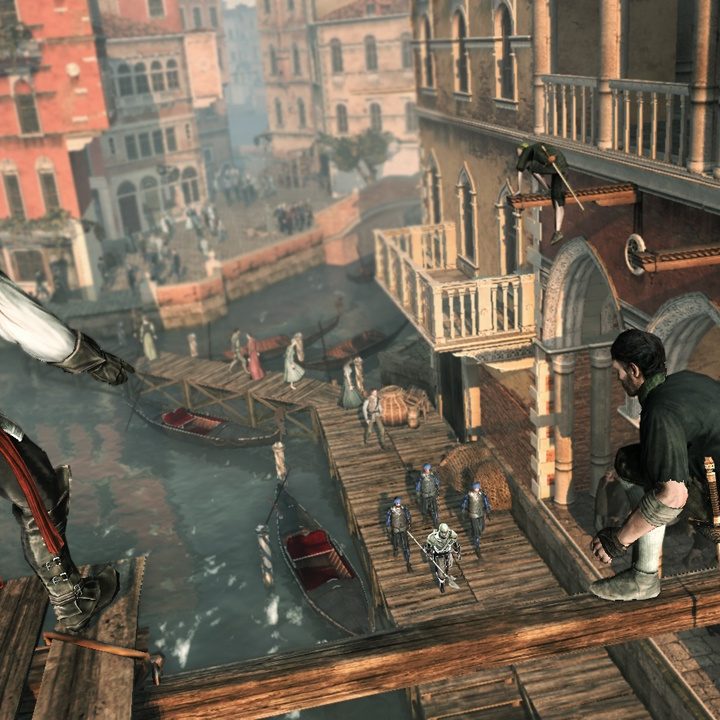
Assassin’s Creed II would serve as the template for the series for nearly a decade, and with good reason. It was a more focused and refined version of the 2007 original, with a much more likable protagonist in Ezio and a more challenging combat system. Ditching Altair and the crusades for Renaissance-era Italy felt like a risky move, but Ubisoft’s big change paid off. It would be followed by two full sequels, both of which would also star Ezio, who remains one of the most popular characters in Assassin’s Creed nearly a decade after his final game.
6. Assassin’s Creed Syndicate (PS4, Xbox One, PC)

Assassin’s Creed Syndicate had the unenviable task of following the downright broken Assassin’s Creed Unity, and though its mechanics were starting to show their age in 2015, the game managed to surprise players with its excellent dual-protagonist setup, non-linear mission design, and bustling Victorian London. Tailing a target had always been a pain in the series as it led to instant mission failures if they got too far away. Syndicate‘s solution was to change the mission rather than end it, turning it into an investigative sequence, making it one of the least-frustrating games in the series.
7. Assassin’s Creed Rogue (PS3, PS4, Xbox 360, Xbox One, Nintendo Switch, PC)
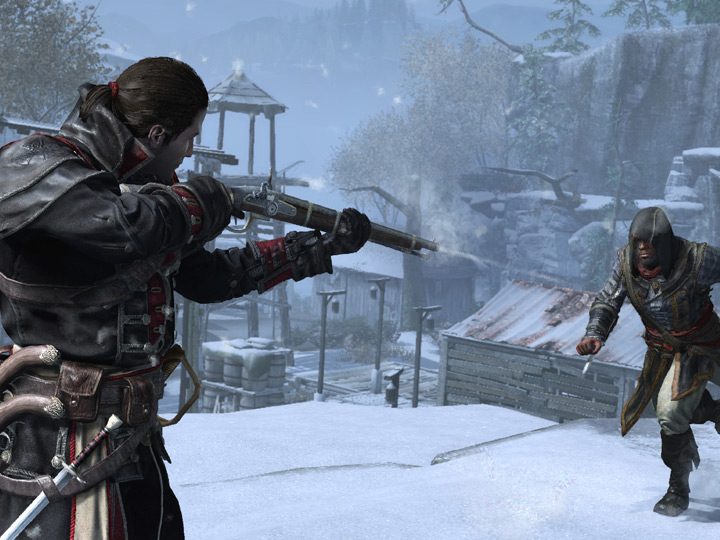
Initially only released on Xbox 360 and PS3 despite the newer consoles releasing the previous year, Assassin’s Creed Rogue was a follow-up to Black Flag that moved the setting but kept its blend of classic stealth-action and naval warfare. Playing as a Templar, fans were able to get an inside look at the dastardly organization and learn more about its opposition to the Assassins. It didn’t do much to innovate, sticking with what made Black Flag so successful in its gameplay, but the reason it remains under-discussed is likely because players were playing a different — and far worse — Assassin’s Creed game that year.
Read our full Assassin’s Creed Rogue review
8. Assassin’s Creed Revelations (PS3, PS4, Xbox 360, Xbox One, PC, Mac)
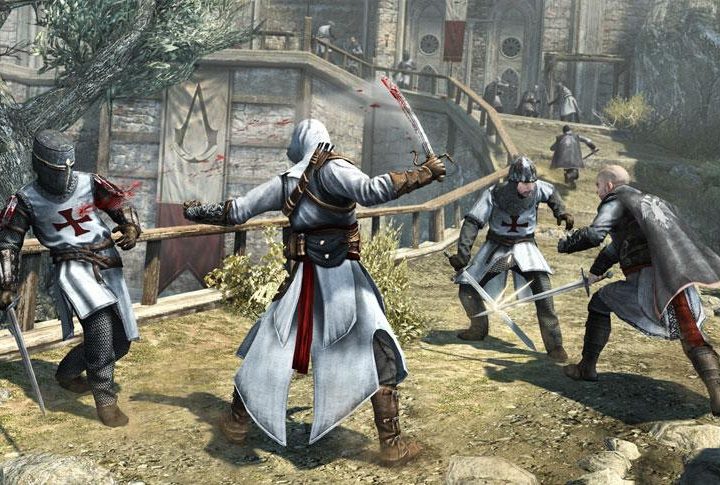
The final game in Ezio’s trilogy, Assassin’s Creed Revelations mostly stuck with the Brotherhood formula, keeping its buttery-smooth combat and excellent traversal. It tried to experiment with a tower-defense minigame, but it wasn’t a good fit and felt more like a distraction than a meaningful addition. Though still filled with secret collectibles and missions, the Constantinople setting was also less memorable than Brotherhood’s Rome, and the game’s modern-day story component started to go off the rails and required too much suspension of disbelief.
Read our full Assassin’s Creed Revelations review
9. Assassin’s Creed Origins (PS4, Xbox One, PC)
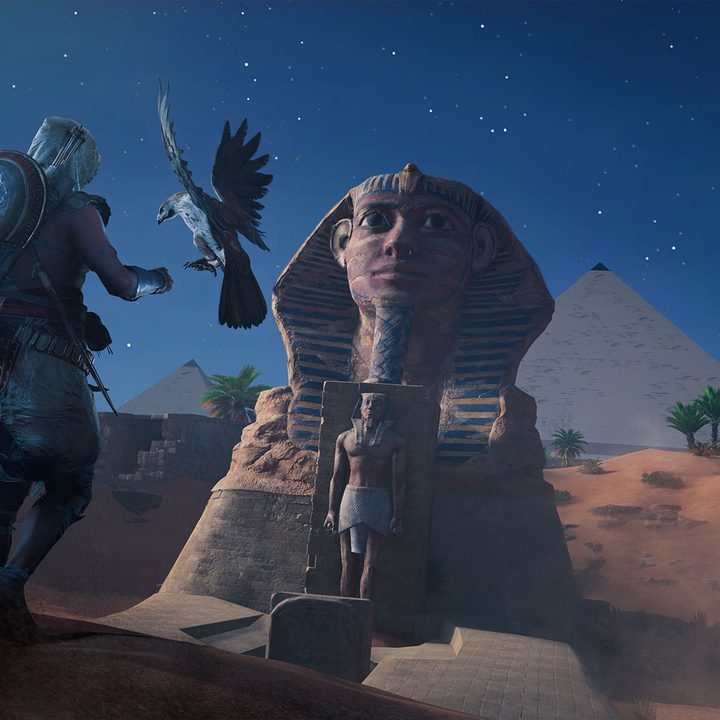
Assassin’s Creed hadn’t taken a year off since 2008, but the series didn’t get a new game in 2016. That was because Ubisoft had radically reinvented the series for Assassin’s Creed Origins, a game that moved genres from pure action-adventure to action role-playing, with a new leveling system and gear. It mostly worked, especially with the huge number of weapons at protagonist Bayek’s disposal, but a slow opening sequence, artificial level-gating before story missions, and shallow combat abilities made it feel incomplete. Thankfully, Odyssey delivered a more fully-realized vision the next year.
Read our full Assassin’s Creed Origins review
10. Assassin’s Creed (Xbox 360, PS3, PC)
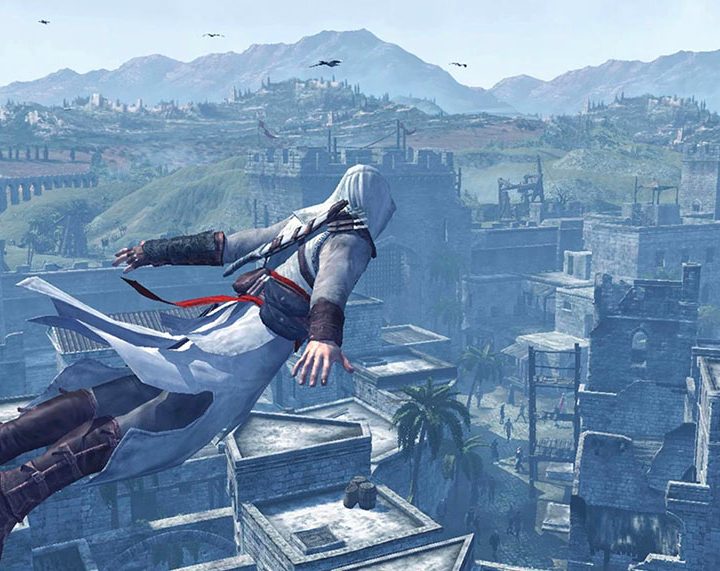
The first Assassin’s Creed introduced several of its most iconic elements, including the hood, hidden blade, parkour system, and precarious dives into bales of hay. It was also one of the most repetitive games Ubisoft ever made, with missions following a set “investigate, fight enemies, locate a boss, fight the boss” pattern, and its world felt cold and dead. Even the clever modern-day story couldn’t make the Crusades-era segments any more interesting. Messing around and trying to defeat dozens of guards at once remains a guilty pleasure, but the first Assassin’s Creed simply can’t compare to the games that followed.
11. Assassin’s Creed III (PS3, PS4, Xbox 360, Xbox One, Wii U, Nintendo Switch, PC)

Assassin’s Creed III should have been the game to cement the series’ legacy as one of the best action-adventure franchises ever, but it was instead a gigantic missed opportunity. The American Revolution setting was almost completely ruined by poor draw distance, which made everything look foggy, and the shorter buildings and forests weren’t particularly fun to climb. The game’s pacing was also a mess, starting with hours of preamble and tutorial missions that could have been condensed into only a few hours, and it was filled with bugs that could break missions. A bold step for the series? Yes, but it was one that needed more refinement.
Read our full Assassin’s Creed III review
12. Assassin’s Creed Unity (Xbox One, PS4, PC)
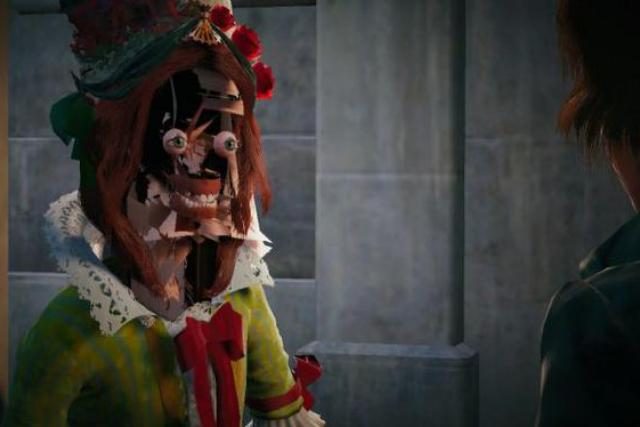
No discussion of Assassin’s Creed bugs would be complete without mentioning Assassin’s Creed Unity. Released for Xbox One and PS4 but skipping the previous generation, the French Revolution game tried to leverage the new systems’ hardware with giant environments and crowds, but it released in a broken state. Frame rates could drop so low that the game resembled a slideshow, and the memes of characters without faces are still haunting (see above). On top of the technical issues, the game was just not interesting, with a contrived love plot and dull characters across the board.
Read our full Assassin’s Creed Unity review