Before this week, I had only ever experienced The Elder Scrolls IV: Oblivion through YouTube videos. I couldn’t tell you a single thing about the RPG’s plot, but I can tell you all about the absurd deaths of its NPCs at the hands of emergent gameplay systems going haywire. I could tell you about the blooper line reads that were left in the game. I could tell you about all the bugs that created some of the funniest video game content I’ve ever seen. I loved Oblivion as much as I think you can love a game you haven’t played, but probably not for the reasons Bethesda hopes for.
To me, Oblivion’s legacy is comedic chaos.
I can still see that in The Elder Scrolls IV: Oblivion Remastered, but I have to peel back layers of gloss to find it. Bethesda’s “remastermake” gives the 2006 classic a full Unreal Engine overhaul that makes a delightfully messy RPG look cleaner and more modern than it is. That’s a fine approach for longtime fans who want any excuse to revisit the world of Tamriel, but Oblivion Remastered does feel like a bit of revisionist history for Bethesda. With its focus squarely on creating prettier landscapes and more realistic characters, it is another in a long line of recent game remakes that does little to add to its source material beyond giving it a needless spit shine. It’s an engrossing RPG, sure, but that’s just because Oblivion is great — and there’s no rule that says you can’t just play the old version anymore.
Deceptively beautiful
Oblivion Remastered is a bit of a misleading title. It isn’t a simple HD touch-up of the fourth Elder Scrolls game. It is a total overhaul that puts the game on a new engine, adds in quality of life tweaks like sprinting, and adds new voice recordings to give each race more distinction. You could argue that it’s a proper remake, more akin to something like Dead Space, but it’s not quite there either. It’s more in the vein of Sony’s Shadow of the Colossus refresh, Nintendo’s tweaked take on Paper Mario: The Thousand-Year Door, or Konami’s upcoming Metal Gear Solid Delta: Snake Eater.
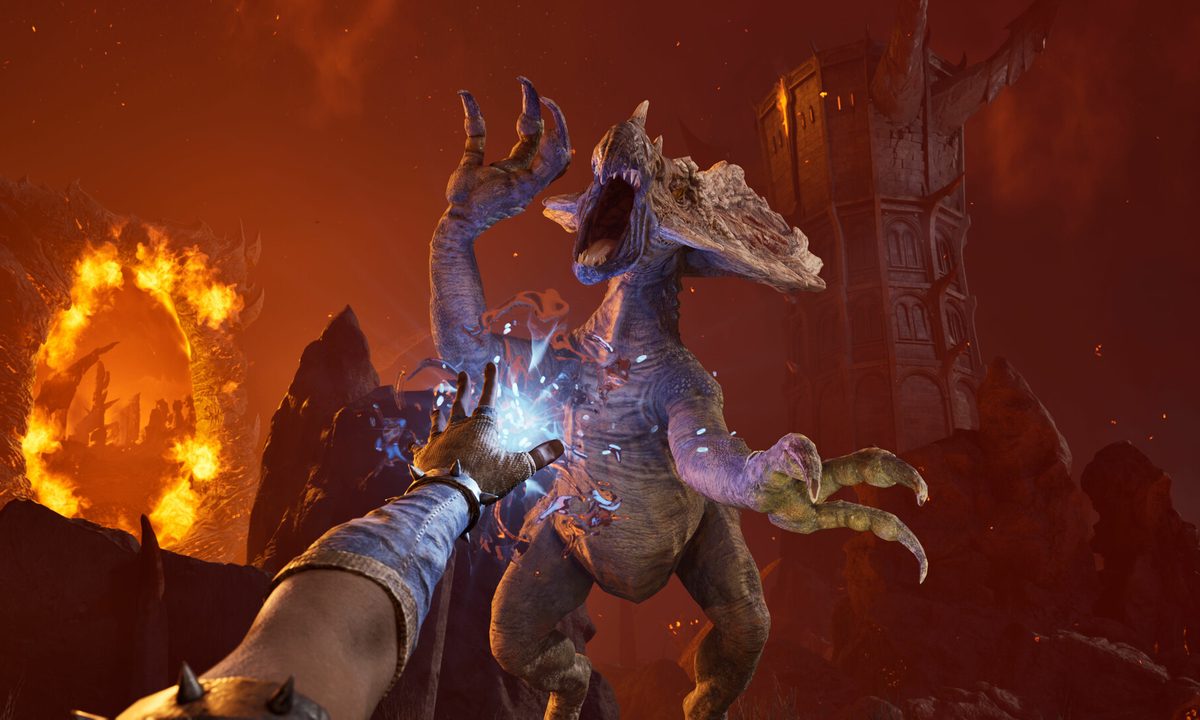
That choice immediately puts Oblivion Remastered in a strange position. At a surface glance, it feels like a brand new game. The visual overhaul is noticeable right away. NPCs are significantly more detailed than they were in 2006, with wrinkles and rough skin giving faces far more texture. Gone are the days of bioluminescent skin that gives everyone a yellow glow. The landscapes are more picaresque, too. The architecture is more detailed, I can see the bark patterns on stray trees, and the sun blankets Tamriel in warm light. When I first discover an Oblivion Gate, its raging flames show off how advanced the new lighting tech is. It’s a pretty overhaul that turns every vista into a screenshot-worthy moment.
That paint job is deceiving. The moment I break out of the sewers and enter the fields of Tamriel, I start to see the cracks under that glossy surface. Textures are slow to load in anytime I step outside. Rocks pop in right in front of me as I walk. Worst of all is that the performance is terribly inconsistent. Sometimes I get an ultra smooth 60 frames per second on Xbox Series X. Other times, the frame rate hits a choppy patch that makes the game feel like an airplane hitting rough air. I’m not the kind of person that makes a fuss over frame rate, but even I felt nausea setting in during my sessions.
It’s in these moments where Oblivion Remastered feels a little disingenuous as a project. Like so many remasters of its kind, it wants to create an illusion of modernity by turning up the graphics dial and looking back for applause. It’s a smart trick that makes a game look great in trailers and side by side comparisons, but those are short-sighted wins. The initial awe of seeing a gorgeous landscape wears off quickly once I know what to expect. If anything, that sheen makes visual moments that don’t look as impressive stick out like a sore thumb. When I see pixelated shadows draped over an NPC’s face, it’s like I’ve peeled back the curtain to see the actual game hiding under the mask.

The philosophy here seems to be that making the graphics X amount better makes the game Y percentage better, and that’s a mechanical mindset that I can’t get behind. Art style is not a quantitative selling point. A game’s look creates a texture that communicates something. The Dragon Quest 3 remake’s HD-2D visuals tells you that you’re about to play a game that respects the pixelated past, but sharpens the edges with tasteful changes. Romancing Saga 2: Revenge of the Seven’s 3D glow-up tells you that you’re getting into a more drastic reinvention that brings it in line with its contemporaries. There is a psychology behind those choices that goes beyond making a game look objectively better.
What does Oblivion Remastered’s visual overhaul communicate? To my eyes, it shouts that this is a more polished take on the game that smooths over the rough edges — literally! That’s far from the case, because the version of Oblivion presented here is still very much Oblivion. That’s great news, but it begs a question that I struggle to answer: Why play this version over the original?
Still engrossing
The best defense I can make for Oblivion Remastered is that it’s launching in a fascinating context. We’re all used to a certain open-world format that’s dominated the past few gaming generations, but Oblivion serves as a reminder of how far we’ve strayed from where the trend started. This isn’t a Ubisoft game that points players exactly where they need to go and fills a map up with points of interest to chase. It is a game about fluid discovery that only comes from living in a world. I find it hard to acclimate to at first. I spend my first hour or two wandering aimlessly in search of a quest to follow. It feels like I’m too underleveled to do anything and there’s no information to teach me how to work around that.
It’s only when I stop trying to chase the main story that it clicks. After getting frustrated by my failure to close an early Oblivion Gate, I just decided to wander into a town and start talking to random people. Doing so loaded my inventory up with quests to pursue in no order or significance to the main story. The more I followed those threads, the easier it was to become part of Tamriel. My favorite quest I’ve done so far involved me agreeing to spy on a woman for a paranoid man who is convinced that she is stalking him. I spent a full in-game day tailing her, spending hours watching her work in the garden unsuspiciously. It was completely anticlimactic, and that told me so much about the world. I learned that the characters I meet can be unreliable, sending me on wild goose chases propelled by their misunderstanding of the world.
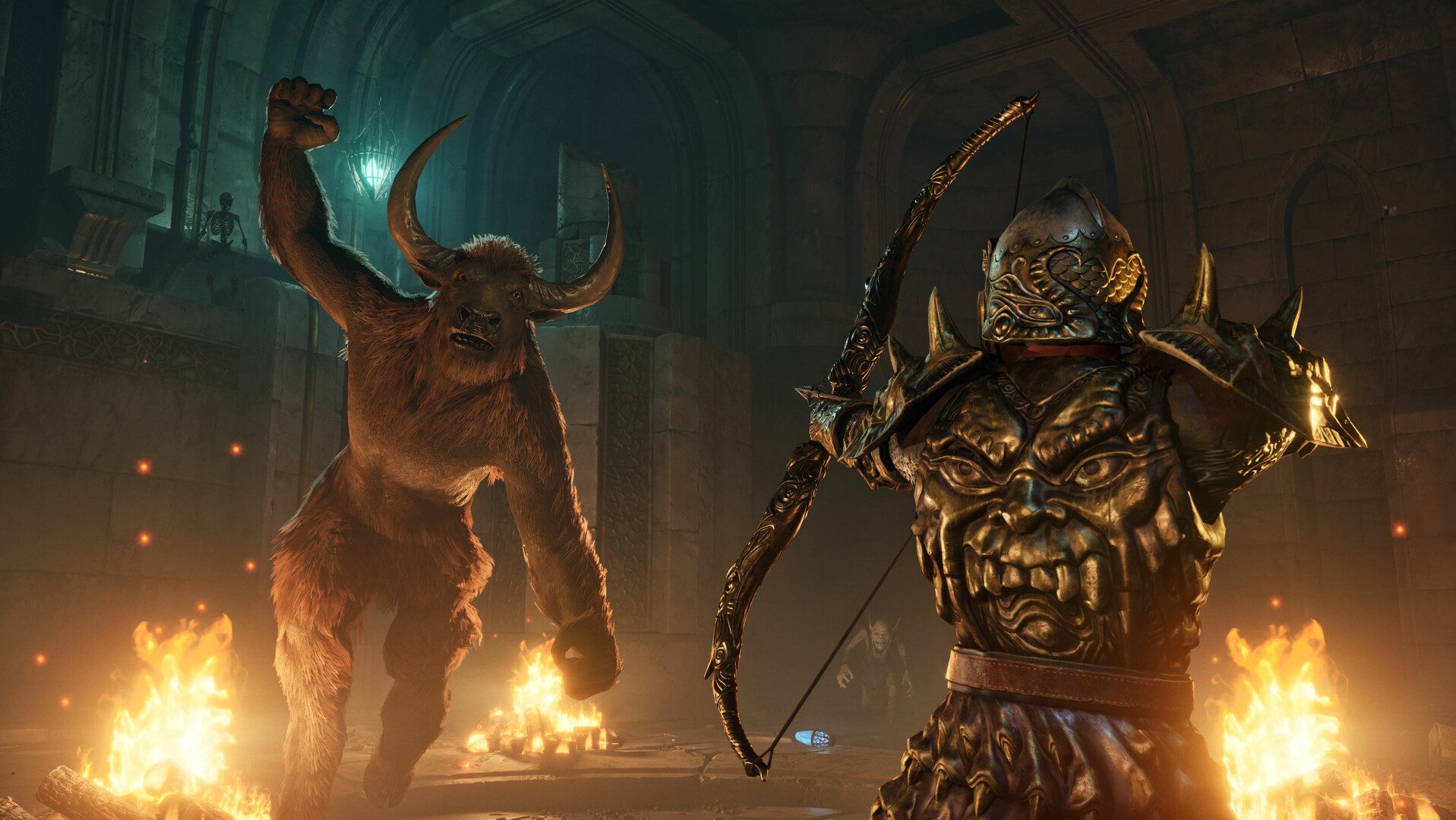
That quest also gave me a chance to appreciate that every NPC I meet has their own life that happens even when I’m not present. If I didn’t follow that woman, she’d still be out in the vineyard in the morning picking grapes. It is not a world simply designed around my life. There’s a sense that the world keeps turning even when I turn off my Xbox.
Nearly 20 years after its release, I can feel the winds shifting back towards Oblivion’s design. This year’s Kingdom Come: Deliverance 2 feels particularly indebted to it as a medieval simulator that embraces the mundane. Dragon’s Dogma 2, with its emergent chaos, certainly feels like a cousin to Oblivion. Even Assassin’s Creed Shadows feels more interested in the Elder Scrolls method, as its unguided mode asks players to sleuth out mission locations based on directions. To return to Oblivion in 2025 is to understand that some of today’s best open-world games are as successful as they are because they embrace the past rather than shy away from it.
Oblivion Remastered doesn’t shy away from its own history either. It’s a total mess, and I mean that as a compliment. All the computer-controlled silliness I used to admire in videos is present here. In one session, I watch an NPC continually duck up and down while sliding down a dirt road towards town. Characters awkwardly butt into my conversations with others. It’s a machine simulation that feels like a computer approximating how humans move around which turns everything into a glorious slapstick comedy. Oblivion presents itself as a serious fantasy game, but it’s really a sitcom. The remastered edition understands that appeal and is wise to leave it be.
All of this makes for a pleasant revisit, but does Remastered actually add anything that players couldn’t get from the 2006 version? Quality of life features like sprinting certainly make it easier to stomach, but everything that’s actually great about this new version is baked into the original. You’re still getting the off-kilter world where anything can go wrong, but with a much funnier visual style that accentuates the comedy — even if that was never the intention. In comparison, the remaster wears a more serious face that doesn’t do anything to make Oblivion better. It’s just easier to turn it into a PC wallpaper.
So what’s the real point of a project like this? What am I getting for $50 here that I can’t get by spending $15 on the 2009 Game of the Year edition? Am I paying to look at better lighting or is it just an entry fee to participate in a zeitgeist moment? The cynical side of me feels like Oblivion Remastered’s existence has nothing to do with me; maybe it’s just a way for Bethesda to keep the Elder Scrolls IP relevant as it toils away on the series’ sixth installment for a few more years. It’s undoubtedly the kind of well-timed publicity beat that Microsoft craves right now as it faces boycotts over its involvement with Israel’s war on Gaza. It feels like a business decision first and foremost, which makes it difficult for me to approach it as a work of art.
It doesn’t really matter whether you play Oblivion or Oblivion Remastered. The latter doesn’t tell us anything new about the former. As much work as Bethesda has put into the new version, most of it boils down to good store page bullet points. No matter which version you choose, you’ll get the same engrossing RPG that today’s open-world games are still looking to as a north star. One will be funnier to look at, and the other will let you sprint. It’s the difference between $35 and a few good mods. And even then, the grass is still, quite literally, greener on the original’s side.
The Elder Scrolls IV: Oblivion Remastered is available now on Xbox Series X/S and PC.