We’re only one month into the new year, but I’m calling it now: 2024 is going to be the year of the Metroidvania.
The 2D action-adventure genre, inspired by the Metroid and Castlevania formula, is already having a banner year thanks to Prince of Persia: The Lost Crown. That’s only the beginning. With games like Ultros, Animal Well, and (hopefully) Hollow Knight: Silksong around the corner, there’s a good chance that 2024’s “game of the year” will be something from that popular genre. But it’s one thing to make a fun, rewarding Metroidvania; it’s another to understand how that formula can reinforce a bigger picture idea.
That’s exactly what Tales of Kenzera: Zau aims to accomplish. The new title from Surgent Studios doesn’t just use the genre because it’s in fashion. Rather, it’s been carefully selected to reinforce its story about grief. I saw that firsthand in an early demo of the project, which balances slick action and platforming with thoughtful, creative decisions that could make it a new gold standard for the genre.
Sun and moon
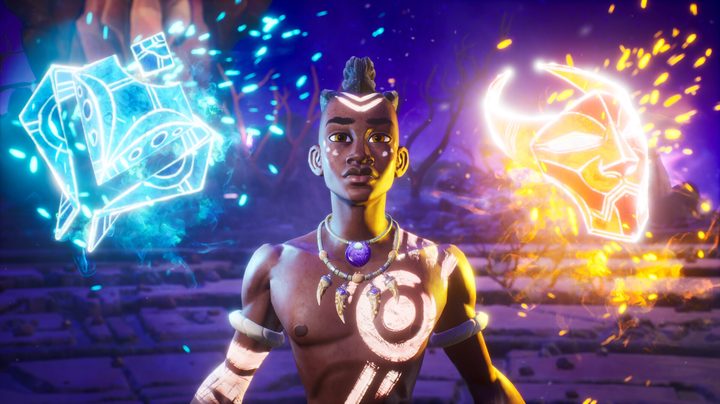
My demo would drop me near the very start of the adventure. I’m quickly introduced to the titular Zau, a young shaman who is trying to bring his father back from the land of the dead. Armed with two weapons representing the power of the sun and moon, he sets off on an adventure through picaresque 2D adventure. It’s already clear that it’s going to be a tale of self-discovery as the hero learns to live with his grief, understand Bantu culture, and unlearn some of his brash tendencies.
From a pure gameplay standpoint, Tales of Kenzera is already nailing the basics. My moon weapon gives me access to long-range arrow shots that I can quickly launch into enemies. By holding a trigger down, I can free-aim my weapon just as I can in Metroid Dread. By switching to my sun powers with a quick bumper tap, I get access to some powerful close-range slashes that can juggle enemies into the air. If you’ve played Prince of Persia: The Lost Crown, the quick and versatile system won’t feel too foreign.

That decision has some specific intent outside of simply giving players weapons with different ranges: “To me it’s this balance of life and death,” Surgent Studios founder Abubakar Salim told press in a roundtable discussion. He explains that each weapon represents the “balletic” dance that people can go through when experiencing grief, while using the sun and moon symbols that are important to Bantu culture. He describes the moon power as representing the idea of taking in and examining a space, whereas the sun is more of a furious chaos.
That thinking doesn’t just extend to combat — and that’s what makes Tales of Kenzera so promising. During the roundtable with the press, Salim teases some of the ways that the adventure subverts certain video game staples to reinforce its thematic points. No element of its design seems random or simply there because that’s what’s expected.
“One of the things I’m proud of is the reflections, which is a way of increasing the player’s health,” Salim explains. “Normally in a Metroidvania, you go to these things, you collect them, and you move on. What we wanted to explore was actually sitting under a Baobab tree and talking about how you feel as the only way Zau can increase his survivability. This play on actually talking about where you’re at emotionally, or not even talking at all.”
Rethinking the Metroidvania
It’s not long before I wander into the basic Metroidvania loop. The first big complication happens when the brash Zau tries to chase a child off a rope bridge. He quickly scampers across it, only to have it fall apart and send him sliding down a series of flowing rivers. The goal of the demo? Get back to the other side of the bridge. That simple task takes me through a winding series of 2D caverns filled with optional collectibles, like perk-granting trinkets and scattered bits of lore. In classic Metroid fashion, my demo culminates in me getting a special power-up: an arrow capable of freezing water, allowing me to wall jump up waterfalls to return to the surface.

While the loop is immediately straightforward, it’s another area where Salim stresses that there’s an emotional idea guiding it. In a press roundtable before receiving access to the demo, Salim broke down why a Metroidvania format was exactly the right match for his personal story.
“We’re really, truly using the Metroidvania elements to represent grief,” Salim says. “This idea of losing yourself. You’re getting thrown into this world you have no idea about and the longer you spend time in it, the more comfortable you get with it, even though it’s still dangerous. All the tools are there for you to use; it just takes you time to get used to it. That’s why we chose this platformer style; to me, it feels the closest to this idea of going through the journey of grief. Because it does catch you by surprise. You have no idea what you’re dealing with, and everyone’s grief is different, but you are kind of in control of it.”
It’s not that ideas like that are immediately apparent in my demo or radically change the game. I’m still doing some basic tasks that appear throughout the genre. One optional platforming challenge has me dodging spikes in a narrow river path, ducking under low-hanging rocks, and air-dashing over obstacles to reach a trinket at the end. I’m also amassing skill points as I go that let me unlock new combat techniques for my weapons, putting an emphasis on the same kind of power growth the genre is built on.

It’s the little details that stand out, though. In the roundtable discussion, I ask Salim if there were any ways that the team needed to subvert the Metroidvania formula to better tell the story. Salim launches into a level design breakdown, which makes it ever clearer that no decision has been made here without some sort of thematic intent.
“One of the things I wanted to try and avoid was making the game feel as ‘gamey’ as possible,” Salim tells Digital Trends. “For example, avoiding the idea of creating a fire biome and a water biome. I really led into the idea of: What feelings is each biome inspired by? The Highlands, which is the first big section you’ll explore in the full game, really comes from a place of anxiety and holding on. You’ve got all these floating platforms because there’s this storm brewing, and essentially, that tension causes this area to have a lot of jumping and leaps of faith.”
Details like that have me convinced that Surgent Studios has something special on its hands. Tales of Kenzera: Zau isn’t just your average indie genre game with a weighty theme grafted on top of it. It’s meticulously considering how game mechanics and interactivity communicate to players, even if those decisions won’t always be perceptible to the average player. And if the nuances are lost on some, at least they’re getting a tightly-made Metroidvania with some satisfyingly fluid combat. No matter which way you slice it, we could be looking at a defining genre classic in the making.
Tales of Kenzera: Zau launches on April 23 for PS5, Xbox Series X/S, Nintendo Switch, and PC.