I’ll be the first to say that video games don’t need to try and emulate movies. Games and film are two different mediums that have their own strengths and weaknesses that don’t always translate well from one to the other. What I will say, however, is that there are broad ideas in film well worth implementing into gaming. Most we’ve already seen, like more dynamic cut scenes and performances. But one of Hollywood’s most impressive accomplishments is the almost unbelievable feat that was creating the Marvel Cinematic Universe. The sheer amount of planning, effort, money, and talent that must’ve been required to establish several independent characters and films before seamlessly integrating them all together is astounding, even if you’re not a fan.
Video games have never had a full-scale shared universe of that scale, Marvel or otherwise. Sure, we’ve had plenty of games with teams of superheroes — Marvel’s Avengers and Ultimate Alliance 3 being two recent examples — but even though every individual character in those games have had their own titles, it isn’t the same character between them. Fighting games are the other big genre for crossovers, with Super Smash Bros. Ultimate being, well, the ultimate example. While the fighters are as faithful as they could possibly be, they’re not actually full-fledged characters with narrative arcs.
For a gaming studio to pull off what the MCU did, they need to build up new characters with the intent of merging them in a natural way. The industry has teased the idea, but now is the time to fully pull the trigger.
A shared universe

I can already hear the moaning about how shared universes are lame or don’t work, but that’s all based on how films have done it. Don’t look at DC, Universal (if anyone even remembers their “attempt” at a shared universe), or even the MCU too closely here. The fact that games have never fully accomplished this does mean there’s some risk, but also mountains of potential. Even the MCU has gotten a bit stale now that they’ve been repeating more or less the same formula for over a decade of films. That’s exactly the kind of trap games don’t have to fall into.
Even studios under the same publisher have unique identities. Yes, we all know the joke about Sony’s first party making only third-person action-adventure games, but even those still feel drastically different from one another. God of War plays almost nothing like Horizon: Zero Dawn, which plays nothing like Ghost of Tsushima. It’s even true within the same studio. Naughty Dog’s Uncharted games and their The Last of Us games are incredibly different, despite both being third-person shooters. When the only thing studios need to consider weaving together is the world, and perhaps some story beats and characters, the game they make can still be completely different.
There’s no reason to limit games to the same genre in order to lead into a shared universe. One game could be an FPS, the other an open-world RPG, and another a horror adventure. Granted, the rules of the world would have to remain consistent in order for this to work, but if all the teams came together at the start to build this plan then it could all feel organic. Forcing a shared universe now could be possible, but not as satisfying. I could see Ratchet and Clank meeting up with Jak and Daxter thematically, and Rift Apart specifically opens up endless possibilities.
But the excitement of seeing characters randomly cross paths isn’t powerful on its own. Without the buildup, there can’t really be a satisfying payoff.
The payoff
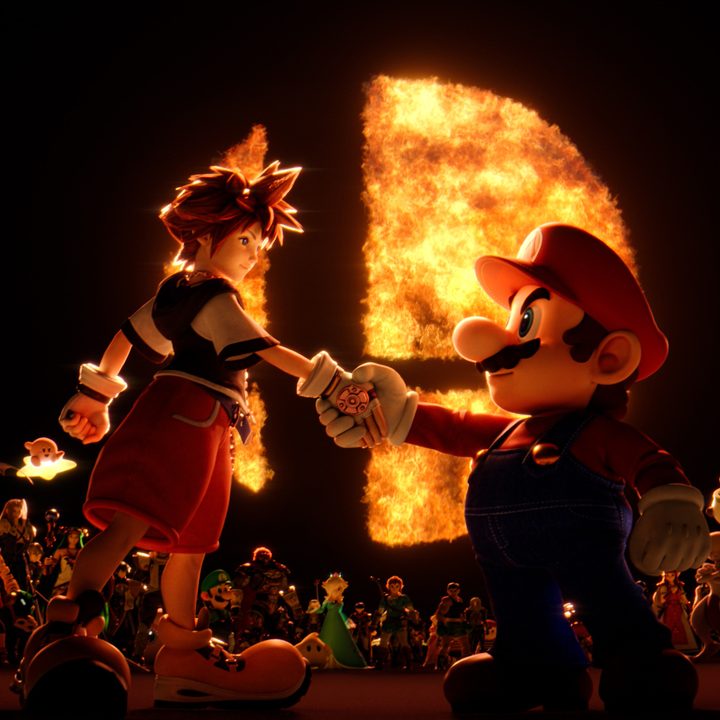
Seeing two characters you like come together is initially exciting, but can be hollow too. Seeing all the weird and seemingly impossible picks that came to Smash is probably the best example of that. It’s an impressive spectacle, but it’s not quite on the same level as an MCU-style shared universe. Seeing Snake fight Sonic, the dog from Duck Hunt, and Ridley is what we all dreamed of seeing on the playground, it doesn’t feel real. Outside of their appearance and moves, they don’t have their personalities. It feels like playing with action figures, which is the entire premise of the series, to begin with.
Compare that with the first Avengers movie and how satisfying it was to see these characters actually meet, interact, fight, and then come together for that iconic panning hero shot. It felt bigger than just seeing a cameo, because they were all equally established and had a reason to come together. Imagine how that would feel for multiple characters you played through individual games with? The level of attachment we can have with great protagonists is leaps and bounds beyond what films can create, so that moment when two characters from different games you played meet up for the first time would be even more impactful.
The real payoffs would be in the actual team-up. Without spoiling anything, there’s a big moment in Avengers: Endgame with Captain America and Thor that had fans screaming in theaters. Imagine a similar event happening when, say, Kratos and Aloy team up to fight some massive beast that had been built up in God of War Ragnarok and Horizon: Forbidden West. Also, consider that you’re not just seeing this in a cutscene, but actually playing it.
Those are the kinds of payoffs we could have with shared universe games. Characters can be fleshed out and established more than you could get in even a trilogy of films. They can come together for massive narrative moments informed by dozens of hours of anticipation between games. And you get the satisfaction of playing it as it all unfolds.
Why now’s the time
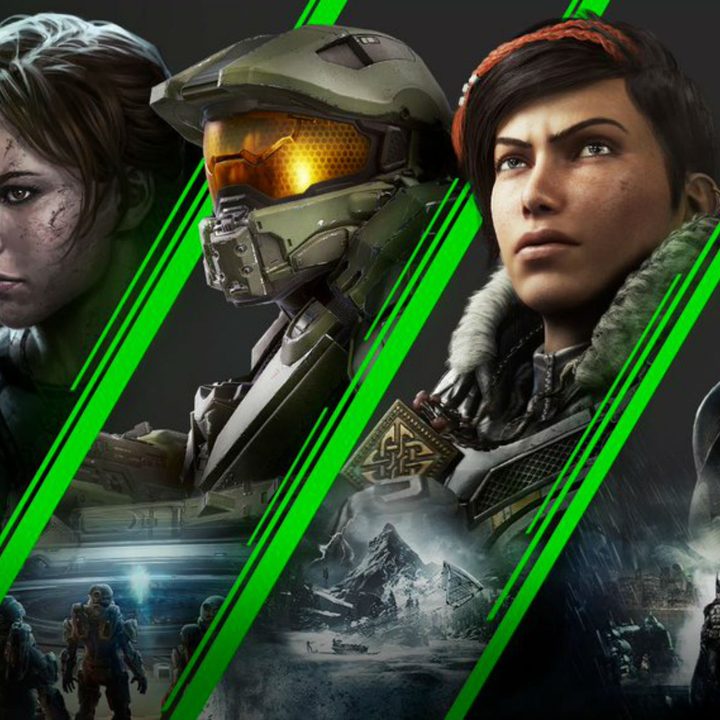
I’m not a fan of the current trend of all the independent studios being bought by big publishers. But one benefit to so many studios being under the same umbrella is that it makes the concept of a shared universe that much easier to pull off. Technically one studio could do it, but it would be such an undertaking, and take way too long if they could only produce one game at a time. In a system where Sony and Xbox each own over a dozen studios, though, collaboration is so much easier.
Timing and motivation for these studios would still be a hurdle, and arguably a larger one than even in the film industry, yet could yield even greater payoffs for both players and the studios. They each can create their own IP, but benefit from the fact that more attention will be brought to their game because players will want to dive into each game in the shared universe to prepare for the eventual team-up.
It’s the best time for this now, because the public at large understands shared universes. Prior to the MCU really showing people what the concept was, it kind of only existed in comic books. We’re almost kind of flooded with shared universes — or attempts at them anyway — so it’s an easier sell these days.
Early signs of success

We’ve had a few close calls of videogame shared universes, but none have quite come together yet. Ubisoft has teased the Watch Dogs and Assassin’s Creed universes being shared, but never followed through. It would need both of those games to have more established main characters, but the idea of the present-day sections of an Assassin’s Creed game being a Watch Dogs style game, but then diving into the Animus to reveal secrets in the past, sounds fantastic to me.
And the games that give me hope for this entire thought experiment is Remedy with Control and Alan Wake. Spoiler alert for Control‘s AWE DLC: Alan is a main focus of that storyline, turning what could’ve been just an Easter egg into a confirmed shared universe. We’ve yet to see how they’ll actually handle this going forward, but the excitement fans had when the two properties came together that it’s something we’re hungry for.
Just, you know, maybe a little quicker than 10 years between games.