1. Home
  2. Phones
  3. Audio / Video
  4. Mobile
  5. Legacy Archives

No Netflix needed: AT&T may be gearing up to broadcast cable TV to your phone

Add as a preferred source on Google

The term “LTE Multicast” might not sound very exciting, but it has the potential to change the way you watch TV. Imagine pulling out your phone or tablet, dialing up your favorite cable channel and watching it live, wherever you happen to be, without having to work through a cable website or “TV Everywhere” service. That’s what LTE Multicast could make possible, and it looks like both Verizon and AT&T are interested in making it happen.

Last week, a top executive for AT&T announced that the carrier expects to begin deployment of LTE Broadcast, or LTE Multicast, sometime next year, a move that could signal a potential shift to cable TV delivery via mobile devices. The carrier’s chief strategy officer, John Stankey, revealed the rough timeline for the rollout at the Oppenheimer Technology, Internet & Communications Conference.

Recommended Videos

LTE Multicast uses technology based on evolved Multimedia Broadcast Multicast Service to enable the simultaneous delivery of identical content to a large amount of subscribers. This translates to a more effective, and less resource-intensive, use of a network’s resources. For example, it’s more efficient to send the same House of Cards episode to 1,000 users as the result of one action than it is to process 1,000 individual requests, one by one, for that one episode; the result ends up being the same (1,000 people watching an episode of House of Cards), but the two processes require varying levels of resources.

report from FierceWireless notes that AT&T has been pretty hush-hush up to this point, having previously revealed that it was only “exploring the possibility of offering eMBMS services” with the 700 MHz and E Block spectrum it picked up as part of its acquisition of Qualcomm back in 2011. But, as Verizon similarly revealed this week, AT&T’s game plan is now certainly on track toward delivering cable TV to mobile devices. And that’s straight from Stankey’s mouth. The CSO explained that AT&T believes people are willing to pay for conveniently delivered TV content, but “the reality of the industry today and how content is licensed and sold doesn’t fit elegantly into that model.”

But perhaps the most potent card up AT&T’s sleeve is its proposed $48.5 billion merger with DirecTV and all of the factors that come with it. If the deal is officially sealed, all of the new content and broadcasting resources in its pockets would place AT&T in a distinctly advantageous position in the market. An AT&T/DirecTV colossus would be able to push forth any number of plans and bundles.

As for specific launch dates and the like, Stankey said customers can expect AT&T to begin rolling out Multicast capabilities “as we move through the next year.” Furthermore, the CSO explained the carrier would be launching the tech on a targeted basis, starting in areas that are ripe for immediate deployment.

Alex Tretbar
Former Digital Trends Contributor
Alex Tretbar, audio/video intern, is a writer, editor, musician, gamer and sci-fi nerd raised on EverQuest and Magic: The…
Old kindle owners are revolting against Amazon’s support shutdown with jailbreaking
Aging Kindles are still working, and some users refuse to let them die
Kindle-Paperwhite

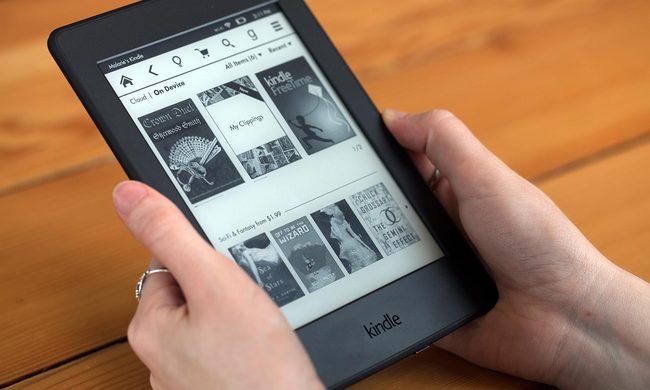
Amazon’s decision to cut support for older Kindles has pushed some longtime owners toward jailbreaking, a route many never expected to consider.

From May 20, 2026, Kindle devices released in 2012 or earlier will no longer be able to buy, borrow, or download new books directly from Amazon. Books already downloaded will still work, but the store experience is basically being switched off for these devices. Reports now suggest that some users are looking at jailbreaks as a way to keep older Kindles useful instead of replacing hardware that still works.

Read more
I’m weirdly excited about Android 17’s upcoming anti-doomscrolling feature
Android Pause Point screenshot.

I have spoken before about how doomscrolling has completely changed the way I consume short-form content. What used to feel like a quick break to watch a couple of YouTube Shorts or Instagram Reels somehow turned into an automatic habit I barely even notice anymore. I pick up my phone for one thing, open a social media app just for a minute, and suddenly I am trapped in an endless vertical stream of videos I did not even plan to watch. And the frustrating part is that I am fully aware of it while it is happening.

I have tried almost everything to change the habit — screen time limits, app timers, turning notifications off, hiding apps from my home screen, and even forcing myself to keep the phone away while working. Some of those tricks help for a while, but the muscle memory always creeps back in. Even during work hours, I still catch myself unlocking my phone without thinking and instantly falling back into the same doomscrolling spiral. That is why one particular announcement during the Android Show 2026 genuinely caught my attention. Buried between all the announcements was an Android 17 feature that actually feels useful. And I am weirdly excited for it to arrive on my Google Pixel 10a.

Read more
I use this iPhone feature every single time someone wants to borrow my device
Electronics, Mobile Phone, Phone

For me, there are basically two kinds of panic in life. The first is sending a risky text to the wrong person. The second is handing my unlocked phone to someone and instantly remembering that my entire digital life lives inside it. Unfortunately, I have experienced the second one far too many times. Most of the time, the reason is completely harmless. A friend wants to click a quick picture, my cousin asks to watch a reel, or someone just wants to place a food order or check the cricket score. But the second my iPhone leaves my hand, my brain starts speed-running through everything stored inside it — personal chats, banking apps, work emails, private notes, passwords, photos, and those screenshots I always forget to delete.

Smartphones are no longer just phones. They are essentially tiny, portable vaults that hold years of personal information, habits, conversations, and memories. Lending someone your device can feel like handing them a small extension of your brain for a few minutes. And honestly, that thought alone is enough to make me uncomfortable. That is exactly why one iPhone feature has become essential for me. It is called Guided Access, and I use it almost every single time someone asks to borrow my phone.

Read more