  1. Home
  2. Audio / Video
  3. News

Wait! What did Google just rename this time?

Add as a preferred source on Google
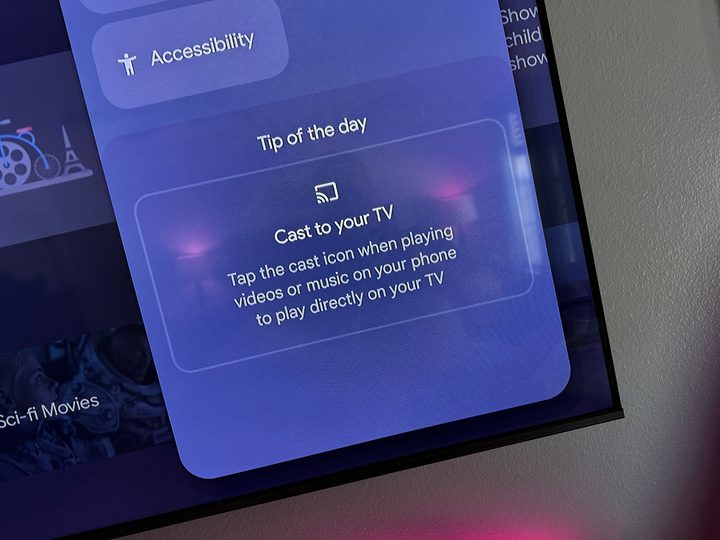
A Chromecast tip on a TV.
Phil Nickinson / Digital Trends

It’s a little on the nose, but there are times when Google is the most binary company on the face of the planet. To wit: Google’s branding is either brilliant (see Gmail), or boneheaded (see every messaging permutation ever).

The latest rebranding that doesn’t really matter? Chromecast. Erm, Cast. Actually, Chromecast built-in.

Recommended Videos

Here’s the deal: Chromecast is the long-standing product that makes it super easy to send content — usually video, but not always — from your phone to a TV. It uses a protocol to do that, which basically means the software that makes that little bit of magic work.

Chromecast was (and still is) the hardware. Cast was the protocol.

Where things got a little messy was when it comes to other devices that you can send media to. Targets, if you will. We’re talking other screens — and speakers, for audio — to which you can hand off video and music or podcasts or whatever. That could be a Nest speaker. That could be a Nest Hub, which is a screen with a speaker. That could also be a Google TV television, which is, uh, also a screen with a speaker. It might not be a Chromecast, but it uses the Cast protocol. Take, for instance, the new Onn 4K Pro, which basically is a newer, better Chromecast.

But at some point, Google decided to highlight that these other devices didn’t just have Chromecast built in, they had “Chromecast built-in.” As in, that’s the name of the feature, and not just a description. And Google recently decided not to do that anymore, and that things are back to just “Cast.”
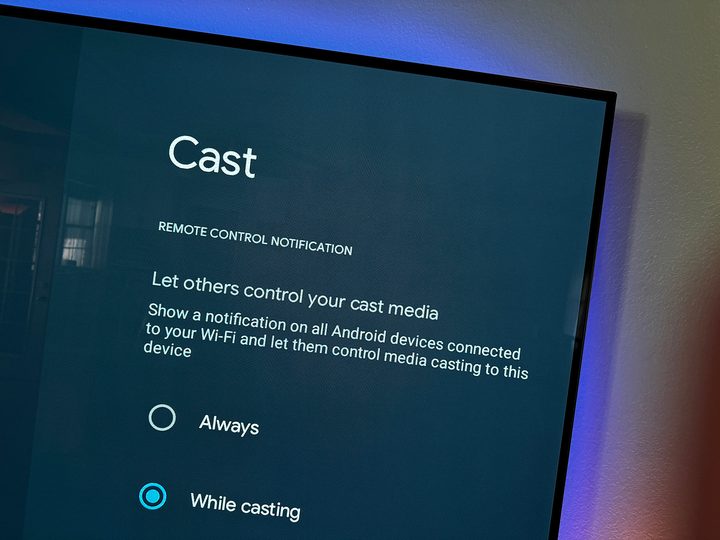
A Cast settings menu on the Onn 4K Pro.
Phil Nickinson / Digital Trends

Welcome to a tech journalist’s nightmare.

The good news is that this sort of nonsense only matters to someone trying to crank out news posts (that’s us), or someone whose job it is to make sure there’s some sort of slight distinction in branding. (That’s Google.)

But to the end users out there — the folks actually spending the money and using the things? This change shouldn’t matter at all. What’s important is finding the Chromecast — erm, Cast — icon, and then a supported target. What Google calls it and whether it’s a built-in service or an external device shouldn’t matter at all.

So there’s one fewer thing for you to have to worry about.

Phil Nickinson
Former Section Editor, Audio/Video
Phil spent the 2000s making newspapers with the Pensacola (Fla.) News Journal, the 2010s with Android Central and then the…
Sony’s True RGB technology is aiming for the best of OLED and Mini LED
Sony’s new display technology is designed to combine OLED level color with Mini LED brightness
Sony Bravia 9 II (

The battle for premium TV buyers has largely revolved around two technologies in recent years: OLED and Mini LED. OLED has earned a reputation for delivering exceptional contrast and viewing angles, while Mini LED has pushed brightness levels to new heights. The tradeoff has often been deciding which compromise makes more sense for your room and viewing habits.

Sony believes that conversation may be about to change. During a private media briefing in New York City, the company unveiled a new display technology called True RGB, which rethinks how a TV backlight works and aims to combine some of the biggest strengths of both OLED and Mini LED.

Read more
Alienware’s upgraded gaming monitors offer higher brightness and refresh rate starting at $300
Alienware’s four new 30-inch-plus screens bring higher brightness, faster refresh rates, and cheaper 240Hz options.
Computer Hardware, Electronics, Hardware

Alienware has four new screens coming out of Computex 2026, and the lineup cuts across almost every tier that serious PC gamers care about. Its latest Alienware gaming monitors put brighter OLED, faster ultrawide refresh rates, and $299.99 240Hz QHD gaming into one launch window.

The range includes a 39-inch 5K OLED flagship, a 34-inch 280Hz QD-OLED ultrawide, and two 240Hz QHD LCD options at 32 inches and 34 inches. That spread gives Alienware a high-end halo product while pushing fast QHD screens closer to mainstream upgrade territory.

Read more
New Apple TV and HomePod mini are apparently ready for a fall launch
Apple finally remembered the HomePod mini exists
HomePod

Apple’s smart home hardware lineup may finally be getting refreshed after years of relative silence. According to a new report from Mark Gurman, Apple is preparing updated versions of both the Apple TV set-top box and the HomePod mini, with launches currently planned for later this fall.

The timing is notable because Apple’s home-focused products have largely remained unchanged while rivals like Amazon and Google aggressively expanded their smart home ecosystems with AI-powered assistants and connected devices. Apple now appears ready to reposition its home products around the company’s next-generation Siri and Apple Intelligence strategy.

Read more