When I went to go buy my first video streaming device, I didn’t have a choice. Not really, anyway.
The year was 2017, and I was using the now-retired Chromecast Audio and last-generation Riva speakers to stream all my favorite Spotify playlists to speakers throughout my home via the Google Home app. I was also a big fan of Amazon’s Alexa smart assistant, employing a first-generation Echo Dot to do everything from setting alarms and getting news updates to ordering dog food.
But when I looked for a solution that would allow me to enjoy all of my favorite video platforms — YouTube, Amazon Prime Video, Netflix, Hulu, and Plex — on my home TV with similar ease, I realized that neither the Amazon nor Google solutions would work.
That’s because, until this week, Amazon and Google devices didn’t play nicely when it came to their respective streaming apps. Amazon devices, which mix seamlessly with my Echo Dot, wouldn’t let me stream YouTube — the most popular video platform on Earth — and Google’s Chromecast suite wouldn’t let me stream Amazon Prime Video, keeper of award-winning series and some of the best films in the streaming universe.
So I bought a Roku Ultra, which offered both, and a whole lot more.
For the past two years, I’ve been extremely happy with my purchase. I’m not unique. The fact that Roku was able to remain agnostic while tech giants withheld popular video services from each other — until now, that is — gave the company a considerable advantage among those of us who watch on multiple platforms. In fact, it likely played a key role in Roku’s growth, helping the scrappy, independent company become the leading streaming player company on the planet, with a 37 percent market share in 2018 that outpaced Fire TV devices, and more than doubled Chromecast’s share.
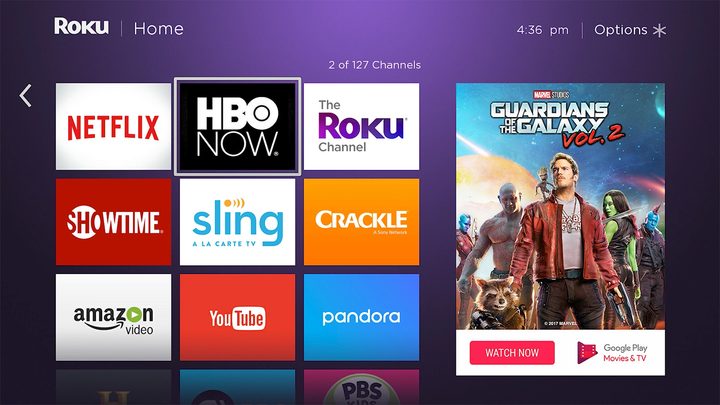
With an intuitive interface and access to virtually every video platform and app viewers could want (now in the thousands), Roku managed to position itself as the hardware (and software, partnering with numerous TV makers) of choice for multi-subscription video watchers. In other words: Most of us.
As more competitors enter the video-on-demand space, with companies like Apple and Disney prepping their own services, demand for access to multiple platforms from a single, easy-to-use device will only increase. Roku has known this for a very long time, and the Roku brass is acutely aware of the need to continue to offer viewers every possible platform they might want to watch.
Now that Google and Amazon have thawed their lengthy streaming feud, allowing their respective video apps on each other’s devices, the question as to whether Roku will be able to offer the same distinct draw it once did is unclear. Given how much research and development Amazon and Google have been putting toward their smart home ecosystems, it is increasingly likely that would-be Roku buyers may stick with the voice assistants and interfaces they know from their cell phones and smart speakers — a very good reason for the two tech giants to finally strike a truce.
While there’s no doubt that a big part of Roku’s success is just how easy its devices are to use, if I was forced to make the same purchase decision today, I’d probably grab myself a Fire TV Cube or Chromecast Ultra.
That said, this is a shift that Roku has prepared for, with the company focusing less on outboard streaming devices, and more on integrating its ecosystem into fantastic TVs that come with Roku’s streamlined interface built-in, in place of the poorly wrought smart TV systems designed by TV manufacturers themselves. It’s a smart move; if Roku can remain a major player in the TV space, it can likely continue to hold a major market share when it comes to streaming video delivery going forward.
Only time will tell whether or not Roku will continue to dominate the streaming landscape as its tech-titan rivals look to use their might — and massive coffers — to make up for lost time and users. But thanks in no small part to years of bickering between the big boys, Roku has a comfy head start.