
Like many other industries, the consumer electronics industry relies on that “next best thing” emerging every few years in order to fuel sales. Small stores crave it. Big chains need it. Home installers can’t live without it.
So what’s happening to the home A/V industry now? Will there be a breakout technology any time soon?
It’s certainly been a while since we’ve had a “next best thing” in home theater or home audio. Yes, there are iPods and other things that have been individually successful, but there really hasn’t been an industry-wide game changer like CDs and DVDs were in their time, the type of change that helped everyone in the industry. CDs and DVDs both enticed people to buy their libraries of music and movies again. What better sign of success is there than to persuade people to buy something they already have?
These new formats really did sound and look better, so they prompted people to go out and buy new speakers, new TVs, fancy cables, home installation services and a variety of other products and services. They created a rising river that lifted many boats. The industry lives on this flow-through.
The original success of flat screen TVs is another example of the industry’s lifeblood. When flat screens came out, people went out and replaced perfectly good tube TVs they already owned. They also went out and bought great new speakers and hired someone to put wires in their walls.
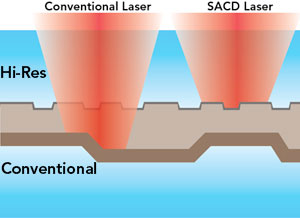 But there has been a serious string of misfires over the last decade. There was the failed attempt at improved audio, SACD and DVD-A. Yes, they did sound better than CD and in some cases, much, much better. But they faltered by the very nature of their dual existence. Having two formats was confusing and an obstacle to sales. We all knew there would be a winner and a loser, and who wanted to have their third copy of Dark Side of the Moon be in a format that lost the battle and was no longer supported?
Content was also pretty thin. Many titles weren’t released in high-definition audio at all. Others were produced in only one format. Either way, you couldn’t get everything you wanted, and that’s a formula for failure. Prices were also too high, but the fact that I was even willing to consider buying Dark Side for a third time shows that the opportunity for success was there. It was just never realized.
There was also one other issue: CDs already sounded really good. Convincing people to move up to SACD or DVD-A was not an easy sell; the 5.1 surround sound was also a little gimmicky at times. We needed low prices (same as CD), a single format, and lots of content to make it work, and these things never materialized.
The same thing happened with Blu-ray and HD-DVD. Blu-Ray is starting to see some success, but the format wars slowed things down, leading people to have second thoughts and explore other options, like streaming and video on demand. Most of the issues that plagued high-definition audio were present with Blu-Ray, too: lack of content, high prices, and confusing, unnecessary dual formats.
And guess what? Regular DVDs look pretty darn good, too. So Blu-ray was always going to be a somewhat difficult sell to the average Joe, and it couldn’t withstand the same crippling issues that hobbled high-definition audio.
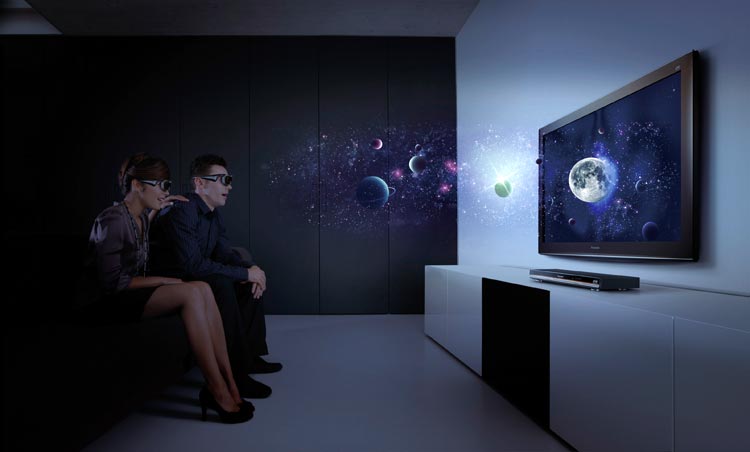
Now we have 3D TVs, which are already showing some of the warning signs of previous failures. Different formats and technologies, a dearth of content, confusing cables with version numbers that change every few years. The industry really could use a success right now, a real water lifter. But it’s just not happening yet. I certainly don’t see many ads for 3D TVs any more. And if the industry is taking it slowly, what do they expect consumers to do?
Maybe the industry is waiting until there are more than a few dozen things to watch in 3D. Maybe they are waiting for newer or cheaper viewing glasses to become available. But if you believed the hype at the Consumer Electronics Show in January, you would have thought that we would all have one, maybe two 3D TVs by now. If the industry is now waiting on the sidelines, being careful with how they invest their funds, you can be sure consumers will be doing the same thing.
Worse, and I hate to say it, but my four-year-old 2D TV looks pretty darn good, too. It’s hard to imagine a scenario where I want to replace it with something that has competing formats, limited content and can also be gimmicky at times. Sound familiar? These are the same shortcomings that sank SACD and DVD-A.
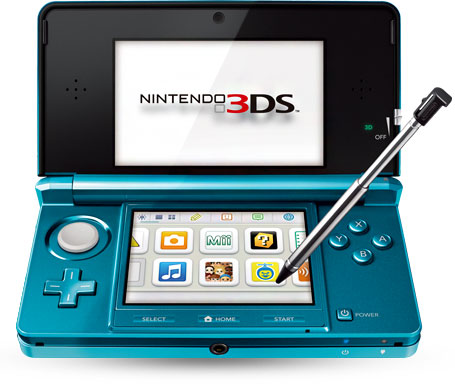 So what signs should we be looking for to gauge the adoption pace of 3D video? First, I’d take a close look at sales of the Nintendo 3DS, which is Nintendo’s recent handheld 3D gaming release. Initial data shows that the more “adult” games are selling quickly. I think this means that it’s not just kids buying these things, but also those of us that can be considered kids at heart, but not so young when measured by the calendar. The 3DS is a great way to dip your toe into the 3D world, as it is much less expensive than a 3DTV and also does not require any glasses to see the 3D effect. If the 3DS can’t pull off a 3D success, it will say a lot about the future adoption rate of 3D TVs.
I’d also keep an eye out for the availability of 3D video streaming and live broadcasts. In the battle between Blu-ray and streaming, it seems like consumers might be choosing streaming on demand as their preferred method of HD video viewing (through Apple TV, Netflix, cable box or a million other ways). The choices for HD streaming are growing every day on all of these platforms, but you still can’t really watch anything in 3D. You basically need to have a 3D-capable Blu-ray player if you want to watch the movies that were released in 3D, and you can’t watch much in 3D “on demand” on your cable box. There have also been very few native 3D broadcasts, like sporting events (which happen to look great in 3D), that will drive adoption of this technology.
Bottom line? I really want a reason to buy a 3D TV, but there are still too many question marks for me. Hopefully they get sorted out soon and the A/V industry enjoys another rising tide in the form of a cool technology that everyone wants and enjoys. In the meantime, I think I’ll order a Nintendo 3DS (for my son, of course).
Ethan Siegel is co-founder of Orb Audio, a U.S. based manufacturer of audio speakers and related equipment. Prior to forming Orb Audio, Ethan was an attorney in New York city. He has always been passionate about technology and used his first credit card in college to buy speakers that were way out of his price range.


