Amazon’s lineup of Echo speakers is an impressive collection of smart home devices, with the Echo Dot being one of the most popular models. Whether you’re using one as a stand-alone assistant to keep tabs on your schedule, listen to the news, or play music, or you’ve tasked your speaker with controlling your home’s other smart home gear, the Echo Dot is a great way to get things done. But with multiple years on the market, the Dot has seen more than one generation. The 3rd-generation Echo Dot was the last to hang onto Amazon’s puck-shaped design, moving into spherical territory with the release of the 4th-gen. That’s not all that changed, either.
If you’ve been considering an upgrade from gen-3 to 4, or you simply want to know the differences between both Dots, we’ve put together this side-by-side comparison of both speakers. Read on to see which Dot is best for you or take a look at our pick for the best Cyber Monday Echo Dot deal.
See more
Design

Amazon has done a decent job at evolving its Echo Dot speaker. The first- and 2nd-gen Dots had a hard plastic exterior but still maintained the hockey puck shape. The 3rd-generation Dot softened up the design a bit, adding a fabric surround and rounded edges.

The 3rd-gen Dot measures 1.7 inches tall and 3.9 inches in diameter. The light ring surrounds the top perimeter, and the four buttons — the action button, volume buttons, and the microphone off button — sit on the top flat surface. You can choose between four color options: charcoal, heather gray, plum, or sandstone.
The 4th generation of Echo Dot represents the next design evolution in Echo speakers. The Echo Dot 4th-gen is spherically shaped, and it measures 3.5 inches tall and 3.9 inches in diameter (the same diameter as the previous generation). Overall, the new Dot is larger than its predecessor, which is somewhat surprising to see in a device that doesn’t have a display screen.
Unlike the Echo Dot 3rd-gen (which has the light ring along the top), the 4th-gen Dot’s light ring is located along the bottom perimeter. The four buttons are also slightly raised, and they sit on top of the sphere. The Echo Dot 4th-gen has a more futuristic look, and it looks like a more expensive device than its predecessor. However, for those who want a speaker they can hide on a bookshelf or corner table, the 3rd-gen Dot may be easier to tuck away in a corner and sit unnoticed.
Design-wise, the 3rd-gen Dot may be less noticeable and easier to wall-mount, but that’s not to say the 4th-gen can never be semi-airborne — you’ll just need an accessory or two to get it mounted. Both designs offer benefits and drawbacks (bigger chassis on the 4th-gen for better sound — more on that below), so we’ll call this category a tie.
Winner: Tie
Sound quality

The Echo Dot 3rd-gen saw a significant improvement in its sound quality, with the implementation of a 1.6-inch speaker (larger than the previous generation’s 1.1-inch speaker). This led to a bigger and better-balanced sound overall, encompassing deeper lows and richer mid-range and treble.
The Echo Dot 4th-gen still sports a 1.6-inch speaker, but it’s front-firing for better sound-staging. Side by side, there’s not much difference, although the bigger chassis on the Dot 4th-gen tends to make for less speaker rattling when you play music at high volumes. Both the Echo Dot 3rd- and 4th-gen have a 3.5mm jack for connecting a pair of headphones or an external speaker.
We’ll give the sound laurel to the Echo Dot 4th-gen for its improved housing and sound-staging.
Winner: Echo Dot 4th-gen
Features


The Alexa technology is the same in both the Echo Dot 3rd-gen and the Echo Dot 4th-gen. Newer skills like Alexa Guard Plus, a subscription-based home security service (a more advanced version of Alexa Guard), and Care Hub let you use Alexa to help you look out for aging family members — but you can take advantage of these new features on either Echo Dot speaker.
With its newer models, Amazon appears to be focusing heavily on climate friendliness by using materials like post-consumer recycled plastics and fabrics and recycled die-cast aluminum. Newer Echo devices like the Echo Dot 4th-gen receive the “Climate Pledge Friendly” tag, and the brand is adding other features to promote energy efficiency. For instance, Amazon is adding an energy dashboard to help you see power consumption across your Echo and smart home devices.
Considering the eco-friendly advancements of the 4th-gen, we’ll award another point to the latest gen model.
Winner: Echo Dot 4th-gen
With clock or without?

Both the 3rd- and 4th-gen Echo Dots offer versions of the speaker with front-facing clock displays. We found that the 3rd-gen Dot with clock is about the same as the 3rd-gen Echo. The only differences we found were that, in addition to showing the time, the LED display could also show timers and the outdoor temperature, which is a nice advantage.
The 4th-gen Echo Dot with LED clock also lets you see the time, alarms, and timers on an LED display. Another bonus feature we love about the alarm clock on this one is that you can hit the snooze button by touching the top of the device.
Both the 3rd- and 4th-gen versions of the clock Dot offer nice step-ups from the display-less versions of the speaker, so we’ll call this one a tie.
Winner: Tie
Pricing and availability
The 3rd-gen Echo Dot originally retailed for $50, but you might be able to get the device on sale for around Buy at Target . The 3rd-gen Dot with LED Clock is no longer available brand new, although you may still be able to find the device from a third-party seller.
The 4th-gen Echo Dot was released on October 22 at a retail price of $50. The Echo Dot 4th-gen with Clock sells for $60 and was released on November 5. Like many Amazon products, you’ll see these speakers go on sale once in a while, with both products often being included in smart home bundles, packaged alongside things like smart lights and thermostats.
The design and edge-ups in the audio department are great 4th-gen Dot features you won’t regret paying for. That being said, if you can find a 3rd-gen Dot on sale for a low price, it’s still an excellent option.
Based on overall value and availability, the 4th-gen Dot earns another point.
Winner: Echo Dot 4th-gen
The verdict
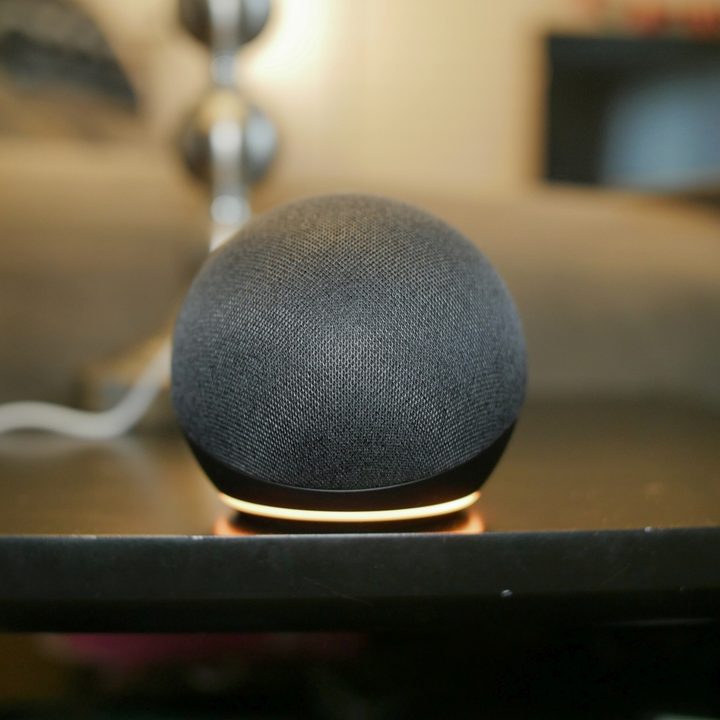
From one generation to the next, Amazon always introduces new and exciting abilities for its smart speakers. If you’re a puck-shaped devotee, the 3rd-gen Dot is the last of the Dots to feature this design — but don’t let that keep you at bay. In our humble opinion, the Buy at BrandsMart USA is the better of the two mini audio devices, even if it’s only slightly-edged ahead in a category or two.
What’s new with the Echo Dot 4th-gen?
Amazon’s rollout of Alexa Guard and Guard Plus was earlier this year, adding a web of security features to multiple generations of the Dot and other Echo products. These abilities include sound monitoring for things like broken glass, smoke detectors, and integration with security suites from the likes of Ring and ADT. While Alexa Guard (standard) is free, Alexa Guard Plus ($5/month) adds access to Amazon’s emergency hotline and plays noises like barking dogs to deter would-be intruders.
Additionally, the company rolled out Amazon Sidewalk a few months ago, adding community networking to the company’s list of laurels. The update hit pretty much every Echo product and utilizes Bluetooth Low Energy (BLE) frequencies to offer expanded and enhanced web performance for many of your web-connected devices.