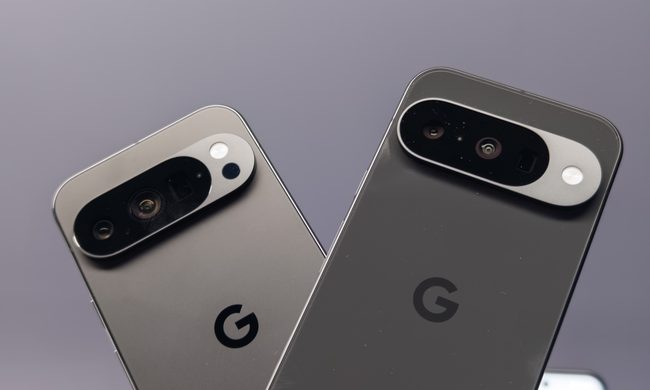
2020 saw Samsung bring three new high-powered smartphones into the world: the Samsung Galaxy S20, the Galaxy S20 Plus, and the Galaxy S20 Ultra. Each one is positively bursting with features and wrapped in a refined package, but what sets these phones apart? Join us as we dig into the spec sheets and explain precisely how the regular S20 differs from the S20 Plus to help you to decide which one is right for you.
Specs
| Galaxy S20 | Galaxy S20 Plus | |
| Size | 151.7 x 69.1 x 7.9mm (5.97 x 2.72 x 0.31 inches) | 161.9 x 73.7 x 7.8mm (6.37 x 2.9 x 0.3 inches) |
| Weight | 163 grams (5.74 ounces) | 186 grams (6.56 ounces) |
| Screen size | 6.2-inch Dynamic AMOLED | 6.7-inch Dynamic AMOLED |
| Screen resolution | 3200 x 1440 pixels (563 pixels-per-inch) | 3200 x 1440 pixels (525 ppi) |
| Operating system | Android 11 | Android 11 |
| Storage | 128GB | 128, 512GB |
| MicroSD card slot | Yes | Yes |
| Tap-to-pay services | Samsung Pay, Google Pay | Samsung Pay, Google Pay |
| Processor | Qualcomm Snapdragon 865 | Qualcomm Snapdragon 865 |
| RAM | 12GB | 12GB |
| Camera | 12-megapixel, 64MP telephoto, and 12MP ultrawide rear, 10MP front | 12-megapixel, 64MP telephoto, 12MP ultrawide, and ToF sensor rear, 10MP front |
| Video | 8K at 30 fps, 4K at 60 frames per second, 1080p at 240 fps, 720p at 960 fps | 8K at 30 fps, 4K at 60 fps, 1080p at 240 fps, 720p at 960 fps |
| Bluetooth version | 5.0 | 5.0 |
| Ports | USB-C | USB-C |
| Fingerprint sensor | Yes, in-display | Yes, in-display |
| Water resistance | IP68 | IP68 |
| Battery | 4,000mAh
Fast charging (25W) Qi wireless charging |
4,500mAh
Fast charging (25W) Qi wireless charging |
| App marketplace | Google Play Store | Google Play Store |
| Network support | All major carriers | All major carriers |
| Colors | Cosmic Gray, Cloud Blue, Cloud Pink | Cosmic Gray, Cloud Blue, Cosmic Black |
| Prices | $1,000 | $1,200 |
| Buy from | Samsung, AT&T | Samsung, AT&T |
| Review score | 3.5 stars out of 5 | 4 stars out of 5 |
Design, display, and durability

The Samsung Galaxy S20 is obviously smaller and lighter than the Galaxy S20 Plus, but otherwise, the two share the same design with a glass back and a rounded rectangular camera module at the top left. The screen size is probably the most notable difference between the two, with the S20 sporting a 6.2-inch display and the S20 Plus adding a half-inch on the diagonal. They have the same resolution of 3200 x 1440 pixels, which means that the S20 will be sharper, strictly speaking, but you may prefer the extra screen real estate offered by the S20 Plus. Both have a higher refresh rate than previous Samsung phones at 120Hz, which should make scrolling silky smooth and ensure gamers don’t have to contend with screen tearing or lag. They also both have a hole-punch front-facing camera at the top center of the screen. In terms of durability, these phones have an IP68 rating, like all of Samsung’s previous flagships, which means they can survive immersion in up to 1.5 meters of fresh water for up to 30 minutes without damage. This category is really down to the size you prefer, so we’re calling it a tie.
Winner: Tie
Performance, battery life, and charging
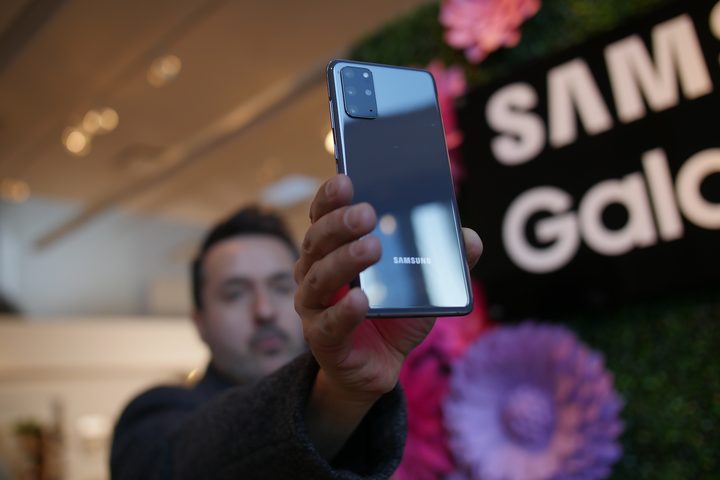
Both the S20 and S20 Plus will have a Qualcomm Snapdragon 865 processor paired with 12GB of RAM. They will pack the Samsung Exynos 990 chipset in some markets (outside the U.S.). That’s more than enough raw power to handle the latest games and apps. There’s 128GB of storage as standard and both phones have room for a MicroSD card, but only the S20 Plus is being offered in a 512GB version. The S20 Plus also has an extra 500mAh in the battery tank. Even with a bigger screen, our review found that its day-to-day longevity is impressive, and it will go for longer than the S20 before needing a recharge. There’s support for fast-wired charging for both phones with a 25W charger in the box and there’s fast wireless charging support, too. These phones can also wirelessly charge other devices in a pinch thanks to Samsung’s Wireless PowerShare feature. We’re giving the S20 Plus a narrow win here, given that its battery offers just a little more juice than its smaller sibling.
Winner: Samsung Galaxy S20 Plus
Cameras
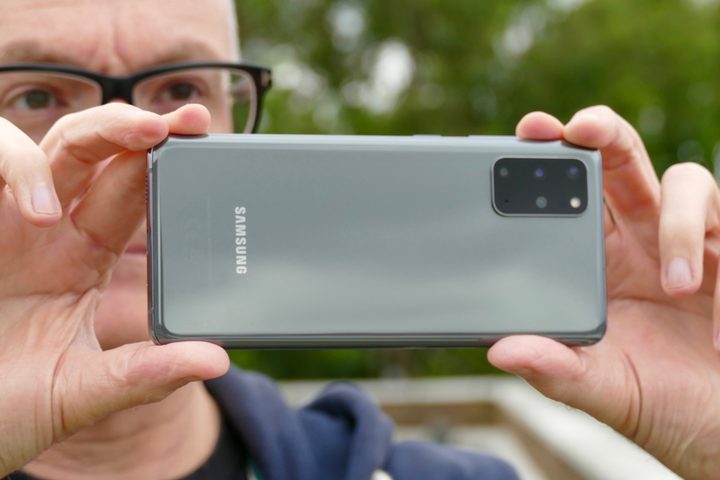
On paper, it looks as though the new Galaxy S20 and the S20 Plus will have very similar cameras. The headline appears to be the new 64-megapixel telephoto lens with an f/2.0 aperture, which joins a regular 12-megapixel lens with an f/1.8 aperture and an ultrawide 12-megapixel lens with an f/2.2 aperture. The telephoto lens enables a much more powerful zoom than previous Samsung phones had, offering up to 3x optical zoom and 30x digital zoom. Because the new lenses have larger sensors, they can capture more light for better photos in low light situations. These new cameras are capable of capturing 8K video. Both models also have the same 10-megapixel front-facing camera.
The one difference that jumps out is that only the S20 Plus has a time-of-flight sensor alongside the triple-lens main camera. In theory, this should help with depth sensing (and also have various augmented reality applications. However, we’ve found that it doesn’t really make a tangible difference to portrait photos, so we’re declaring a tie.
Winner: Tie
Software and updates

The S20 and S20 Plus both run Android 11 with Samsung’s new One UI 3.0 over the top, which brings an enhanced Single Take mode as well a handy Object Eraser tool (letting you get rid of unwanted items in photos). The updates for these phones will likely be on the same schedule so there is no separating them here.
Winner: Tie
Special features

We’ve already mentioned the size difference and the extra battery capacity of the S20 Plus, but there is one more thing that sets these phones apart. While both the S20 and S20 Plus are described as 5G phones, the S20 only has support for sub-6, whereas the S20 Plus supports both sub-6 and mmWave technologies. In simple terms, sub-6 refers to spectrum under 6GHz and offers greater range but lower speeds than higher frequency mmWave. Different carriers are employing different technologies to build out their 5G networks, so this could be an important difference. If 5G is something you’re thinking about, then check with your carrier about coverage and the technologies being deployed before you decide on the S20 or S20 Plus.
Winner: Samsung Galaxy S20 Plus
Price and availability
The Galaxy S20 started at $1,000 and the S20 Plus started at $1,200, although they’ve now sold out on Samsung’s official website. Fortunately, you’re likely to find them online for noticeably less than their official RRPs, so act now while stocks last.
Both phones are supported by all major carriers.
Overall winner: Samsung Galaxy S20 Plus
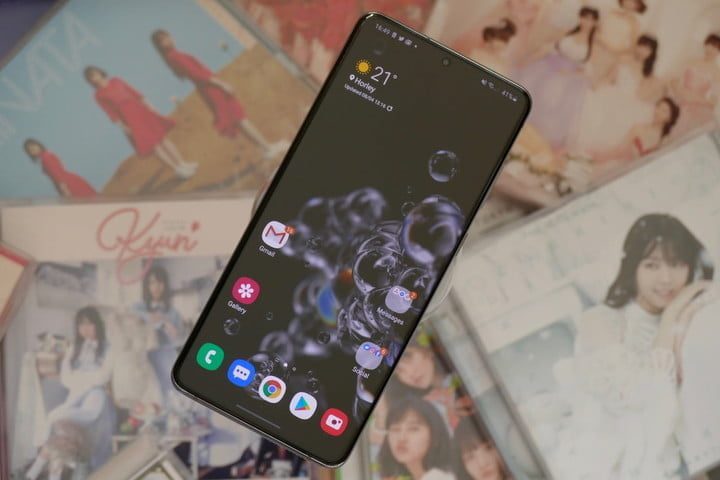
As the name implies, the Plus has just a little bit more to offer than the S20, but there really isn’t much to separate these two. The S20 Plus has the extra screen size, the bigger battery, that extra sensor in the camera, and support for mmWave, which will be enough to justify the extra $200 outlay for many. The experience is likely to be pretty similar whichever you choose, so unless one of these extras is essential for you, it’s probably better to pick the size that suits you best.