
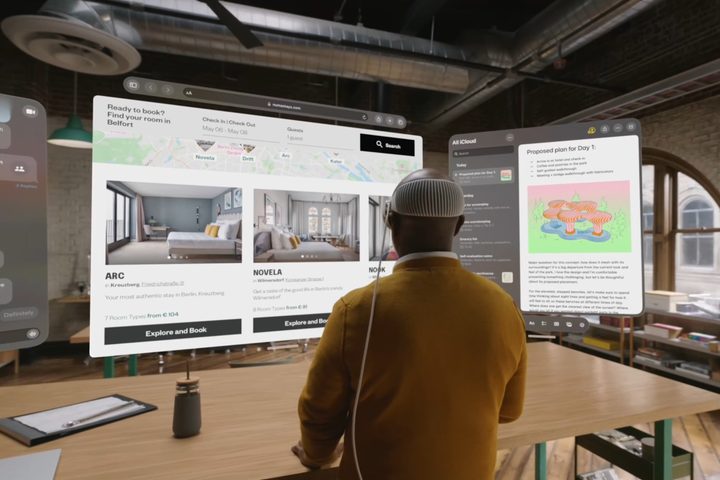
“One more thing” means you’re about to be treated to something groundbreaking — and that’s exactly what happened when Apple CEO Tim Cook uttered those fateful three words at the end of the recent Worldwide Developers Conference 2023 keynote. The Apple Vision Pro is not just another VR headset; no, it’s an incredible piece of technology that pushes the boundaries of what we can expect from both virtual reality and augmented reality. The display tech, sensor quality, and polish are like nothing we’ve ever seen before in a headset — and they signal a big jump forward in VR and AR tech.
The only quibble is the price: $3,500. That’s a whole lot of cash, and due to that, I’m not confident the Vision Pro will appear in every other house in the next few years.
But it doesn’t matter. The Vision Pro doesn’t need to be a massive success as it’s already changed the face of VR and AR tech simply by existing. Once again, Apple has delivered an iPhone moment that’s going to change the face of technology. Only, this time, it’s done so for the VR and AR market.
I’m not sold on the Vision Pro
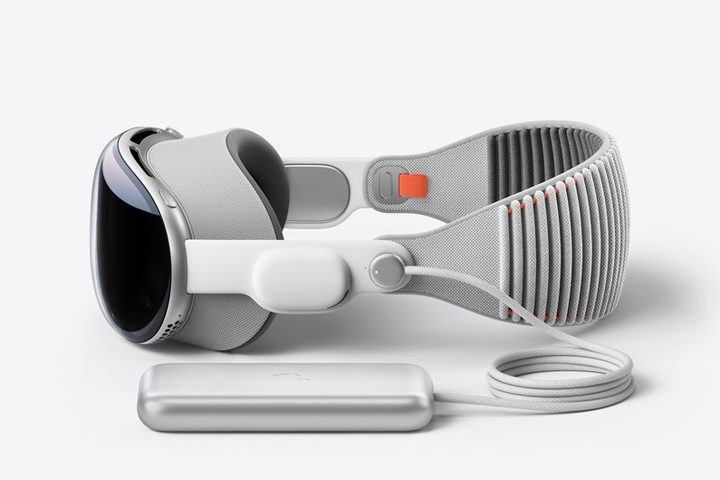
I truly can’t understate this: I’m really, really not confident the Vision Pro is going to be a hit. Apple’s presentation spent a long time trying to persuade us to wear the Vision Pro all the time, and, well, that seems like a terrible idea. I’ve spent quite a lot of time in my own Meta Quest 2, and while Apple’s headset is noticeably smaller and lighter than mine, I still don’t think many people are going to want to spend a lot of time with a screen strapped to their head.
The weight is a problem, but there are many other factors that also limit the amount of time you want to spend in any VR headset. If the fit isn’t perfect, then the frame can press into your head uncomfortably. The positioning needs to be exactly right, or it’ll blur. Oh, and if your nose isn’t the right size and shape to accommodate that position, well, enjoy the pain that causes. Heck, it’s also hot in those things, and that by itself puts a major limit on the amount of time you’ll want to spend wearing it.
But even if Apple has cracked the comfort element, the Vision Pro is constrained by other means. The tethered battery only lasts for two hours, which means anyone wearing their headsets throughout their daily life will have to dash to a charger every couple of hours.

But ultimately, the Vision Pro is held back because, er, who is it actually for? Granted, everyone is going to want one. But why are you going to need one? VR headsets have traditionally been the domain of gamers, so will it be great for them? Well, not really. You’ll be able to play over 100 Apple Arcade games at launch, but I can play over 100 Apple Arcade games on my iPhone 8 right now without it being strapped to my face.
What about productivity hounds who dream of a massive Minority Report-style setup of floating screens? That is pretty cool, but you’re going to look like an utter lunatic in any office environment. I can see it in a working-from-home situation, but you’re going to need a lot of empty space to pull it off properly. Plus, you can bet Apple’s control system isn’t anywhere near as foolproof as it’s claiming, meaning you’ll need a mouse and keyboard to really make headway — and at that point, what’s the point of having the headset on at all?
Well, what about film buffs and TV show bingers? This is the Vision Pro’s strongest element, as it boasts the ability to watch movies on a 100-foot screen and will have Disney+ support from day one. It has spatial audio, and the stunning 4K displays are tailor-made to deliver incredible audio-visual experiences. It’s actually quite a tempting prospect, and I can see myself watching a movie on the Vision Pro.

There’s only one issue with that last statement: “myself.” Doing anything on the Vision Pro is a solitary experience, and that goes for watching movies and TV shows. If you like to watch anything with friends or family, you won’t be doing it on the Vision Pro. That is, unless every one of your friends and family has a Vision Pro, at which point you can use SharePlay to watch a movie at the same time.
All of these problems are exacerbated by — you guessed it — the price. You may be fine with watching movies alone, but do you want to spend $3,500 to do it? Apple Arcade games are pretty great, but is it worth paying three times more than an iPhone 14 Pro to play them on a virtual screen? Is it worth 35 Benjamins to play Minority Report at work? My answer is “no”, and I’m willing to bet lots of other people feel the same way as me.
But curiously, all of this doesn’t actually matter. Because the Vision Pro doesn’t need to be successful to make an impact — it already has.
The Vision Pro is already making waves

The fact that Apple Vision Pro exists is enough to change the game dramatically.
I cannot understate the impact of Apple’s name alone. Whenever Apple launches a new feature, it’s a running joke that Android or Windows did it first. And that’s because, more often than not, it’s true. But the point is, for many people outside of tech-obsessed circles, this might be the first time they’ve heard of that particular feature. In this case, while most people will have heard of virtual reality, they probably saw it as little more than an oddity; a heavy headset that turns up at family events and scares grandma. Apple’s tech isn’t like that; the Vision Pro is about watching movies, working, and being productive. In other words, it’s for the “normies.”
Before long, everyone will know what a Vision Pro is. While not everyone will buy one, they’ll know it exists, and that’s more than enough for it to have a significant knock-on effect for the rest of the VR market. Now that Apple has entered the space, there’s an incentive for developers to start creating VR apps and experiences for the Vision Pro. Expect a lot of those apps to make the jump to other VR headsets, adding more and more utility to the Meta Quest and other standalone headsets.
Even the Vision Pro’s sky-high price is a boon because it lifts the price ceiling for other headsets. Premium headsets from other brands already exist, but frankly, everything looks cheap when compared to the Vision Pro, so why not take the chance to explore the space for high-end headsets? Plus, a number of people will be newly interested in VR due to the Vision Pro’s announcement, but won’t want to pay Apple’s high price tag. Some of those people may buy a different VR headset instead — which they may not have done if Apple hadn’t just created an all-singing, all-dancing announcement for the Vision Pro.
A true iPhone moment for VR and AR
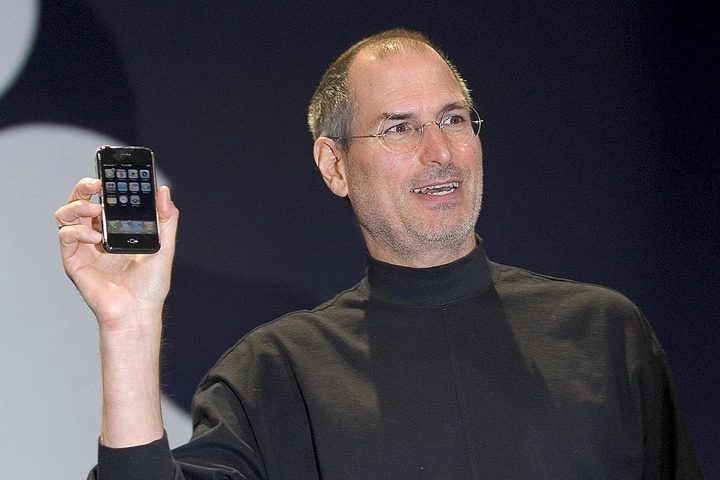
As ever, Apple making its play has changed the game. Remember when it axed the headphone jack? It seemed like insanity then, but now, my Android phone doesn’t have a headphone jack, and I’m willing to bet yours doesn’t either. The Vision Pro has the potential to be another iPhone moment for Apple, and just as the release of the original iPhone put smartphones on the map and set the course for the future of smart devices, the Vision Pro could do the same for virtual reality and augmented reality.
Sure, I and many others have problems with the Vision Pro, but remember that when the iPhone was first announced, it had more than its fair share of naysayers. Microsoft CEO Steve Ballmer famously thought it wouldn’t get any market share and pointed out the lack of keyboard for business users and — crucially — the high price. Well, that high-priced and apparently niche product changed the world in ways many people didn’t see coming. Now, with the Vision Pro, Apple has the chance to do so again.


