  1. Home
  2. Phones
  3. News

Google finally explains why Android AICore keeps eating your storage — and it actually makes a lot of sense

Add as a preferred source on Google
Electronics, Mobile Phone, Phone
Shikhar Mehrotra / Digital Trends

If you’ve ever glanced at your Android phone’s storage breakdown and done a double-take at how much space AICore is consuming, you’re not alone. It’s one of those things that’s easy to notice and hard to explain, and for a while, Google wasn’t offering much clarity on it. That’s changed now, and the explanation turns out to be more sensible than the mystery surrounding it suggested.

AICore is the on-device AI backbone that powers a growing list of features on Android 14 and above — smart replies in WhatsApp, scam detection in messages, real-time transcription, grammar correction, audio summarization, and more. It runs Gemini Nano locally on supported hardware, which means your data stays on your device, the features work without an internet connection, and there’s no latency from bouncing a request off a remote server. The trade-off, as anyone who’s installed a multi-gigabyte model knows, is storage.

The storage spike has a simple explanation

Google has now published a support article addressing the one thing that confused people most: why AICore’s storage footprint sometimes balloons unexpectedly. The answer is that when a new version of Gemini Nano becomes available, AICore holds both the old and the new versions simultaneously for up to 3 days before clearing the original version.

It’s a precautionary measure. If the new model version encounters problems after installation, your phone can instantly revert to the previous version rather than re-download gigabytes of model data from scratch. It’s the kind of sensible engineering decision that’s obvious in hindsight, but Google probably should have communicated it sooner, given how much confusion it’s caused.

On-Device AI is worth the storage cost — but Google needs to be upfront

The broader case for on-device AI is genuinely compelling. Sensitive data never leaving your device is a meaningful privacy win in an era when everything seems to be vacuumed into the cloud somewhere. Features that work in airplane mode are more useful than they sound when you’re somewhere with patchy connectivity. And local processing simply feels snappier than waiting on a server response.

Recommended Videos

But the goodwill only stretches so far when users are left staring at an unexplained storage spike with no context. Documenting it now is the right call — it just shouldn’t have taken this long to get there.

Shimul Sood
Shimul is a contributor at Digital Trends, with over five years of experience in the tech space.
I’m rocking an old Pixel 8a in 2026, and my latest vacation is thankful for it
A week in Camiguin turned Google’s cheap phone into my navigator, camera, music player, payment tool, and one less thing to worry about.
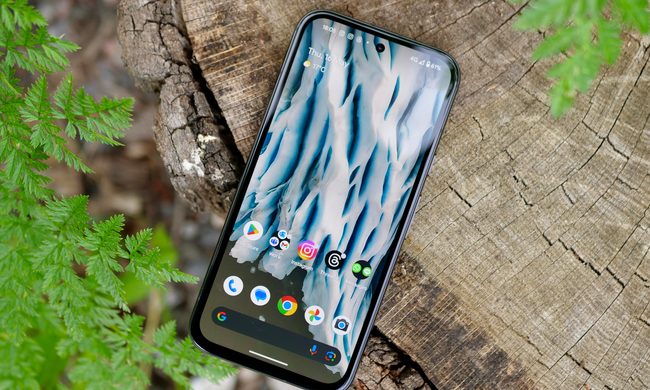
The Google Pixel 8a's screen.

I didn’t bring the Pixel 8a to Camiguin to prove a point. I brought it because it’s still my phone, two years after I bought it as a stopgap when my OnePlus 7 Pro died. That’s annoying, because I wasn’t supposed to like this thing for this long.

A week on the island gave it chances to fail. I used it for directions, island-hopping photos, Bluetooth music, online payments, and the usual checks when nobody remembers where the booking screenshot went.

Read more
You can now check a product’s price history spanning a whole year on Amazon
The 365-day window rolling out across the US, UK, and India gives every purchase decision a full year of context, not just the last 90 days.
Amazon one-year pricing history feature.

Amazon’s AI shopping assistant Rufus can now show you a full 365 days of price history for a product. In other words, you now have access to a full year’s worth of pricing data, including when the product was available for a higher or lower price, and when the last price change took place, before buying anything. 

Previously, the maximum available price history was 90 days, enough to catch up on a recent sale, but not enough to know whether a limited-time offer is actually the best price a product has been available in the last year. 

Read more
Just like the MacBook Neo, Apple might serve another pricing slam with the iPhone 18 Pro
Aggressive doesn’t necessarily mean expensive.
Apple iPhone 18 Pro Colours

Apple’s pricing strategy might be about to get… interesting again. Because after surprising everyone with the aggressively priced MacBook Neo, the company could be gearing up to pull a similar move with its next flagship iPhone. And this time, it’s the Pro models in focus.

Apple reportedly going aggressive with iPhone 18 Pro pricing?

Read more