
They may have been released last year, but Google’s latest phones are still the best the company has produced yet: relatively fast and affordable, with plenty of power, slick software, and awesome cameras. But which one should you go for? Is the regular Pixel 4 the best option or should you go large with the Pixel 4 XL. We’re here to help with a detailed breakdown of the differences between these two phones, so read on to find out exactly how the Pixel 4 and Pixel 4 XL measure up.
Specs
| Google Pixel 4 | Google Pixel 4 XL | |
| Size | 147.1 × 68.8 × 8.2 mm (5.7 × 2.7 × 0.3 inches) | 160.4 × 75.1 × 8.2 mm (6.3 × 2.9 × 0.3 inches) |
| Weight | 162 grams (5.71 oz) | 193 grams (6.8 ounces) |
| Screen size | 5.7-inch AMOLED | 6.3-inch AMOLED |
| Screen resolution | 2,280 × 1,080 pixels (444 pixels per inch) | 3,040 × 1,440 pixels (537 pixels per inch) |
| Operating system | Android 10 | Android 10 |
| Storage space | 64GB, 128GB | 64GB, 128GB |
| MicroSD card slot | No | No |
| Tap-to-pay services | Google Pay | Google Pay |
| Processor | Qualcomm Snapdragon 855 | Qualcomm Snapdragon 855 |
| RAM | 6GB | 6GB |
| Camera | Dual 12-megapixel and 16-megapixel telephoto rear, 8MP front | Dual 12-megapixel and 16-megapixel telephoto rear, 8MP front |
| Video | 4K at 30 frames per second, 1080p at 120 fps, 720p at 240 fps | 4K at 30 frames per second, 1080p at 120 fps, 720p at 240 fps |
| Bluetooth version | Bluetooth 5.0 | Bluetooth 5.0 |
| Ports | USB-C | USB-C |
| Fingerprint sensor | No | No |
| Water resistance | IP68 | IP68 |
| Battery | 2,800mAh
Fast Charging (18W) Qi wireless charging |
3,700mAh
Fast charging (18W) Qi wireless charging |
| App marketplace | Google Play Store | Google Play Store |
| Network support | AT&T, T-Mobile, Sprint, Verizon | AT&T, T-Mobile, Sprint, Verizon |
| Colors | Just Black, Clearly White, Oh So Orange | Just Black, Clearly White, Oh So Orange |
| Price | $499 | $599 |
| Buy from | ||
| Review score | 4 out of 5 stars | 4 out of 5 stars |
Performance, battery life, and charging
The Google Pixel 4 and the Pixel 4 XL both have a Qualcomm Snapdragon 855 processor with 6GB of RAM. That gives them plenty of processing power to run the latest Android games and apps, and makes for seamless and swift multitasking.
Since the Pixel 4 XL has a bigger screen to power you’d expect it to boast a bigger battery and it certainly does. The Pixel 4 makes do with a paltry 2,800mAh capacity, less than last year’s Pixel 3, while the Pixel 4 XL has a 3,700mAh capacity. Even taking the screen sizes into account, the Pixel 4 XL has a bit more stamina than its smaller sibling. Both support fast wired charging via the USB-C ports and Qi wireless charging.
Winner: Google Pixel 4 XL
Design and durability
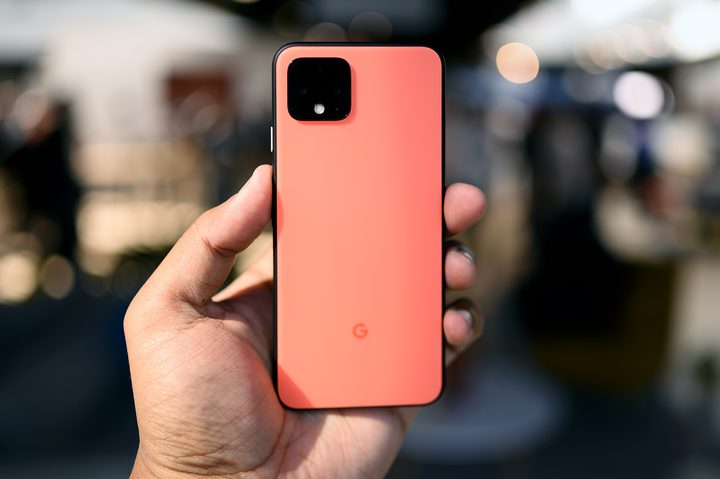
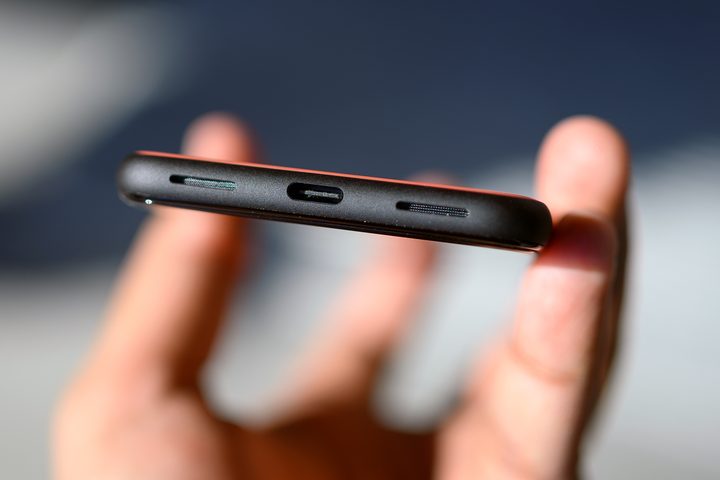
Google has tweaked its design for the Pixel 4 and Pixel 4 XL, but they look virtually identical apart from the fact that they’re different sizes. On the front, there’s a sizeable bezel at the top of the screen, but thankfully no notch. The bezel below the screen has been shaved down compared to the Pixel 3 and 3 XL. You’ll still find the power button and volume controls on the right edge and a USB-C port on the bottom. The glass back is now a single color, though the rounded frame is a slightly different tone to provide contrast. The camera module is a rounded square at the top left, which sticks out just a little. There’s no fingerprint sensor as the new Pixels support face unlock. They come in white, black, or a new orange color.
As glass phones with scuffable metal frames, the Pixel 4 and 4 XL are both begging for a protective case. They are IP68 rated, though, which means rain, spills, and even accidental submersion will not cause any lasting damage.
Winner: Tie
Display
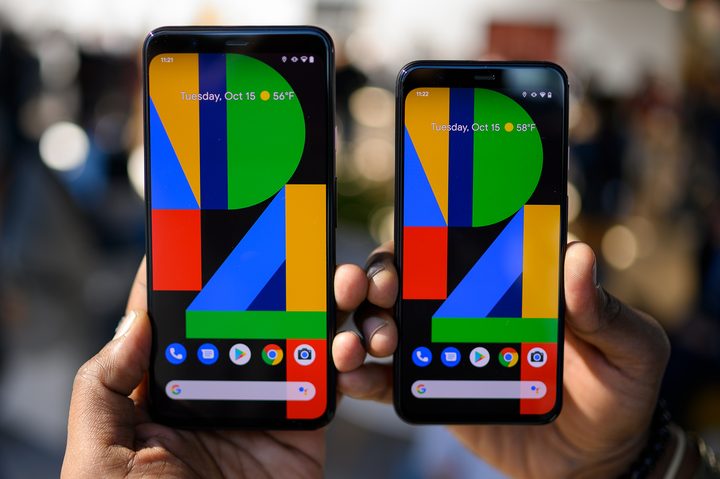
The Pixel 4 screen is 5.7 inches, compared to 6.3 inches in the Pixel 4 XL. Both have a higher than usual refresh rate of 90Hz which makes everything look that little bit smoother. They’re also both OLED screens offering great contrast and good legibility in most conditions. But the other advantage that the 4 XL has is a higher resolution, which translates to 537 pixels per inch, compared to 444 pixels per inch for the Pixel 4.
Winner: Google Pixel 4 XL
Camera
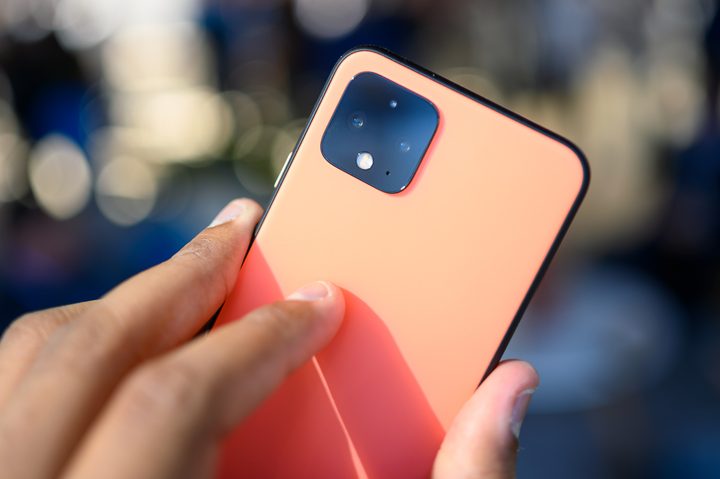
Perhaps the biggest upgrade for the Pixel 4 range is the move to a dual-lens setup. The Pixel 4 and Pixel 4 XL combine a 12-megapixel, 28mm wide-angle lens with a 16-megapixel, 14mm telephoto lens in the main camera. There’s a single-lens, 8-megapixel wide-angle lens on the front. The new telephoto lens enables you to zoom in on subjects with far more clarity than before. It offers 2x optical zoom, but using a hybrid approach combined with Super Res Zoom on the software side it can go further.
Google is also offering Live HDR+, so what you see on screen is an accurate representation of the final image. There are also new Dual Exposure controls, so you can manipulate brightness and shadows with different sliders, White Balancing for truer colors, and a dedicated Astrophotography mode for shooting the stars. You’ll also find improvements to existing modes in the Pixel 3 camera, such as Night Sight and Portrait Mode.
The Pixel 4 and 4 XL have exactly the same camera setup front and back, so there’s no separating them here.
Winner: Tie
Software and updates
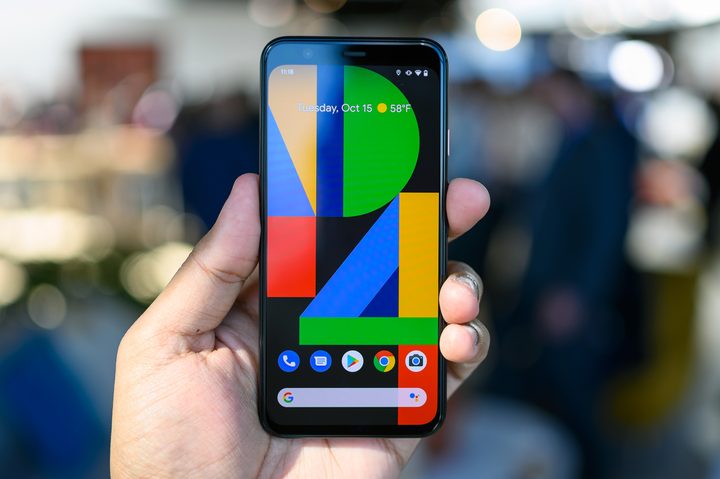
You’ll find Android 10 with a Google touch running on the Pixel 4 and 4 XL and it’s the slickest, most elegant version of Android around. It’s easy to use, packed with useful features, and it feels refined.
Naturally, both these phones will get updates and new software features from Google quickly, before other Android phones. If you’re the sort that installs beta software, that means the latest developer build of Android — right now that’s the first beta of Android 11. No, it won’t have a fun name like Jellybean or Gingerbread, but it will bring new features. We’ll learn more at Google I/O shortly; for now, you’re fine with the existing OS.
Nevertheless, Google continues to update these phones. In a December 2019 “Pixel feature drop,” Google improved some of the Pixel 4 and Pixel 4 XL’s best features, including the A.I.-powered Call Screen, background blur in photos, and Duo video calling. It’s nice to see these features continue to improve. They’re also guaranteed to get swift and regular security patches.
Winner: Tie
Special features
Both the Pixel 4 and the 4 XL come already loaded with several new features that’ll leave you feeling excited. Some of them include things like audio assistance—users can turn the volume down on their device by using a specific hand gesture. A person could also stop an alarm or even answer a call through the Motion Sense feature. This technology allows users to open their smart device without punching in a passcode or waiting for the phone to read their fingerprint. Instead, the device employs facial recognition software to recognize a user and unlock for them. The newest update for Google Assistant comes with some new features; The virtual assistant can now react to several commands in a row, without users having to say “Hey, Google” for every single command. The phone also utilizes tech called “Active Edge,” which allows users to squeeze both sides of the Pixel to talk to Google Assistant.
Winner: Tie
Price and availability
When the phone launched, the Pixel 4 reached about $799, while the 4 XL was about $899. After releasing several discounts and deals, Google dropped the price for both devices; the Pixel 4 has a price tag of $499 and the 4 XL costs $599. That said, in the smartphone industry, this price drop is actually a relatively small amount. You’ll save $100, but that’s pretty much it. Both phones are available from Google or any other popular provider.
Overall winner: Google Pixel 4 XL
Side-by-side, the Pixel 4 and the 4 XL function very similarly. They have a superior processing power, exciting features, and comparable software. The biggest differences you’ll notice are the 4 XL’s larger screen and extended battery life. For that reason, we chose the Pixel 4 XL as our winner, although the Pixel 4 is still an excellent phone and a fantastic choice for anyone who likes a smaller phone or wants to save an extra $100.


