  1. Home
  2. Phones
  3. Mobile
  4. News

Digital Trends may earn a commission when you buy through links on our site. Why trust us?

Google’s newest app makes it easier to switch to Android

Add as a preferred source on Google

After a soft launch last week, Google today confirmed it was making its “Switch to Android” app available to users on the App store. Much like Apple’s equivalent Move to iOS app for Android users, the app tries to speed up the process of moving to Google’s ecosystem, albeit, with a few snags.

You can find the app available at the App Store, with Google saying to TechCrunch that it’ll become available worldwide over the next few days.

There are limitations that make it easier to switch to iOS than Android, and those are set to be lifted in the coming weeks. You can’t transfer all your apps wholesale from the iPhone by this method — you’ll need to go to the Play Store and select them one by one.

Recommended Videos

This isn’t the only way to transfer from iPhone to Android. If you own a Pixel 6 or S22 and an iPhone with a USB C to lightning cable, you can do everything the Switch to Android app offers and more.

“With the recent Android 12 release, we added the ability to transfer all your essentials by connecting your iPhone with your new Android phone using a cable. With your permission, Android automatically matches and installs the same apps from Google Play, and lets you easily bring your SMS and iMessage history with you, along with photos, videos, contacts, calendars, and more,” Google shared in October 2021.

To be very clear, if you’re buying a Google Pixel or another phone with Android 12 on board, you’d be better served holding on to your iPhone and then using the cable method described above rather than the Switch to Android app.

At the same time, while the company’s objectively superior method is available, the Android 12 limitation paired with the need for a Lightning cable means that the Switch to Android app could become a better option over the coming months as Google improves it.

Michael Allison
Former Mobile News Writer
A UK-based tech journalist for Digital Trends, helping keep track and make sense of the fast-paced world of tech with a…
I’ve used Apple gear for years, and right now is the best time to buy from the used shelf
With iPhone prices about to climb, buying from the used market makes more sense now than ever.
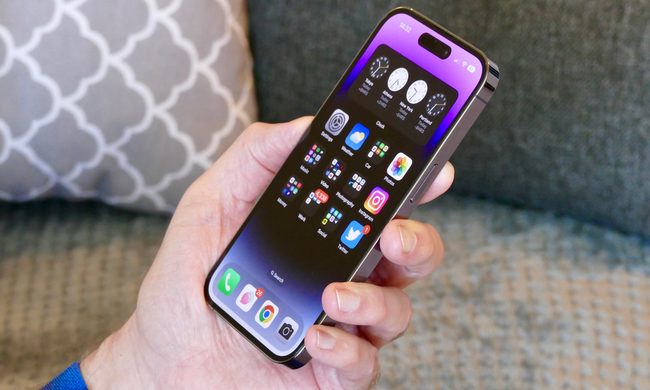
The iPhone 14 Pro held in a mans hand showing the screen.

Apple is preparing to raise iPhone prices in the coming months. CEO Tim Cook told The Wall Street Journal this week that climbing memory costs, driven by AI's demand for the same chips, have made the move necessary. For years, Apple managed to keep sticker prices steady, likely by absorbing some of the rising component costs on its own, but that cushion now appears to be gone. Having bought and used Apple products for years myself, I think this is the right moment to stop holding out for the newest release and start browsing the used shelf instead.

The savings add up fast

Read more
Apple has a stacked product lineup slated for later this year
Electronics, Phone, Mobile Phone

Apple has spent much of the past year playing catch-up in the AI conversation, but if a new report is accurate, the company is preparing to remind everyone that it still knows how to ship hardware. According to Bloomberg’s Mark Gurman, Apple has an unusually ambitious product roadmap stretching across late 2026 and 2027. While annual iPhone refreshes are nothing new, the list of devices in development reads like a company trying to reinvent multiple product categories at once. And honestly? It’s about time.

For years, Apple’s launches have largely followed a predictable formula: faster chips, slightly better cameras, and incremental refinements to products that already dominate their respective categories. That’s not necessarily a criticism — those products continue to sell incredibly well — but it hasn’t exactly been an exciting era for people hoping to see Apple take bigger swings.

Read more
iOS 27’s Liquid Glass slider looks simple, but it’s more useful than I expected
Text, Document, Business Card

Let's be honest: few iOS design changes have sparked as much debate as Liquid Glass. When Apple first introduced it with iOS 26, the internet immediately split into two camps. Some people loved the fresh, translucent look, while others couldn't stand it and felt it made parts of the interface harder to read. I happened to be firmly in the first camp. At the time, I was using an iPhone 14 Pro Max, and installing the update was one of the first things I did. I loved how the new design made iOS feel more modern and dynamic. The transparency effects gave the interface a sense of depth, making the entire experience feel fresh again.

That said, it's easy to understand why not everyone felt the same way. After months of feedback, screenshots, hot takes, and endless debates online, Apple eventually responded by giving users more control. Instead of forcing everyone into the same look, it introduced options that let people choose between a clearer glass effect and a more tinted appearance. With iOS 27, Apple is putting the Liquid Glass debate completely in your hands. A new slider lets you customize the effect exactly the way you want it, whether you prefer a crystal-clear look or something easier on the eyes. Here's what it does and how to make the most of it on your iPhone.

Read more