Imagine an artificially-intelligent smartphone so clever that when we point the camera at a beautiful scene, it will guide us to the best spot to snap a picture, ensuring the lighting, composition, and colors are all perfect. It’s a feature that in theory is not too far away.
You’ll take an amazing picture, but it will likely be exactly the same as photos taken by every other person who stood there and asked their phone to do the same thing. The AI effectively turned us into automatons, sharing beautiful-but-identical cookie-cutter photos. Terrifying, right? Everybody panic! AI is a threat to our creativity and freedom of thought.
Don’t worry, this nightmare scenario is nonsense, and a great example of how artificial intelligence and its benefits are still misunderstood. At a recent event in London, Huawei gathered together experts on AI and human behavior to put our minds at rest about how the technology will help free us from mundane decisions, and actually encourage creativity further.
35,000 decisions a day
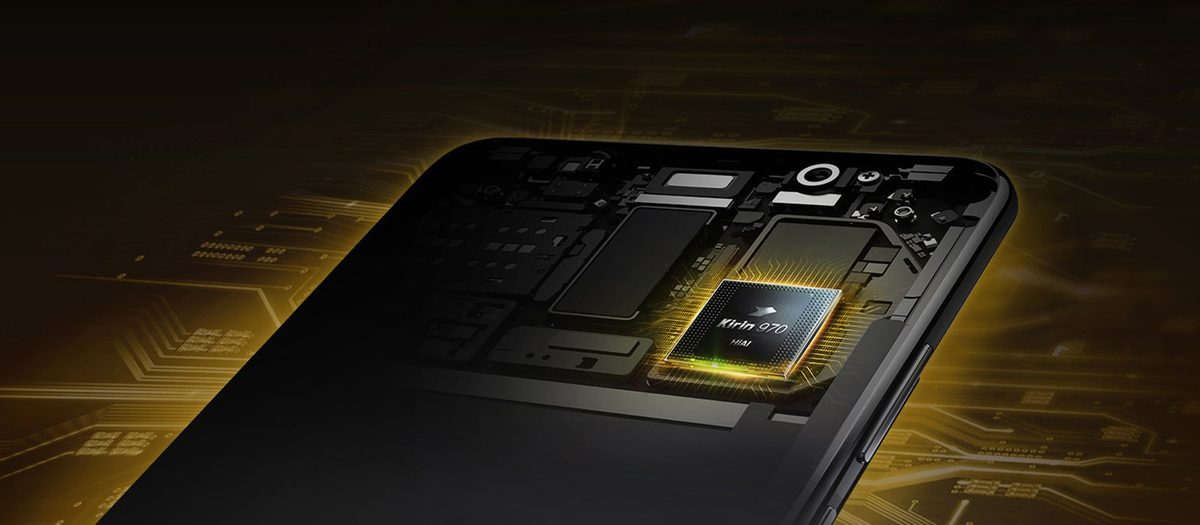
Huawei has a vested interest in making us understand the benefits of AI. Apart from what’s coming in the near future, AI is already a major part of the Huawei Mate 10 Pro smartphone, including the camera. Inside, the Neural Processing Unit (NPU) recognizes the environment — a sunny day, for example — and adjusts the camera’s settings accordingly. AI potentially guiding us to take the most aesthetically-pleasing photo would be an extension of this. Rather than halt our creativity, Huawei said it’s at this time our own creative ability would come into play, giving the resulting picture our own personal spin.
This is based on how AI will free our minds from mundane decisions, or from decisions we’re not equipped to make, and open us up to concentrate on what’s important to us at that time. Except, how many decisions do we make each day that AI could possibly help out with? Some guess a number in the hundreds, or perhaps the low thousands. Research from Huawei puts it at an astonishing 35,000 a day.
How many decisions do we make each day, that AI could help out with?
Most of these are unconscious decisions. We’re actually only aware of around one percent of them, and it’s the dull unconscious ones that AI can help out with. Huawei’s Global Brand Management Director David-Dohyung Kim gave Digital Trends an example.
“We make most of those unconscious decisions automatically,” Kim said. “Think of it like this: When you cross the road, you look to the right. We don’t think, we just do it. This is great at home, but potentially very dangerous if you’re visiting somewhere that drives on the opposite side of the road. That’s where artificial intelligence comes in. AI thinks, when our minds are being lazy.”
Unlock potential
By using its sensors and data, Kim explained, the NPU can make the jump from collecting and analyzing data, to eventually intelligently using that data to help us make decisions.
“AI needs to make our lives easier,” Huawei’s Chief Marketing Officer, Andrew Garrihy, added. “We can forget things, because AI will remember for us, and then go on to make an even better decision when it does. It could unlock human potential.”
Behavioral science professor Paul Dolan gave some insight into how AI will complement our brains, and help us achieve that potential.
“The best way to make a decision is to do something else,” he said. “Your unconscious mind works in the background, and comes up with a solution. That’s what AI will do. AI is a copilot, it can make us aware of the decisions we’re making, and learn to make them better. Brains want to make life easy, and taking a break lets it wander.”
He provided a sports analogy to help understand further.
“We don’t think about many actions, in the same way a golfer doesn’t want to think about the unconscious part of hitting a golf ball,” he said. “When they do, that’s when it goes wrong.”
Implemented correctly, AI will take the pressure off the mind and a portion of its 35,000 daily decisions, so you’re hitting that golf ball more consistently, more often.
The concept of AI unlocking potential is a popular outlook, and it’s shared by many other major companies contemplating artificial intelligence, including Accenture, IBM, and UBS. But surely to unlock any potential, it means handing over a degree of control to an AI system, and isn’t that worrying?
Ask questions
Garrihy said AI “should be liberating, not frightening. Anything that frees us up to enjoy life more should be enticing.”
But AI’s capabilities will come from giving the technology control — the negative sides are associated with horror scenarios from movies like “The Terminator,” and people are concerned. Tabitha Goldstaub, founder of AI market intelligence company CognitionX, has a clear idea of what needs to be done to keep AI in check.
“[AI] should be liberating, not frightening.”
“We need to ask questions,” Goldstaub said. “We should ask why it does things. That way, we hold companies and the AI accountable. We need the benefits it provides to be clearer, because AI needs to be trusted.”
She also warned against being scared of the technology. “We need to avoid the horrors of the [genetically-modified] crops, where the public becomes too fearful of technology, and innovation slows down.”
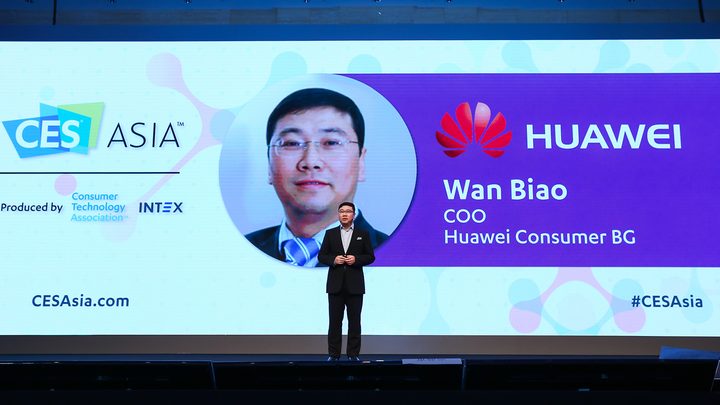
Huawei believes AI will become mainstream, in terms of mass awareness, during 2018. It has been driving discussion about using AI for some time. We recently talked to Huawei’s COO Wan Biao, who discussed what he called the “Know Me” stage of mobile artificial intelligence, where devices proactively understand our requirements. This is very much a stage in the process Huawei envisages here, where AI makes decisions simpler and easier.
At the moment, Huawei’s NPU, crucial for fast mobile AI functionality, is only found inside the Mate 10 Pro, an expensive flagship smartphone. For AI to work in the way Huawei plans, it needs to be in more devices. Garrihy said to “watch this space for more NPU devices, as the tech gets cheaper.” Huawei sub-brand Honor is also working towards the same goal, and has already announced the Honor View 10, a Kirin 970 and NPU-equipped phone available for a lower price.
Artificial intelligence that works with us and helps us make better unconscious decisions frees us up to do more of what we like. That’s exciting, and it’s a real-world benefit we can all appreciate. It’s much nicer than thinking AI is only interested in turning us into automatons or blowing up the planet.