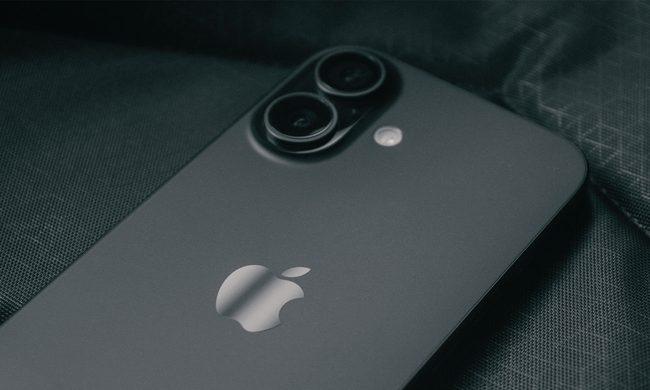
When’s the last time you used a phone or gadget that you just couldn’t put down? For me, it was the Galaxy Z Fold 7 a few months ago, with Samsung’s ultra-thin folding phone proving that the best folding phones can be as thin as regular phones when folded.
Before the Galaxy Z Fold 7, Samsung tested the form factor with the non-folding Galaxy S25 Edge. Measuring just 5.8 mm thick, it demonstrates that a strong flagship experience can be achieved in an ultra-thin body, provided you’re willing to accept certain compromises.
A few weeks ago, Tecno introduced the Tecno Spark Slim, which is slightly thicker at 5.9 mm but proves that an ultra-thin body can accommodate a battery larger than 5,000 mAh. Just days later, Apple went the opposite way with the ultra-thin iPhone Air.
The thinnest phone requires more compromises than its rivals, but gives you something unprecedented in return. Our longer-term iPhone Air review is nearing completion, but as I’ve been reviewing Apple’s new thin phone, there are the three key things that I’ve discovered.
The iPhone Air packs the wow factor

I’ve shown the iPhone Air to many people over the past week. If it’s not Apple’s ultra-thin phone, I’m often using the Cosmic Orange iPhone 17 Pro or the excellent iPhone 17, which proves that you don’t need an uber-expensive flagship phone: an $800 phone is more than good enough.
Inevitably, someone asks me if that’s the new iPhone, and while most people have an opinion on it based on what they’ve read, seen, or heard, these often change once you hold it in your hand. The curved edges, camera plateau design — first made popular on the best Google phones — striking slim profile make this a phone that stands out.
Although other iPhones have ushered in striking changes in terms of size or style — such as the current all-screen design that debuted with the iPhone X or the previous iconic design complete with a home button that started with the iPhone 4 — the iPhone Air is the first to offer a true next-generation in-hand feel. This is what thin looks like in the Apple world, and it has me excited for next year’s ultra-thin iPhone Fold.
The battery life is average at best, but better than I expected

The large display, Center Stage selfie camera, and A19 Pro chipset all offer a flagship or flagship-like experience, and the selfie camera is the best on any smartphone. Yet, the laws of physics inevitably meant that Apple would face limitations in certain areas of the iPhone Air hardware, and a key one is the battery.
At 3,149 mAh, the battery on the iPhone Air is considerably smaller than the rest of the iPhone 17 lineup, including the iPhone 17 Pro Max, which has a 5,000 mAh battery for the first time on an iPhone. During the Apple Event three weeks ago, the company reported strong video playback battery life expectations, but with one caveat: it had the MagSafe Air battery pack attached.

My battery pack has only just arrived — and is one of the reasons behind the del/ayed review — but without it, the iPhone Air battery has been average at best. However, it’s also been better than I expected.
The smaller capacity battery was bound to struggle, but Apple deserves considerable credit for its battery life optimizations here. During a recent short-haul travel day, it lasted 15 hours on a single charge with 4.5 hours of screen time. This involved capturing photos — especially using the selfie camera — which is particularly taxing on battery life.
If you’re by a charger, carry a power bank, or buy Apple’s official battery pack, you’ll probably be ok unless you’re a super-heavy user. The battery pack features a 3,000 mAh battery — 95% of the original capacity of the iPhone Air — that is rated to extend battery life by up to 60%.
I don’t miss the missing camera lenses as much as I expected

Alongside the battery life, another area that features considerable limitations is the cameras, or lack thereof. The iPhone Air features a single 48MP camera that can capture good photos at 1x or 2x, but little beyond that. If you use the ultrawide or telephoto lens regularly on your current phone, you’ll be disappointed with the iPhone Air.
Yet, it’s also surprising how little I’ve missed those two cameras. Yes, there have been notable occasions when I wanted to use the ultrawide, or zoom to 4x and beyond, but for the most part, you can easily adapt your workflow. The square selfie camera is also fantastic, further enhancing the iPhone Air experience, albeit it is also available on the rest of this year’s lineup.
Overall, Apple clearly had to make some careful choices with the design and features of the iPhone Air. Having spent a week with it, the iPhone Air proves that you can have both form and function in an ultra-thin body. It’s not perfect, and it’s an exercise in compromise, but regardless, the iPhone Air offers an unparalleled in-hand experience. It’s rightly one of the best phones you can buy, just for its design.