
Last year, Microsoft introduced us to a new category of … something … called the Surface Duo. Microsoft tried really hard to convince us that the Surface Duo was not a phone, nor was it a tablet. Rather, it was a multitasking productivity masterpiece that provided an impressive way to work while on the go. You could open multiple apps and use single apps on both screens to up your productivity game, even when you weren’t at a computer.
But, as we noted in our review, the Surface Duo was pretty much a disaster from launch. It was brought down by a too-high price, software that was buggy (believe it or not, we’re being excessively polite), and poor internals. Microsoft tried to control the narrative with a system of embargos designed to make consumers ooh and ahh over the hardware so much that we would pay no attention to the mediocre software wizard behind the curtain.
Microsoft eventually put the Duo on a fire sale earlier this year for as little as $400 at some outlets, and to be perfectly frank, it was still hard to recommend at that price. So, when Microsoft announced a new event next week with all signs pointing to the premiere of a Surface Duo 2, we had some thoughts about what we’d like to see from Microsoft’s next not-a-phone, and we’ll start with that label.
Make it an actual phone

This is the first item on our wish list because if Microsoft does this right, it’s basically the only item we need on the list. It solves 80% of the problems the Surface Duo ran into last year. Microsoft tried hard to convince us that the Duo was not a phone, but rather a productivity device you could use on the go. Sorry, but I call that a “phone.”
What’s not clear is whether the “not-a-phone” conversation was the chicken or the egg. Did Microsoft design this thing and then realize that it wasn’t up to snuff with the rest of the landscape, and create the not-a-phone conversation to cover that up? Or did Microsoft go into this project with the not-a-phone expectation, only to produce a product that spectacularly lived up to that description? The latter would be forgivable; the former, not so much.
Shrink down the screens to a more manageable size, keep the exquisite build, fatten it up so you can include the basics every phone needs, and for the love of Pete, just sell us a phone, Microsoft.
The Surface Duo was not a phone in the traditional sense. It was far too big to hold up to your head and have conversations. As stunning as the remarkably thin and light design was, you simply couldn’t hold a device that big to your ear comfortably for any amount of time. This allowed Microsoft to make other compromises on its not-a-phone. If this is not a phone, you don’t need NFC, or 5G, or an IP rating.
Unfortunately for Microsoft, a $1,400 device that fits in your pocket, accepts a SIM card, and can make and receive phone calls is by definition a phone. Further, you can market this as a secondary device for productivity on the go, but you will not sell a lot of them. Full stop. Most people can barely afford a single phone in their pocket, so if you’re trying to sell a second device that cannot replace a tablet, cannot replace a laptop, and cannot replace a phone, and by the way, it’s over $1,000, that’s going to be a problem. So, shrink down the screens to a more manageable size, keep the exquisite build, fatten it up so you can include the basics every phone needs, and for the love of Pete, just sell us a phone, Microsoft.
Make it a flagship

Of course, none of that will matter if the phone is a midrange phone and you’re still trying to sell it for $1,400. The specifications on the Duo were not terrible, but they were also not good. The processor was a generation old, the camera was terrible, and the battery was tiny. Some of that could not be helped given the extremely thin build Microsoft was working with, so there will need to be some bulk added.
Samsung has already proven that given the right market conditions, people are willing to have thicker phones in their pockets as long as the screen real estate advantage is there. So, while adding a little bit of bulk will feel like a step back from the stunningly thin Duo, it will be well worth the gains to be made in basically every other aspect of the phone. You do not have to be Steve Ballmer to sell this concept.
Adding flagship specifications should be more doable in a second-gen product. The Duo, being first-generation hardware, had to make some compromises because first-generation hardware usually has a longer development cycle, and you can only change so many internals to keep up with current technology trends. The original Duo is not the only first-generation hardware we’ve seen with less than stellar specifications. But now, with a year under its belt, Microsoft has had every opportunity to build the latest and greatest into the Duo 2. Microsoft needs to have the Snapdragon 888, a top-tier camera sensor, and a larger battery to handle day-to-day phone tasks.
The one compromise that Microsoft is allowed to make is the exclusion of 5G, as 5G networks are still not where they need to be for efficient communication just yet, so sticking to LTE will keep battery life under control for another generation until more carriers are able to roll out additional towers for better coverage. Heck, I’m on T-Mobile, which has the best 5G network in America, and I still can’t get a 5G signal at my house in the suburbs of Chicago, which by the way is also T-Mobile’s best city for 5G coverage. So, if Microsoft wants to make this compromise, that’s forgivable.
Fix the software

This item goes without saying because the software was arguably the biggest train wreck to come out of the Duo. Let’s not forget that we first saw the Surface Duo in October 2019. At that time, we saw demos of the software and how it was supposed to act. In other words, this was not a brand new idea in October 2019. Still, when the product came to market in September 2020, the software was so bad, Microsoft felt the need to dance around the problem with reviewers.
Quite frankly, Microsoft, it’s put up or shut up time. This software needs to work, and it needs to work well. I’ll forgive some bugaboos in there. Let’s face it; no one is using Android in this way right now, so there will be some edge cases that cause problems. But on the whole, the software on this device needs to be a finished product. There’s no room for hiccups here.
Don’t give up
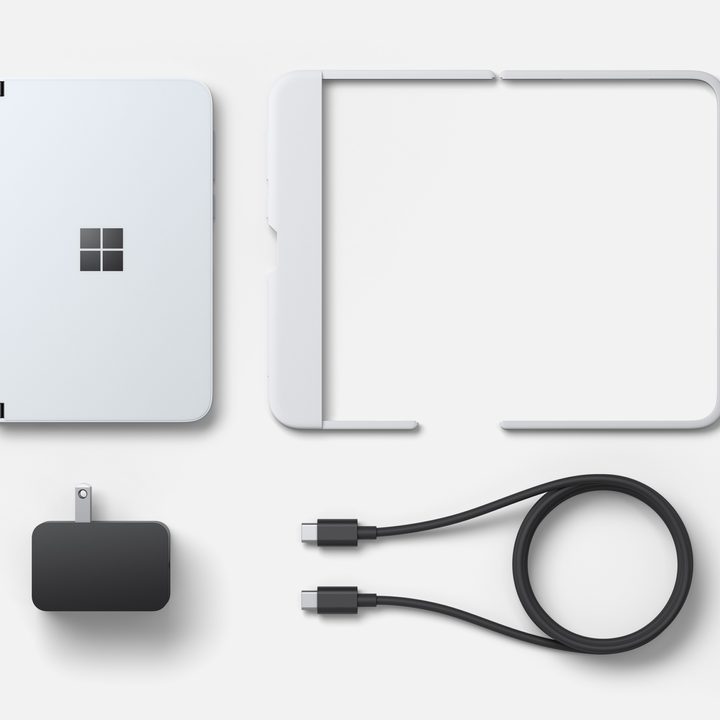
I will grant you, this list is very broad in its definitions, but that’s largely because the Surface Duo was a broadly flawed product. The folks at Microsoft tried to do something pretty cool in the Surface Duo, and for that, they have my respect. But honestly, the product was too flawed to actually try to sell to anyone, let alone for $1,400. The problems are all easily solvable, but only if Microsoft realized the problems early in the production process.
And these are all problems that need to be solved if Microsoft expects the Surface Duo 2 to be any bit more successful than its predecessor. The Samsung Galaxy Z Fold’s proximity to this device in terms of form, function, and price put the pressure entirely on Microsoft at this point. Put simply, Microsoft is trying to change the game with the Duo, but the Galaxy Z Fold 3 is changing it even further. But this is not a Galaxy Fold-versus-Surface Duo piece. This is just a laundry list of items Microsoft needs to fix if it wants to play in this space. Otherwise, the Surface Duo will follow the Windows phone into obscurity.


