Last year’s foldable Motorola Razr generated serious excitement with just the right amount of tech nostalgia combined with amazing new foldable tech in the display and hinge. But that was quickly tempered by the reality of using the device. Its slow processor, poor camera, and questionable build quality, paired with Verizon-exclusive availability and a high price, made it a nonstarter for most. And just a couple months later, Samsung’s superior Galaxy Z Flip clamshell foldable took away the Razr’s chance.
Less than a year after retail availability of the first foldable Razr, Motorola is announcing a successor with huge changes in exterior design, internal specs, and camera quality — directly addressing the complaints we had with the first phone. And perhaps best of all, the new Razr will be available unlocked, and internationally.
From the top, let’s make it clear that the new Razr has the same overall size, shape, and dimensions. It also has the same internal 6.2-inch 21:9 foldable display, and same external 2.7-inch Quick View display. It also runs the same software — though there was a substantial update to the functionality of the Quick View display recently, with the ability to run any app, accomplish quick tasks, and reply to messages, in addition to the usual features of notifications, and a camera viewfinder.


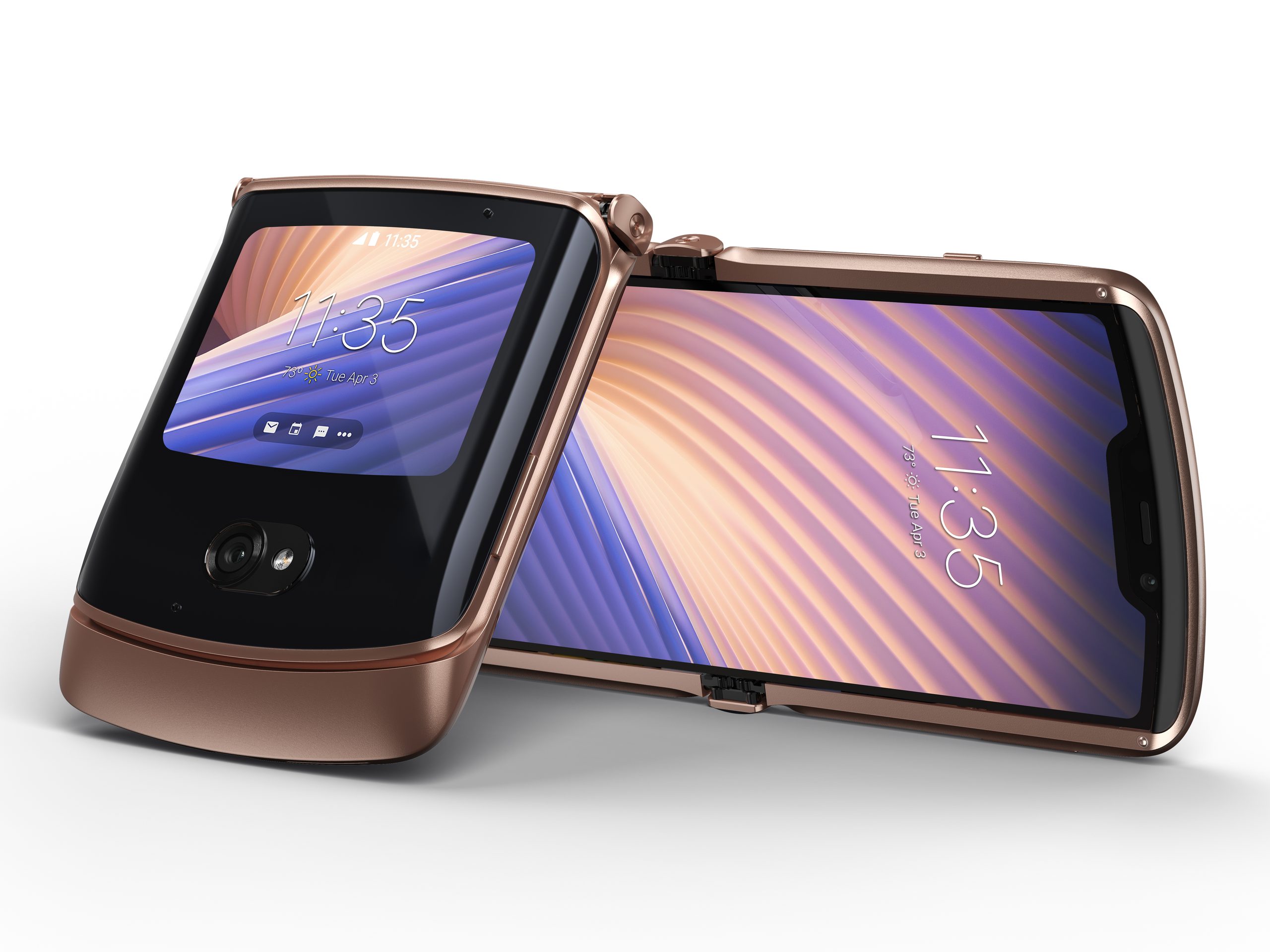
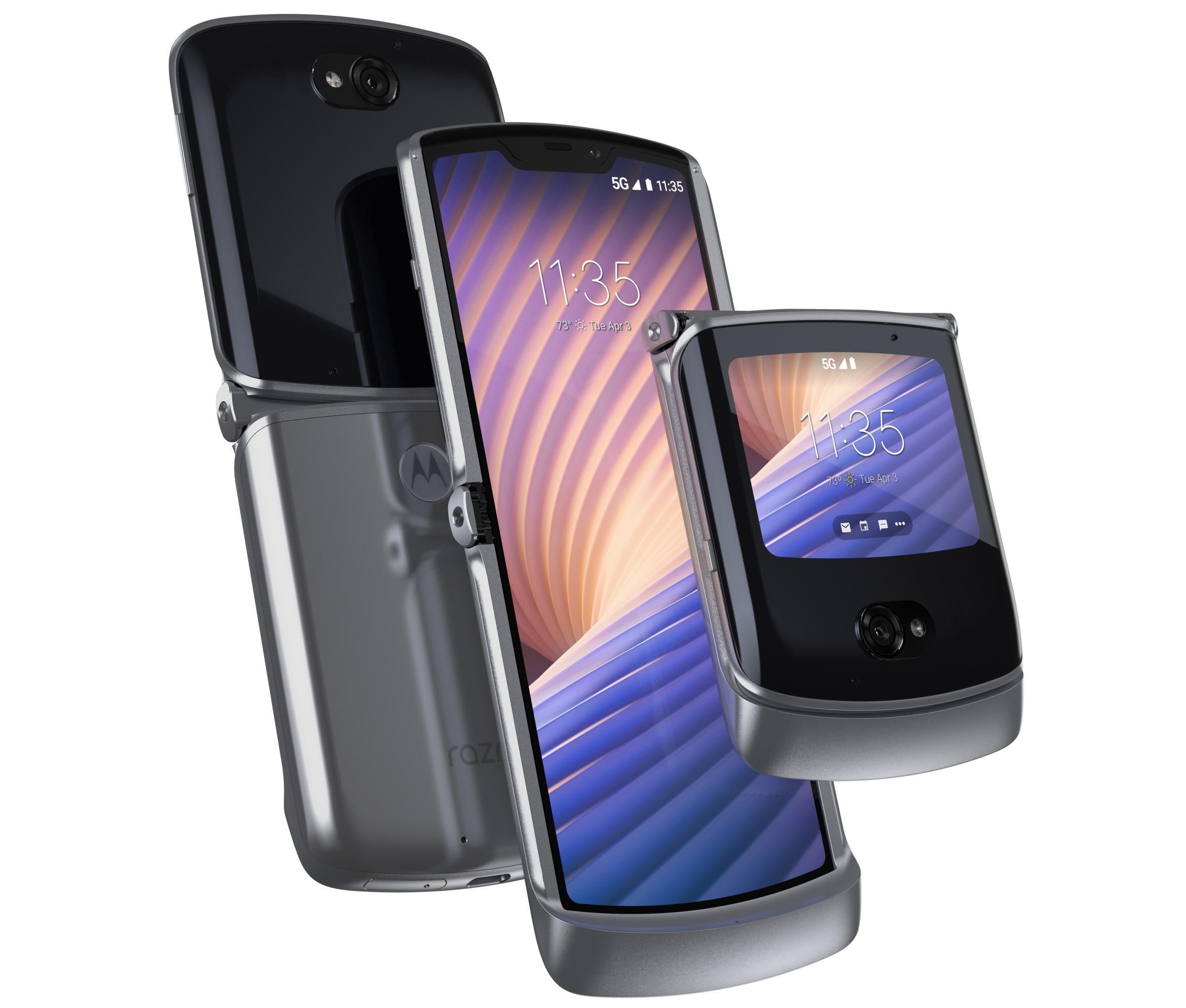
But trust me, this is still a big upgrade, because everything else about the Razr has been improved. Other than being the same basic shape, the design has received an overhaul. There’s now 3D curved glass on both sides, sculpting the overall profile to be symmetrical and smooth, with an aluminum frame that’s debuting in three new colors: Black, gold, and gray. The “chin” at the bottom is now smoother and smaller, and has given up the fingerprint sensor to the back of the phone. The entire is even splash resistant, which is very surprising for a foldable phone with so many moving parts. Motorola already introduced an excellent design last time around, and this is a sleek refresh.
New hardware makes the Razr more competitive
You’ll find internal spec bumps across the board, and they sure were needed. A Snapdragon 765G processor runs the show, which is a huge upgrade, and it’s paired with 8GB of RAM and 256GB of storage — modern specs, finally. The 2,800mAh battery is 11% larger than before, and paired with that new processor, it should address the shortcomings on the original. Interestingly, the phone is lighter than before, despite that extra capacity.
Perhaps most importantly, Motorola upgraded the weakest part of the last Razr: Its camera. A new 48-megapixel sensor, which you’ll recognize from tons of upper-mid-range phones in 2020, is a huge improvement. It’ll do 4-to-1 pixel binning to produce 12MP photos with dramatically better clarity and brightness, and this larger sensor paired with OIS (optical image stabilization) will be miles ahead of the old model in low-light scenes. That also means the Razr should be great for selfies, because the rear camera is the front camera when you close the clamshell and use the Quick View display as your viewfinder — one of the benefits of foldable phones.
Motorola promises the hinge is better. Really
In learning about the new Razr, my biggest question to Motorola was about the durability of the hinge and screen. Were the reports of loud, creaky, and rough hinges on the first model isolated or widespread? And what’s changed for this model? The clever hinge and substrate that lets the display curve at a more gradual rate and slide under the chin to reduce creasing seems great, but the whole combination didn’t befit the price on the first model.
Motorola says that while the hinge functions in the same way, there have been specific changes made to reduce noise during movement and smooth out the sliding portion at the base of the phone. The company is also once again very confident in the robustness of both the hinge and screen, saying they’re tested to last over 200,000 folds.
For what it’s worth, after initial reviewer complaints about hinge noise I haven’t seen more than a few hinge or display failures from Razrs in actual customer hands, so we know durability isn’t necessarily an issue. It’s all about how smoothly the whole mechanism works. We’ll have to wait until we actually use the new phone to know if the overall experience of folding the screen has improved, though.
Pricing, carriers, and availability
The biggest reason to look at the new Razr when you’re shopping for a phone this fall is that it’s actually available for more than just Verizon customers. Motorola is selling the new Razr unlocked in the U.S., as well as globally. The phone has the 5G network bands for both T-Mobile and AT&T, although only on the slower (but more widespread) Sub-6 5G networks. Ironically that means it won’t work on Verizon … though I’d be shocked if we don’t see a Verizon-specific model at some point.
The price is still steep at $1,399, nearly the same as the Samsung Galaxy Z Flip. But that’s much easier to pay with across-the-board spec improvements, a camera you’re actually going to use, and a larger market to sell to when you choose to move on down the road. And with open retail availability across the usual places like Amazon and B&H Photo, in addition to AT&T and T-Mobile directly, you’ll have plenty of financing options.
Sadly Motorola isn’t yet providing an actual pre-order or sales date, other than “this fall” — we’ll be impatiently awaiting more details.