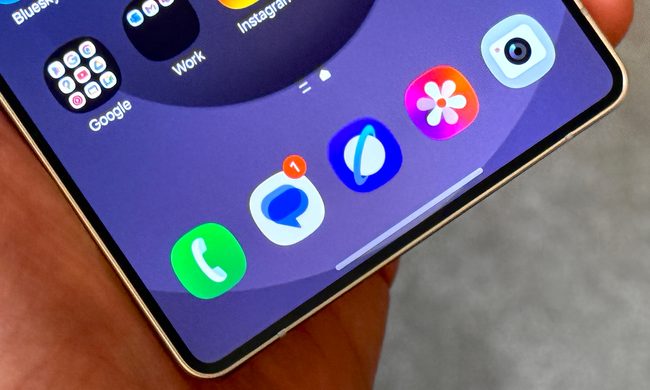
What happened: So, it’s official. BOE just showed off the brand-new screen they built with OnePlus, and it’s confirmed to be the star of the upcoming OnePlus 15. And get this, they’re claiming it’s the first phone screen in the world that can run at a super-smooth 165Hz refresh rate while also being able to drop down to a single nit of brightness, which is perfect for reading in a pitch-black room. This was revealed by the Chinese smartphone maker in a Weibo post.
- They’ve also used some new materials in it to finally fix that annoying green tint you sometimes see when you look at a phone from an angle. OnePlus says they stuck with a 1.5K resolution because pushing to 2K at that speed just isn’t quite ready for primetime yet. To run the whole show, it’s using a new display chip from Oppo that should also pop up in their next big phone – the Find X9 series.
- The chip is Oppo’s P3 chip, which brings in support for faster response times and also helps in brightness stability while the display is in high refresh rate mode. It also helps in hardware-level brightness dimming to 1 nits – certified by TÜV Rheinland.
- Although we would like to mention here is 165Hz AMOLED displays are already available in the market, like the ASUS ROG Phone 6 Pro, launched over three years ago. But there is something else.
- The something else here is that BOE’s display can drop to a shatteringly low brightness of 1-nits, thanks to the Oppo chip.

WHY is this important: Okay, so here’s why this is a bigger deal than it might sound. For a while now, phone companies have just been in a race to shout about the highest, most blindingly bright a screen can get for a split second. It was all marketing.
- BOE and OnePlus are changing the conversation. They’re focusing on stuff that actually matters in your day-to-day life: how bright it is normally, how dim it can get at night, how much battery it saves, and whether the colors look right when you’re not looking at it dead-on. This screen is a genuine leap ahead of the 120Hz screens on the latest iPhones and Galaxies, and it’s built to last longer and be easier on your battery.
- To explain – the display gets a drop-dead 1-nit low-luminance panel and a resolution of 2712 x 1220 pixels because of which BOE can actually claim it is a world’s first.
- Even though in numbers, its only a smidge ahead of most 165Hz display phones but ahead it is. BOE says this is the best display there is in terms of it being an OLED panel with 1.5K resolution – only because a 2K display with 165Hz is available yet because of limitations in technology and build materials.

Why should I care: Alright, let’s break down what this actually means for you if you’re thinking about grabbing the OnePlus 15.
- First, your games and even just scrolling will feel ridiculously smooth. But it’s also smart, so it’ll slow down when it needs to and save your battery. It also comes with the latest Qualcomm Snapdragon 8 Gen Elite 5 chipset.
- They’ve also packed in a ton of features just to make it easier on your eyes. It gets super dim for late-night reading, has built-in blue light filtering, and is tuned to stop that annoying screen flicker. It even has some AI tricks that will adjust the colours based on the room you’re in or gently remind you to blink. A little weird, but also kind of cool.
- And you know how colours can look washed out when you tilt your phone? They’ve worked hard to fix that, so what you see should look right from almost any angle.
What’s Next: So, what’s down the road? OnePlus is pretty much saying this is the best you can get right now, and that pushing to an even higher resolution at this speed will have to wait for the next generation of tech. You can definitely expect to see this same screen pop up on Oppo’s next flagship phone, which is the Find X9 series.
The big takeaway here is that OnePlus is kind of throwing down the gauntlet. They’re betting that people care more about a screen that’s comfortable, efficient, and looks great in the real world than one that just has the biggest numbers on a marketing poster. This could be the thing that sets a new standard for what a top-tier phone display should actually be.