
Here’s a fun fact for you. I have absolutely zero idea as to what charge level my phone is at right now. It’s on; I can tell you that. But what battery percentage is it at? I couldn’t tell you. I couldn’t care less and that’s because I don’t have to. At first, it was scary, but now it’s just beautiful.
Here in the U.S., we don’t really have to worry about charging phones; we charge them overnight. Maybe we set our phone down on one of the best wireless phone chargers, or we snap on a MagSafe charger (even on Android), or we simply plug the phone in. I used to be one of those people.
We do that here in the States because we have to. Fast charging doesn’t really exist here. Samsung tops out at 45 watts, Apple peaks at 30W, and besides that, neither one will ship you a charger. Others have varying sizes of chargers from 10W up to 20W or more. If the phone manufacturer doesn’t ship you a charging brick, you could be plugging your phone into a laptop, which is even slower. Let’s not even talk about wireless charging.
Don’t get me wrong, 45W is no slouch if you buy the fastest charger you can find. But it doesn’t hold a candle to the 65W charger that OnePlus ships in the box with the OnePlus 10 Pro. With that 65W charger (which isn’t even the fastest OnePlus ships), I can top off my phone in the time it takes me to destroy all challengers in Call of Duty: Mobile battel royale mode. It’s really a powerful feeling if you’ll forgive the pun.
Changing the charging
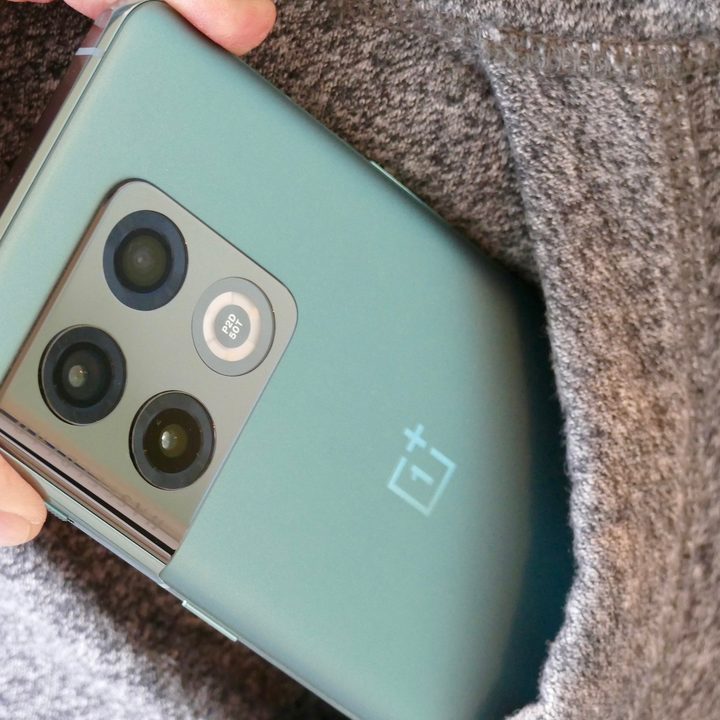
Since OnePlus shipped me the OnePlus 10 Pro, I have not plugged it in at night a single time, which for me is deeply weird. During that time, I flew to (and spent a long weekend in) New Orleans, hunted geocaches, and went to parties and get-togethers back home — and not once did I fear for my battery life. Of course, I also couldn’t really tell you how long the battery lasts, because my brain has not rewired the part that says, “I took it off the charger at 6:30 a.m.”
You might be wondering what it was like to use a phone in such a way, especially if your flag has 50 stars on it. The first part that’s really hard to wrap your mind around is that you’re no longer working within the bounds of 0% and 100%. Plus, you are no longer tethered to charging conventions to dictate your day or activities. On the contrary, you can let your day dictate your charging. You don’t have to plug in your phone every night. You just plug it in when it needs it.
There are no rules! At first, I tried to wait until my phone dropped below 20% to charge it until at least 80%, but I soon realized those were arbitrary numbers. You can plug in your phone at 50% and get up to 80% in a few minutes. You can plug in at 5% and get up to 35%. It’s insane how fast the initial minutes of charging can be. With charging that fast, it’s like having a tap to unlimited power.
Too often, our phones are bound by those 100% and 0% constraints.
If that sounds weird to you, that’s because it is. It’s deeply weird, but it’s also a lot of fun. The phone charges from empty to full in just a bit over 30 minutes. Obviously, if the phone is already half full, it doesn’t even take 30 minutes. So when it comes time to go somewhere, I can plug in my phone for a few minutes and I always have enough juice at least to last me until I get back home. Plus, the phone doesn’t have to be full before I can unplug it. If you’re going to be gone all day (Great America is open again after all), then you should plan ahead by about 30 minutes, but longer than that is never necessary.
There’s a certain freedom in that. Too often, our phones are bound by those 100% and 0% constraints. There is something satisfying about knowing that if you plug in your phone at night, you can get up and go to work the next day and have your phone last all day. But it’s magical knowing that when you need a charge, you can have it.
There are caveats
Battery health is not a concern either. OnePlus has tested these batteries up to 1,600 charge cycles while still retaining 80% charge capacity. Even though, as I mentioned, before I don’t know when to charge my phone, I do know I’ve never had to do it more than once per day.
To be completely fair, I have to point out that I work from home, so I am not out and about nearly as often as most people. If you are someone who doesn’t have an unlimited supply of power at your disposal 24/7, this almost certainly will not work for you. Arguably if you work in an office, you can do this. If you’re a forest ranger, construction worker, or someone without an eight-hour-per-day desk job (doctors, police officers, delivery workers, etc.), this will be basically impossible.
Plus, there are downsides. OnePlus’ charging tech is proprietary, so if you plug into a 65W charger not made by OnePlus (or Oppo), your charging speed is slowed. OnePlus’ charger, by the way, is not small by any stretch, competing in size with my old 2015 Macbook Pro charger. It’s not the easiest thing to toss into a bag and be on your way.
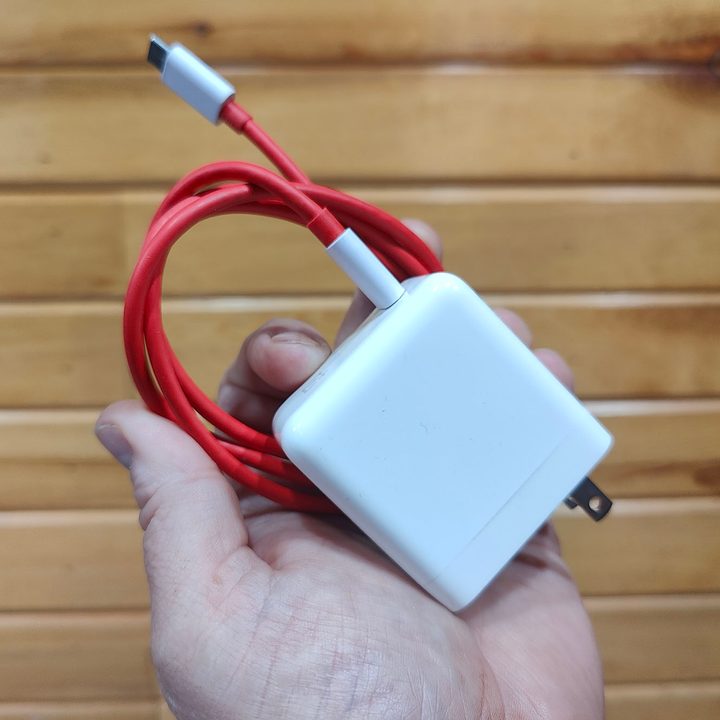
Plus, there were times early on when I would wake up in the morning and unexpectedly have to be somewhere (those new geocaches aren’t going to find themselves after all) and I would find my phone at 20%. I have a charger in my car, but that’s not really the point, right? I would later learn that you can plug in your phone before you go to the bathroom or put on your shoes, and you’ll have a lot more juice when you unplug than when you plug in.
Once you learn (and accept) that fact, you’re off to the races! It’s not easy, especially given the comparatively slow charging speeds we have in the U.S. I’d be willing to bet that a similar experiment with a Samsung or Apple phone might be possible, but I think there would be larger question marks about the overall feasibility. Once I shift away from the OnePlus 10 Pro, I’ll likely go back to charging overnight, but if I’m being honest with myself, I won’t like it. OnePlus has broken me and made me crave fast charging in a way I never thought I would. Well played, OnePlus.


