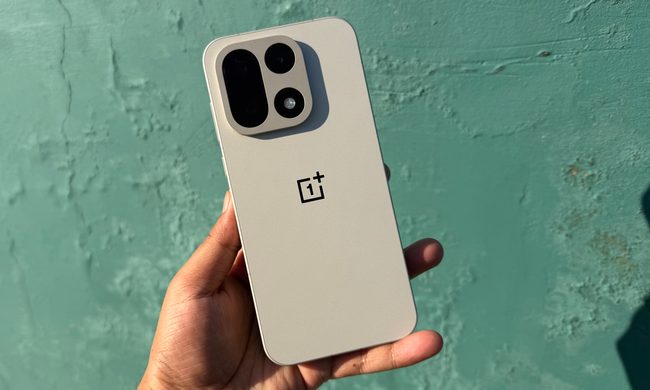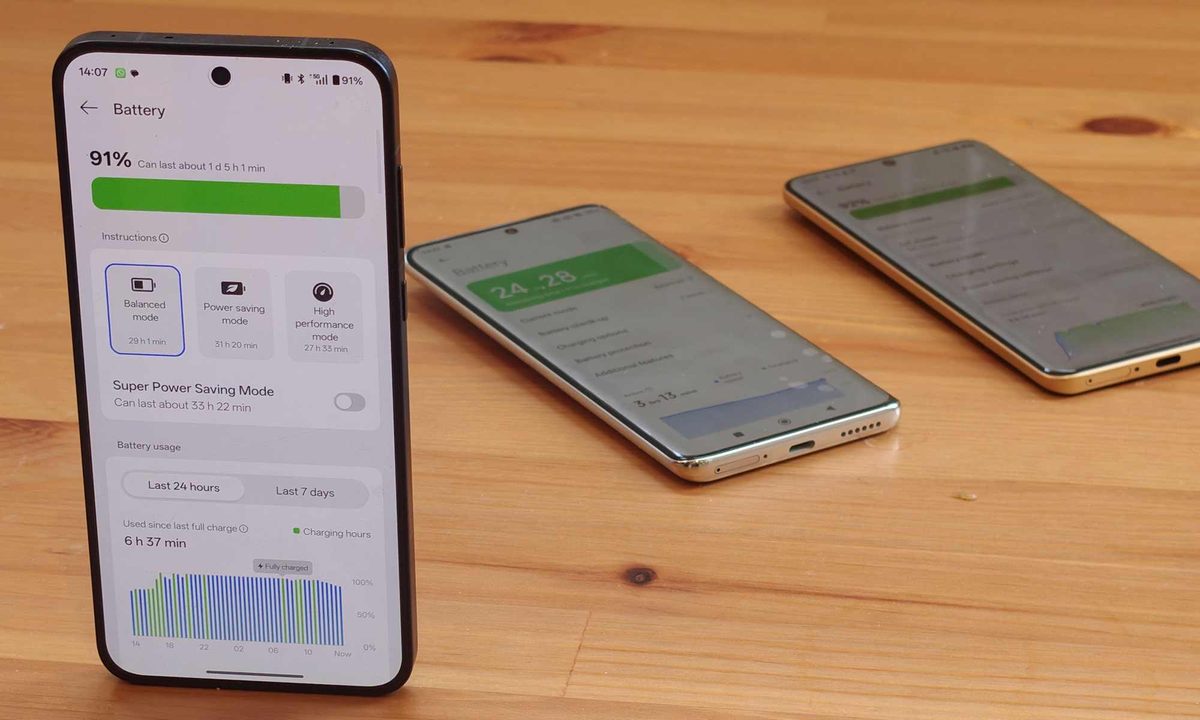
In my recent OnePlus 15R review, I claimed it had the best battery life I’d ever experienced in a smartphone. That felt, from a month’s use, to be the case – now I’ve got the figures to back it up.
The OnePlus 15R’s 7,400mAh battery is larger than most of the best Android phones, and day after day during testing I was constantly wowed by how much charge was left in the tank when I went to bed. I fell out of the habit of regularly charging my mobile – who knows how I’ll cope when I go back to my regular phone.
It’s one thing to say the 15R it has the “best battery life I’d ever experienced” though, and another to prove it, so I put the handset through some rigorous head-to-heads to see how it fared against some other phones. Up against it, two phones I had on hand: the Poco X7 and Realme 15 Pro (well, a Game of Thrones-themed Special Edition).
Meet your contestants
In part, these phones were chosen as they’ve both seen roughly the same amount of use as the OnePlus 15R did; my regular phone has seen much more use so its battery health won’t be at its peak.
The handsets also cover a price spectrum; none are iPhone 17 Pro Max and Galaxy S25 Ultra levels, and they all released in 2025. Let’s look at some key specs of them really quickly:
| OnePlus 15R | Realme 15 Pro | Poco X7 | |
| Battery | 7,400mAh | 7,000mAh | 5,110mAh |
| Screen size | 6.83-inch, 1272 x 2800 | 6.8-inch, 1280 x 2800 | 6.67-inch, 1220 x 2712 |
| Screen specs | 1,800nits, 165Hz | 1,800 nits, 144Hz | 1,200 nits, 120Hz |
| Screen tech | AMOLED | OLED | AMOLED |
| Processor | Qualcomm Snapdragon 8 Gen 5 | Qualcomm Snapdragon 7 Gen 4 | MediaTek Dimensity 7300 Ultra |
| RAM | 12GB | 12GB | 12GB |
The spec list reveals other variables that could affect battery life: the screen size, max brightness and refresh, as well as processor and connectivity. Some specs I couldn’t change, and are natural differences beyond the phone. That’s why I ran a range of tests, to ensure I’d reveal the full picture, and reflect the general user experience.
But to ensure the tests would be somewhat scientific, I kept factors controlled when possible. I relied on automated screen specs and turned off all connectivity except where necessary. I didn’t want incessant WhatsApp notifications to affect one phone’s power drain, if I somehow became incredibly popular.
I also powered each phone to full before commencing each test, and ran them simultaneously in the same environment (except the gaming test, as I couldn’t play on all three at once, but in that case I did them back to back).
The tests

I ran five tests to try out various use cases of the three phones.
First up was the camera video recording test. I set all three phones to record in 4K 30fps (the max framerate that the Poco could hit), turned off any extra recording features, pointed them face down, and pressed ‘record’.
I conducted two video playback tests – no, not of the dull 4K recording of a tabletop I’d just captured. In one, I played a 90-minute home-made sizzle reel of my own projects, which I saved internally on the phone. In the other, I played 120 minutes from a 6-hour nature video loop I found on YouTube. I ensured there were no ads, so all three phones played in tandem. This was initially to be a shorter test, however I forgot it was running.
Test three was for gaming: I booted up Call of Duty: Mobile, made sure the graphics options were consistent, and played games. I made sure the experiences were even, jumping back into games as soon as I finished a previous one, and recorded the battery at 30, 45 and 60 minutes.
The other test I conducted was meant to replicate lighter uses, of staring at the screen: I brought up the Google app (which, since Wi-Fi was turned off, just showed the ‘no connection’ message), and left it for 90 minutes to see the drain. As you can see from the results, there wasn’t much of a drain, but I’ve left the scores in regardless.
The results
Battery drain per task
| Task | OnePlus 15R | Realme 15 Pro | Poco X7 |
| 4K video recording (60 minutes) | 14% | 11% | 11% |
| Internal video playback (90 minutes) | 2% | 3% | 4% |
| YouTube streaming (120 minutes) | 4% | 7% | 8% |
| White screen (90 minutes) | 1% | 3% | 1% |
| Gaming (30 minutes) | 2% | 6% | 5% |
| Gaming (45 minutes) | 4% | 9% | 9% |
| Gaming (60 minutes) | 6% | 13% | 12% |
I want to add some observations: the Poco X7’s auto-brightness kept turning its display dimmer than the other phones, most notably in the light-use and internal video playback tests. This may explain some of its high scores. Also, in the YouTube playback test, the Realme had the opposite problem – it was far brighter. I manually reduced its brightness until it was on par with the other phones, which again is something to bear in mind with the results.
As you can see from the results, the OnePlus 15R beat or drew with the other phones in nearly every single test; in gaming, it wasn’t even close. Longer sessions of mobile games would ram home the point that the OnePlus’ huge power pack ensures it’s designed to last, and that margin would only grow wider over a longer period.
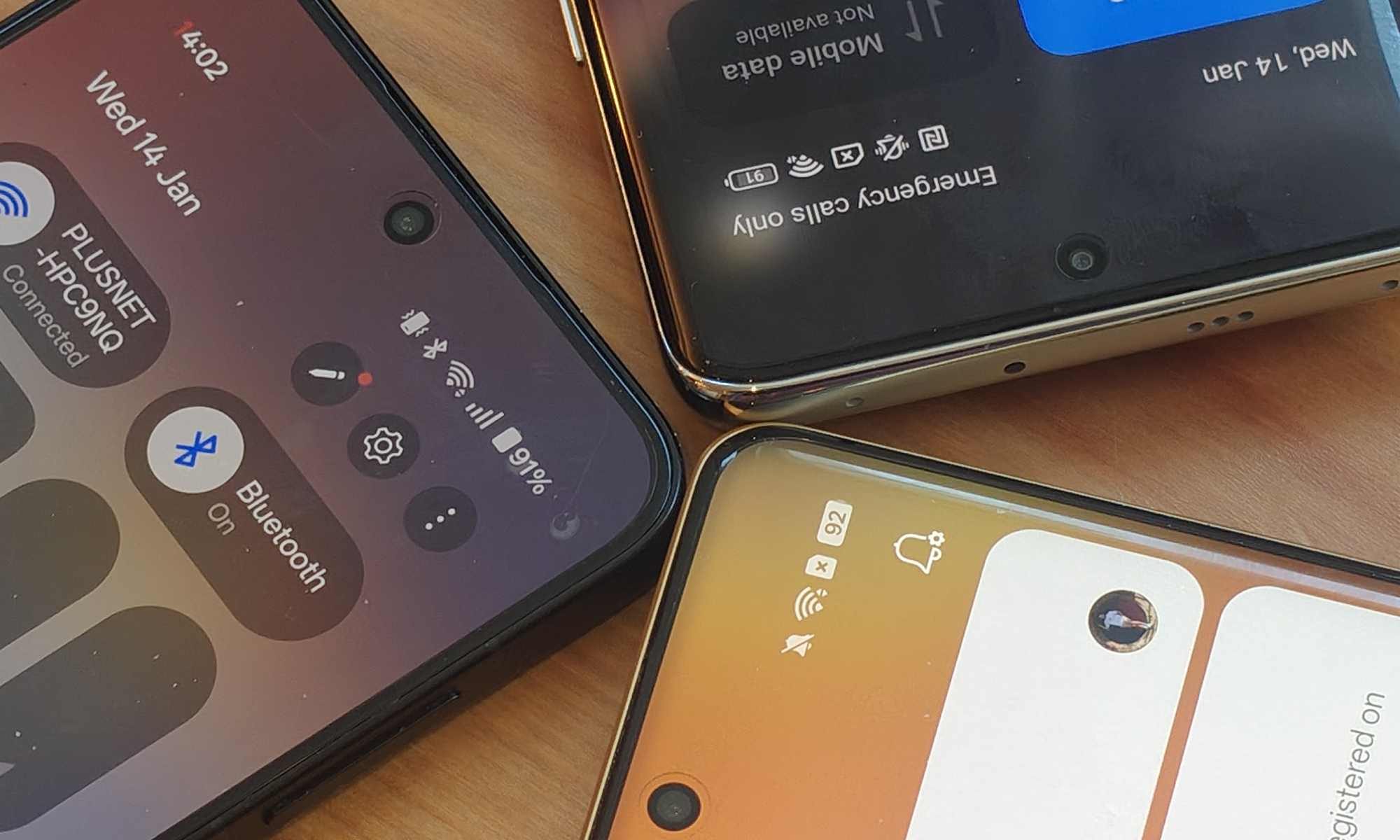
The result is true of other tasks, even if the margins are smaller in less-intensive tasks. That the OnePlus 15R only dropped a single percentage of power over 90 minutes of continuous screen-on time is superb, that it only lost 1% more when the equivalent time was spent streaming a movie-length video is also fantastic.
Now for the one exception: video recording. As you can see in the results, the OnePlus lost more power than both of its rivals, which surprised me a little. If I had to guess, I’d point the finger at internal processing being optimized better on the Poco and Realme handsets. I’d have liked to bump up the specs to see how higher refresh rates hurt it, but then the Poco wouldn’t be able to compete.
All of these phones have pretty good battery lives too; that they all could stream a 2-hour video without losing 10% charge would be unheard of a few years ago. If I’d have put the OnePlus 15R up against its big-name contemporaries like the Samsung Galaxy S25, iPhone 17 or Google Pixel 10, I imagine it’d come out looking even better.
Despite the battery performance, I was giving lustful side-eyes to the Realme 15 Pro during some of the tests – it performed admirably in gaming, offered more vibrant colors during the video tests and, most importantly to me, charged up lovely and fast (like the 15R, it powers at 80W compared to the X7’s 45W)
Battery life isn’t the most important spec to everyone; some people are never far enough from a charger for it to be a concern. But there are plenty of other people like me who like a good power pack, whether it’s because you don’t like being tied to regular charging schedules or because you’re often on trips or holidays where charging is unlikely. And so it’s great that phone manufacturers are recognizing this need, and offering handsets like the OnePlus 15R.
Tempted by the OnePlus 15R? It’s available to pre-order now.