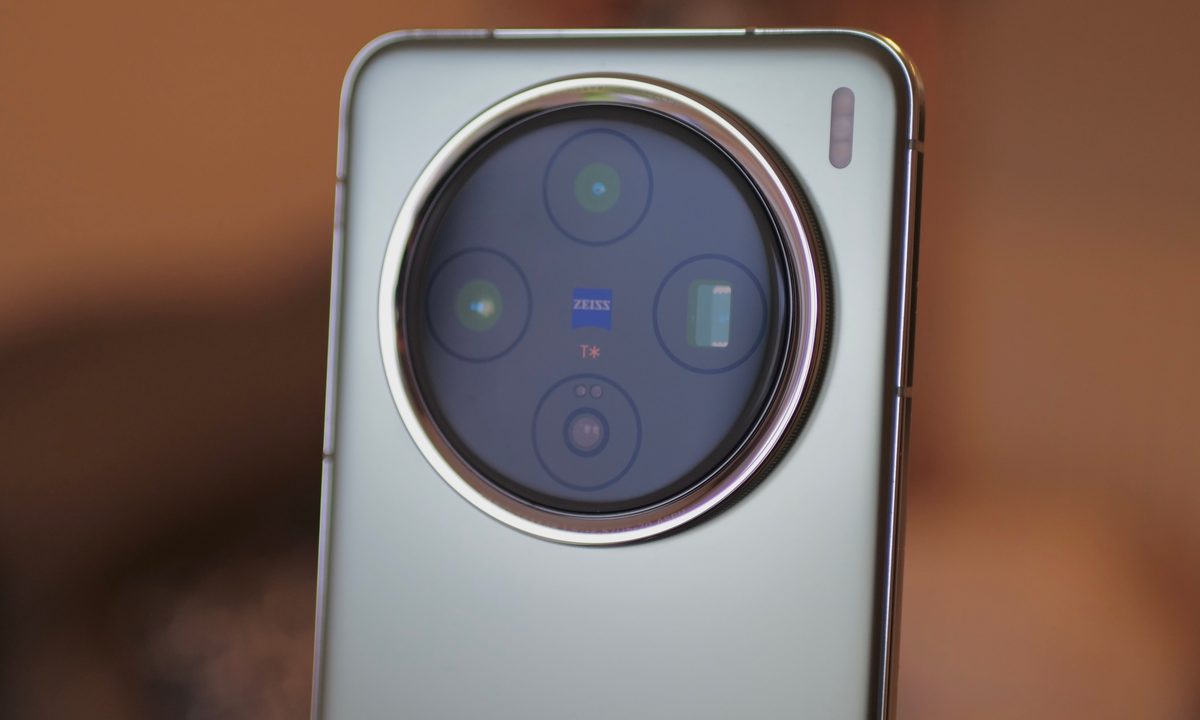
Photos taken in dull and dreary British weather simply don’t do the Vivo X200’s stunning camera module justice. It’s without a doubt one of the best-designed, most visually interesting, and classiest I’ve seen on a phone yet. It also looks positively dainty next to the huge camera module on the back of the Vivo X200 Pro.
These two phones have been given an international launch, and I’ve had the chance to hold them both. However, I’ve spent most of my short time with the pair marveling at that camera module.
Vivo X200

What makes the Vivo X200’s camera module such a beauty? The polished outer ring sits slightly proud of the phone’s rear panel, almost like a watch dial, a theme that continues with the subtle clou de Paris embossed pattern around the edge. The real standout design aspect is how the polished rim curves inward around the edge, encapsulating the glass camera module inside.
Smooth your finger over the surface and around the edge, and the Vivo X200’s camera module feels like no other. The light also uniquely catches the curved edge. This isn’t the result of chance. Someone has thought about the way the camera module could look, and rather than incorporate odd shapes or mismatched lines — I’m looking at you, Honor — to make it unusual, Vivo has made something beautiful. So many brands reference “luxury timepieces” in their marketing blurb, but Vivo is one of the few that has brought a similar touch of class to its camera, without mentioning watches at all.

Yes, I’m aware that’s a lot of words about a camera module, but I’m not done with the design yet because the screen is a winner too. The 6.67-inch AMOLED screen has a “quad curve,” which means it’s curved down at each side and at each corner, so it blends in with the frame and rear panel. It makes the phone comfortable to hold and also enhances the classy rear panel design and camera module. It’s not the first we’ve seen — Huawei has used the same style in the past, for example — but it really suits relatively compact phones like the X200.
What about the rest of the X200? It’s the entry model in Vivo’s new range, but that doesn’t make it basic. It uses the MediaTek Dimensity 9400 processor with either 12GB or 16GB of RAM and a 5,800mAh battery with 90-watt charging to cement its high-end credentials. The phone weighs 202 grams in the pretty green color seen in our photos and is both IP68 and IP69 dust- and water-resistant.


Inside the camera module is a 50-megapixel Sony IMX921 main camera, a 50MP Sony IMX882 telephoto camera, and a 50MP wide-angle camera. Vivo continues its relationship with Zeiss, which provides the optics and various camera modes. There’s also a 32MP selfie camera on the front. It’s probably clear, but I’ve fallen for the Vivo X200’s design, and the specification looks strong enough to hold my interest when I get the chance to use it for a longer period of time. But what about the X200 Pro?
Vivo X200 Pro

The Vivo X200 Pro doesn’t share the same exquisite design for its camera module, but it’s still interesting. It’s much larger than the X200’s module, and while the outer rim still has the clou du Paris embossing, the upper section is made from titanium and has a subtle brushed effect. The large black glass module sits proud of the titanium outer section. It still looks good, but it lacks the uniqueness of the X200’s module. The screen also has the quad curve shape but is slightly larger at 6.78 inches.
The camera’s specifications are different, which is why you’d choose this model over the X200. The 50MP Sony LYT-818 main sensor has Zeiss optics and is joined by a 200MP Samsung ISOCELL HP9 telephoto camera. It shares the same 50MP wide-angle camera and 32MP selfie camera as the X200. The Vivo X200 Pro uses Vivo’s V3+ Imaging Chip to improve lowlight and portrait shots while increasing efficiency. The telephoto camera provides a 135mm equivalent zoom and an 85mm HD Portrait mode, too.

The MediaTek Dimensity 9400 processor continues over, this time with 16GB of RAM, while the battery capacity has been raised to 6,000mAh and adds 30W wireless charging to the 90W wired charging. Both phones use Vivo’s Funtouch OS interface over Android 15 and come with a range of AI features, including Circle to Search and access to Google Gemini.
What about the Vivo X200 Pro Mini?
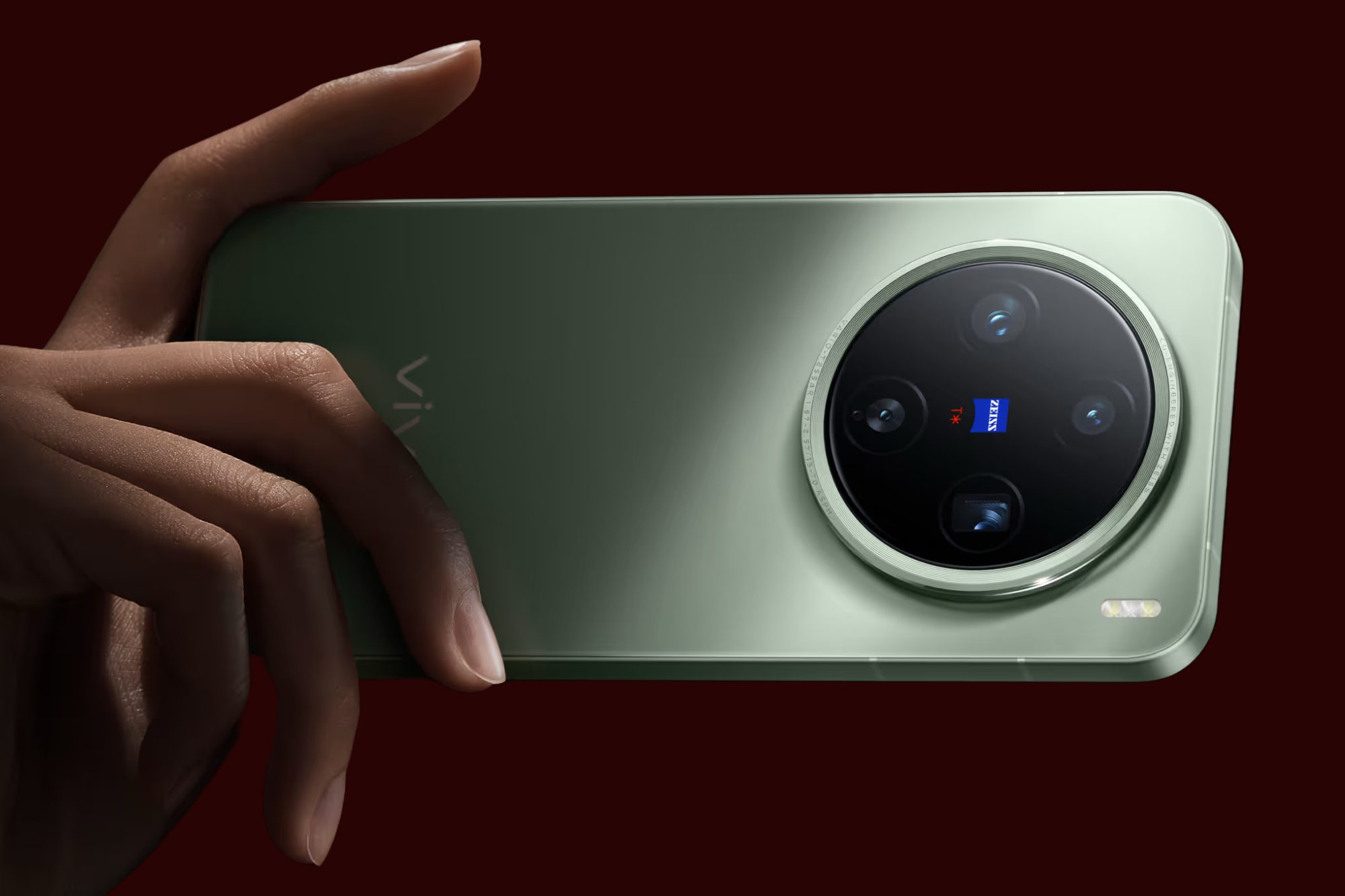
When Vivo announced the X200 series in China earlier this year, it added a third model to the range: the Vivo X200 Pro Mini. Unfortunately, it doesn’t appear the phone will be released internationally.
The phone shares the same Dimensity 9400 processor and a triple-50MP camera system, but the major spec difference is the 6.31-inch screen, making it mini in size, but not performance.
Vivo X200 series release and prices

At the time of writing, Vivo has not confirmed which regions will get the Vivo X200 and Vivo X200 Pro or the approximate prices for both phones. The information will come after the official announcement, and we will update here when we have confirmation.
However, expect the phones to be available in India, Asia, and parts of Europe, and the price for the X200 to be somewhere around $620, with the X200 Pro likely to be around $800, based on the prices in China.