

In a few days from now, the iPhone Air will be in the hands of Apple fans who are sold on the idea of an ultra-slim phone. And apparently, they also trust Apple with its claims of an all-day battery life, four lenses on a single camera, and stellar performance.
There is plenty of skepticism, but the pattern is clear. The trend of slim phones is here to to stay, or so claim the pundits. The rest of the industry will follow suit, even though Apple won’t be the first to attempt a super-thin phone.
Vivo pushed the V5 Max a decade ago, with an even slimmer waistline of 4.75mm, nearly a millimeter thinner than the iPhone Air. The now-defunct Gionee also pipped Apple years ago. In the modern era, Samsung brought uber-slim phones back into the mainstream with the Galaxy S25 Edge.
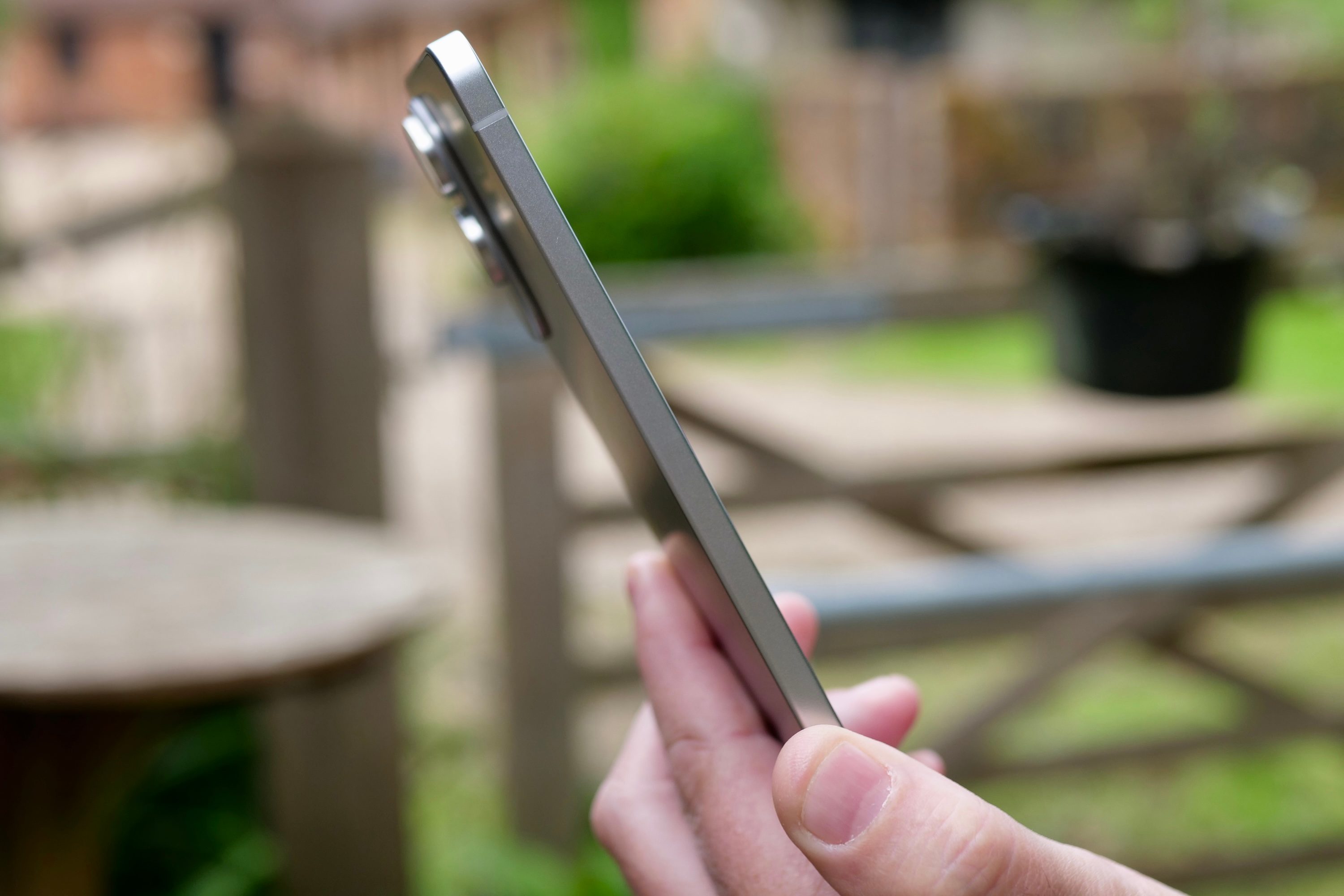
Next, the Korean giant will be closely monitoring what the iPhone Air has achieved and how it has been received by the masses. Based on Samsung’s history of taking potshots at iPhones, the company will go all-in to outshine the iPhone with its next, the Galaxy S26 Edge.
The crucial camera race
In hindsight, the iPhone Air — or more specifically, its shortcomings — should serve as a template for Samsung to build a better slim phone. There are two crucial areas where the Galaxy S26 Edge could meaningfully pip the iPhone Air, and it likely will.

One of the weakest aspects of the iPhone Air is its camera hardware, specifically the lone rear snapper. Apple says it offers the benefits of four lenses in a single package, offering a Fusion 48-megapixel resolution and 2x optical-quality zoom.
While the benefits of pixel-binning will be evident on the fused 24-megapixel shots captured by the iPhone Air, the zoom output won’t quite match the prowess of a dedicated telephoto camera, neither in terms of raw quality, nor zoom range. Likewise, the lack of an ultrawide camera is a sore miss. Look no further than the iPhone 17 to gauge its importance.

The vanilla iPhone 17 upgrades from a 12-megapixel to a 48-megapixel Fusion ultra-wide camera. But it’s not just the sheer lift in the quality of ultrawide shots, but also macro capture that will greet buyers. The iPhone Air misses out on either blessing.
Samsung already has an upper-hand over the iPhone Air on the Galaxy S25 Edge. This one features a dedicated 12-megapixel ultrawide camera to capture landscape shots with a wider field of view. Then we have the main snapper, which relies on massive 200-megapixel sensor.
Now, it would make little sense to claim superiority of Samsung’s main camera over the iPhone Air’s, or vice versa. However, a higher resolution offers more space for digital cropping to deliver more detailed zoom-in shots, so there’s that technical upper hand. The results — as the AI-charged Pixel 10 Pro suggests – could vary.

Where the iPhone Air takes the lead is the new 18-megapixel Center Stage front camera, which is not only more pixel-dense compared to the selfie snapper on the Galaxy S25 Edge, but also serves a few meaningful tricks. The ability to intelligently adjust the frame and taking landscape shots in portrait mode are practically compelling.
For the Galaxy S26 Edge, Samsung doesn’t have to do much for the rear imaging hardware. A sensor upgrade, though, would be more than welcome. The real work must be done on the front camera. That shouldn’t be an uphill task, either. Also, let’s not forget that Samsung has entire business that sells smartphone camera sensors.
Five years ago, the Galaxy S20 Ultra was treated to a massive 40-megapixel front camera. The current crop of Samsung’s Galaxy A-series mid-rangers come with a 32-megapixel selfie snapper. As far as the software stack goes, Samsung has offered simultaneous multi-lens capture for years, among other creative camera capabilities.

What it needs are a few software tricks that the can set the camera experience apart from the iPhone Air. Samsung is no stranger to the camera game, and it’s an almost obvious expectation from the Galaxy S26 Edge to deliver some imaging fireworks, at both hardware and software levels.
Tackling the battery challenge?
The most meaningful upgrade that Samsung can deliver on the Galaxy S26 Edge is the battery capacity, without making any scientific or technical breakthrough of its own. There’s plenty of fodder available out there for Samsung, and the most obvious one is a silicon carbide battery.
On the Galaxy S25 Edge, it’s a typical Lithium ion battery, though with nearly 4% higher energy density compared to the one fitted inside the Galaxy S25 Ultra. As far as the status quo is concerned, the Galaxy S25 Edge packs a noticeably bigger 3,900 mAh battery compared to the 3,149 mAh unit fitted inside the iPhone Air.

Both companies are touting a full day of usage, though the figures are estimates based on specific test conditions and rely on software-based power optimizations. It’s not raw battery life, and definitely not a match for a phone with a physical 5,000 mAh (or larger) battery.
The Galaxy S26 Edge will likely — and should — explore the superior silicon carbon tech to fit a physically larger and more energy-dense battery. Such batteries, with over 6,000 mAh capacity and super fast charging, have already appeared in multiple smartphones.
Apple has, oddly, skipped the tech and fitted a smaller-than-usual battery inside the iPhone Air. Samsung can seize the opportunity to embrace the next-gen battery tech and give a meaningful boost to the Galaxy S26 Edge, both in terms of raw capacity and charging speeds.

We have already heard rumors of native Qi2 charging across the board for the Galaxy S26 series, so it won’t be surprising to see it appear on the S26 Edge. A magnetically-enabled wireless top-up perk will be a fitting answer to the MagSafe convenience, and could even match (or surpass) the charging speed.
The performance dilemma
Apple pulled a surprise by arming the iPhone Air with the A19 Pro silicon, a distinction that is historically reserved for the “Pro” iPhones. If the Galaxy S25 Edge is any indication, it’s successor will likely get Qualcomm’s next-gen flagship silicon, as well.
We are yet to see any credible benchmarks and performance tests to show the might of A19 Pro, but at this stage, the differences in numbers don’t matter too much. The current-gen Snapdragon 8 Elite is already a beast, and it’s follow-up shouldn’t be any different.
The biggest differentiator is going to be the thermal hardware, the secret sauce that allows a phone to run cool. The Galaxy S25 Edge comes armed with a vapor chamber cooling system that is 10% larger than the one used in the Galaxy S25+, which is no small feat.
Apple had to shift from Titanium to Aluminum, and switch to a unibody metallic chassis on the iPhone 17 Pro to equip it with a vapor chamber. The Galaxy S25 Edge has already embraced a similar chassis design with a “hole structure” that allows more efficient heat transfer from the chip to the chamber.
On the Galaxy S26 Edge, Samsung will likely stick with a similar vapor chamber architecture, though an expansion in size and improved integration with chassis for better heat dissipation would be welcome. Actually, Samsung must do it with quite a bit of urgency.
The Galaxy S25 Edge, despite a fire-breathing silicon and vapor chamber perk, fared poorly at maintaining peak performance for long spells. In stress tests on 3DMark’s platform, the stability was below 50%, which is pretty terrible and a tell-tale sign of aggressive throttling. For comparison, the Red Magic Astra with the same processor delivered a stability of 99% in the same set of tests.

The Galaxy S26 Edge already has the architecture ready that can beat the iPhone Air by delivering top-notch performance under sustained load. But if the Galaxy S25 Edge is any indication, Samsung needs to do more. And while at it, Samsung will also have to carefully balance the power draw.
So far, it seems that Samsung is in a relatively safe position with the Galaxy S26 Edge, especially with practical perks that outshine the iPhone Air. Unless Samsung decides to topple the iPhone Air at the “thinness” or price parity game, the next uber-slim phone from the company might turn out be a competitively superior choice.


