As a society, we now produce more photographs than ever before, and the total number is becoming difficult to fathom. This year, it is estimated that billions of humans armed with smartphones will take some 1.2 trillion pictures. Many of them will be shared on social media, but many more will simply be forgotten. A few good selfies will flash before your eyes as you swipe left or right on them, late some Friday night. But hardly any will make the transition into the physical world, bits becoming blots of ink that coalesce into an image on a piece of paper, canvas, wood, or metal — a print.
The reasons for this are rational, and there’s no point fighting progress, but nor should we ignore the value of a print. We may no longer print every photo by default, but this can actually be a good thing for printing. It is now about quality rather than quantity, and the pictures we choose to print deserve the best treatment. Honestly, there has never been a better time to print than now, thanks to technological advances in both digital cameras and inkjet printers. If you haven’t yet tried your hand at photo printing, you owe it to yourself to do so, even if you’re just a casual photographer.
Print isn’t dead — it’s better than ever
It’s a common refrain in the digital age, and not just in reference to photography. Print is dead, or at least dying, right? In truth, a certain type of print has certainly declined, but this isn’t a tragedy. Prints used to be the only way we had to view our photos (short of shooting slide film and using a projector). We’d drop our film off at the drugstore and pick it up 24 hours later not because it was a better system, but because it was all we had.
In 2017, billions of humans with smartphones will take some 1.2 trillion pictures.
We tend to romanticize the print, but when printing was the norm, many photos were still lost and forgotten (and some were found again). Most were destined for photo albums or shoeboxes that would sit around and collect dust until moving day. If fewer were forgotten, it was because fewer were made. Far fewer, in fact — in 2000, Kodak announced 80 billion pictures had been taken that year.
Sure, that sounds like a lot (it was a new milestone at the time), but for those who think of such large numbers as vague clouds of zeros, consider that 80 billion is still 1.12 trillion shy of 2017’s 1.2 trillion photos. For the mathematically disinclined, let’s put it another way: Subtracting the total number of photos made in the year 2000 from those made in 2017 would have no effect on the number of shirtless mirror selfies posted by lonely men on Tinder.
With so many photos being taken, it’s no wonder so relatively few are being printed. Every print costs money, after all, so of course people aren’t going to print 1.3 trillion photos (maybe they’ll print a minuscule fraction of that, like, oh, 80 billion). What’s more, the point of printing (often the point of taking a photo in the first place) was to share your memory with someone else. Now that we don’t need prints to do that, it makes sense that people are choosing not to spend money on them, especially when electronically sharing images also happens to be much more convenient.
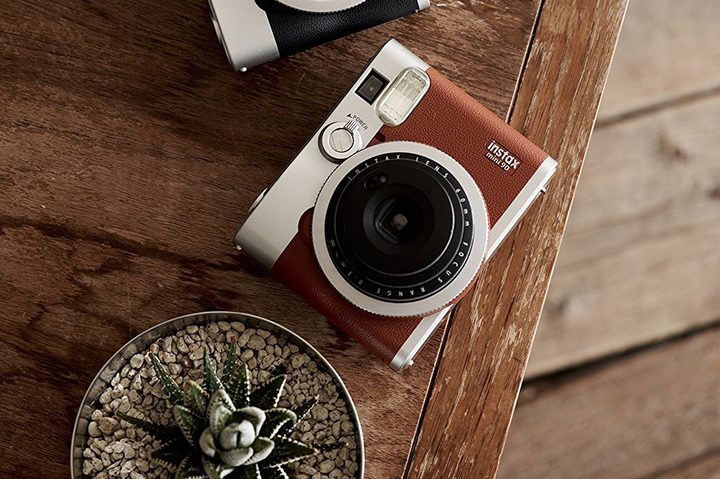
But people still love prints. Even the “low end” of printing is alive and well as instant photography has seen a huge resurgence in recent years. Polaroid Originals (formerly the Impossible Project) has built an entire brand around it, and Fujifilm Instax cameras and film packs made up six of the top ten best selling photography products on Amazon last holiday season.
Digital and print are not enemies
To be sure, digital has indeed changed how we print, and there’s no going back. The number of standard 4 x 6-inch photo prints is expected to decline to 39 billion this year, down from 47 billion in 2014, according to information provided to Digital Trends by Keypoint Intelligence. While this may be bad news for the drugstore photo lab, it doesn’t spell doom for the art of the print; in fact, one could argue it has elevated it. (Keypoint Intelligence also expects the downward trend is slowing, and will level out at around 36 billion prints by 2021.)
Take independent publishing, which has increased in recent years largely because of digital tech and the internet, ironically. Despite what people perceive as a decline in print media, the number of magazines produced has stayed constant since 2008, according to 99U. Circulation of any given publication may be smaller, but each is higher quality and more targeted. From design to photography to paper selection, everything has improved.
Rather than bemoan the decline in quantity, let’s celebrate the chance to produce higher quality prints that digital tech gives us.
Rather than bemoan the decline in quantity of photos printed, let’s celebrate the fact that digital has given us new technology and new avenues for producing high quality prints. We have the tools today to make better prints than ever before. With a $600 inkjet photo printer on your desk, you can produce a museum-quality 13 x 19-inch print in your home that rivals what a professional lab can do. In the film days, you would have had to convert part of your house into a darkroom in order to do this. Sure, many professionals did exactly that, but such an undertaking was well outside the scope of most amateurs or designated family documentarians. No one can deny that digital has made professional printing more approachable (not to mention, reduced the amount of water and hazardous chemicals needed).
If you make the plunge into the world of DIY photo printing, you may also discover a new addictive hobby. Like learning to cook or drive a stick shift, learning to print can be a struggle at first (have you seen Office Space? That’s just a well-edited documentary). But with the struggle comes understanding, appreciation, and, eventually, enjoyment for the craft. Did you feel those things when you dropped your film off at Walgreens?

It doesn’t make sense for everyone to invest in a photo printer, we get that. But whether you print at home or send a file to a lab, put some effort into selecting a photo and preparing it for print. This process makes you a better editor and narrows your focus to making one or two great images, rather than a dozen or so OK ones that can be quickly uploaded to a Facebook album. Buy a sample pack of fine art papers to try out or ask the lab to make some test strips on the papers they offer. Create a physical scrapbook filled with photo memories. Experiment, get creative, make mistakes, and refine your approach.
Printing may be safer than just storing digital files
Even if you’re running low on wall space, printing can still play an important role in archiving your images. The physics of how light bounces off a piece of paper and into your eyes is not going to change, but the way a computer reads an image file does change. JPEG, long the standard of compressed images, is beginning to give way to the new HEIF format. Optical disks like DVDs used to be the gold standard of photo backup, but now they’ve all but vanished. External hard drives have gone through several types of physical connection, from USB to FireWire to Thunderbolt — and several generations of each.
In short, there is no guarantee that the computer of tomorrow will be able to read the photos you take today, unless you consistently modernize your digital archives. Cloud services can certainly help with this, but the companies that run them aren’t guaranteed to be around forever, either.
An archival inkjet print can last for over 100 years when stored properly (and yes, you can make this sort of print at home). It’s not a replacement for digital backups, but for your most important photos, a print offers a very good form of redundancy, at the very least.
At the end of the day, it’s about your art
Printing for archival reasons is a logical thing to do, but the real reason you should start printing is emotional. When done correctly, seeing a high quality print of an image you made can be mesmerizing. There is just something about holding a finished print in your hands that is infinitely more satisfying than seeing your photo on a screen — especially a pocket-sized one. It also serves as a tangible, permanent product of your work, a monument to the time and effort you put into creating it.
So take a trillion photos. Forget billions of them. But print one, and do it right. Mount it, frame it, display it. Take pride in it. Heck, print two.
Updated October 16, 2017 to include comments from Keypoint Intelligence.