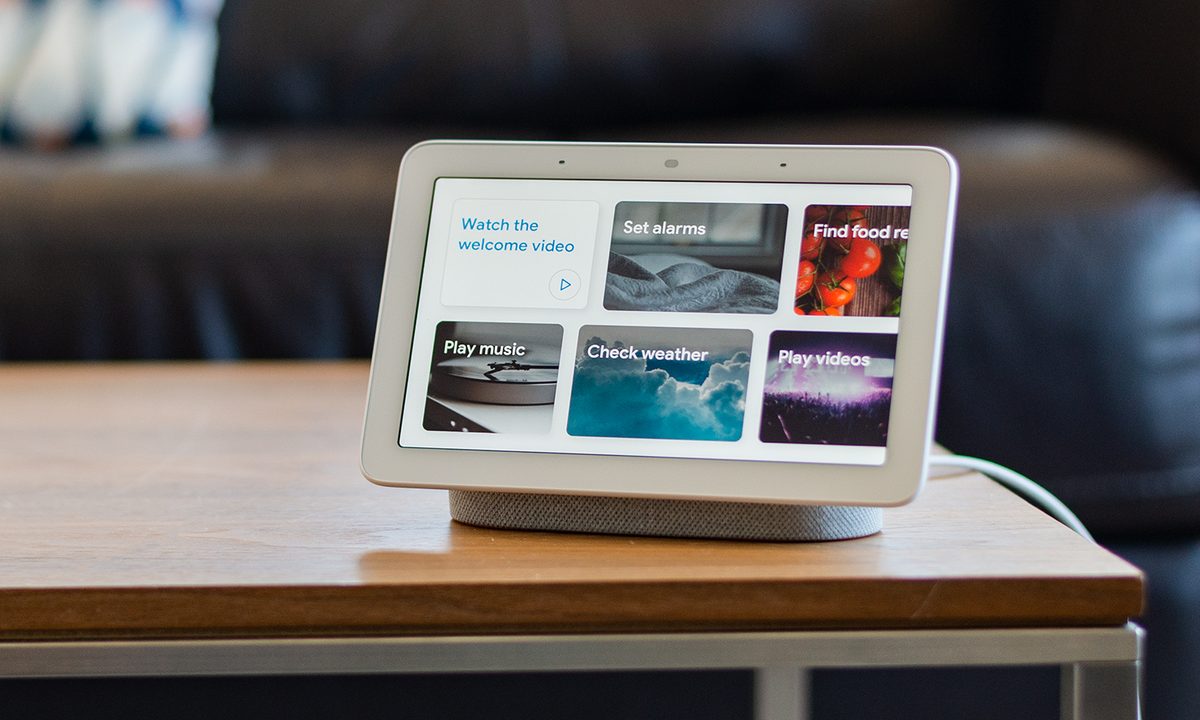

“Google’s Nest Hub is a great way to keep tabs on your smart home.”
- Easy smart home control
- No camera on device
- Small size means it can be placed anywhere
- Doubles as a digital photo frame
- Affordable
- No camera means no video chatting
- Poor sound quality
- Screen is too small for media consumption
“Why you can trust Digital Trends – We have a 20-year history of testing, reviewing, and rating products, services and apps to help you make a sound buying decision. Find out more about how we test and score products.“
When the Google Nest Hub (initially $149, now $70 at most places) arrived on our desk, we were surprised. This tiny little box can’t be it, we thought. Smart displays (smart speakers with built-in voice assistants like Google Assistant or Alexa) are supposed to have gigantic screens for reading, big footprints, and plenty of bells and whistles — right?
Google’s Nest Hub has other ideas, and though it’s tiny, it has some powerful features that make it mighty under the hood in being a central figure in the ever growing smart home. In a way, its simple approach is a refreshing take on the smart display — but it also feels watered down given some of the new options out there.
Since its release, we’ve seen its bigger brother — the Google Nest Hub Max. It shares many of the same features, but comes with a larger screen, superior audio performance, and a front-facing camera for video calls. With that camera, it can even act as a security watchdog while you’re away. It’s also more expensive at a whopping $229. And most recently, its sleep monitoring successor in the Google Nest Hub (2nd Gen) was announced. While the original Nest Hub is no longer sold on the Google Store, you may still find deals on it elsewhere.
Tiny screen, big world
At just over 4.5 inches tall, the Google Nest Hub is comparatively small, with a 7-inch portrait-style screen attached to an oval fabric stand on the back. Unlike its competition, the hulking Amazon Echo Show — which features a 10-inch screen and a four-inch base — the Nest Hub takes up almost no room at all, and can sit anywhere without taking up much space. That makes it easy to fit in many parts of your home.
Unlike other smart displays, the Nest Hub lacks a camera of any kind, which is either a good thing or a bad thing, depending on how you feel about your privacy and the lack of ability to video chat. The only buttons on the outside of the Hub are volume up/down and mic on/off.
When placed next to the Echo Show and the Lenovo Smart Display (another smart speaker with a screen powered by Google Assistant), the difference in size is like comparing a tablet to a smartphone. While the Nest Hub’s small size makes it more versatile — most smart displays are designed for primary use in the kitchen — it feels like a missed opportunity, given the device comes with six months of free YouTube Premium. The screen is too small to watch for an extended amount of time.


However, the Nest Hub works as a digital photo frame. If you use Google Photos you can connect your albums to the device during set up and have photos of your choice rotating throughout the day. We loved this feature and found some long-lost gems in our collection.
A feature called Ambient EQ automatically adjusts the brightness of the screen so that the device blends into the room. You can manually adjust the brightness as well. We also appreciate Interpreter Mode, a feature that allows you to communicate with people in different languages.
Keeping it real
More smart display reviews
We love how easy Google Home makes it to get devices set up. The Nest Hub is no different — plug it in, open the Google Home app, and follow simple instructions on both screens to get started. Depending on whether you’re already plugged into the Google Home ecosystem, you’ll have more steps to take.
For example, the app will ask whether you want to set up Voice Match, which automatically recognizes your voice and give you and others in the household tailored responses. You also will want to connect to any streaming music and video services (you’ll need to log into your accounts for this) and smart home devices, which is all self-explanatory in the recently-overhauled Google Home app.
In our case, we already have a Google Home device in our test home, which made the setup process as easy as plugging in the device.
A smart home love connection
The Google Nest Hub is at its finest when connected to a smart home. We like the pull-down screen that gives us instant access and control over smart home devices we have connected. There’s still the option to use your voice to control lights, plugs, locks, cameras, and more (“Hey Google, turn on the downstairs lamp”), but the pull-down menu features a nicely organized list of connected devices, and the status of each.
You can tap “lights,” for instance, and get a list of connected lights and their status, or can choose by room to see a list of all the devices connected. You’ll need just minutes to organize your devices in each room. It’s an easy-to-use control panel for all your connected devices.
Hey Google, what’s my morning commute look like?
Google Assistant works the same no matter what smart speaker you have, but the Nest Hub compliments your interactions with by adding a screen. For example, if you want to a video tutorial on how to hard boil eggs, simply say, “Hey Google, show me videos on how to hard boil eggs” and then you can use the touchscreen to choose from results that pop up. With a Google Home Mini or Google Home, which doesn’t have a screen, Google Assistant will simply read the instructions. That’s not as helpful if you’re a visual learner.
The Hub is a nifty way to get a snapshot of what’s happening in the home.
There’re other uses, too. If you have a Nest camera (or any compatible camera) connected to the device, you can view footage from it on the Google Nest Hub. We have two Nest cams in our test house and found viewing footage from them was a seamless process.
You can also answer the Nest Hello video doorbell on the Nest Hub, complete with two-way communication. While we don’t have a Nest Hello in our smart home, we certainly like the idea of having an extra place to monitor movement at the front door.


Because Google Assistant is already connected to our Gmail, Google Calendar, Google Maps, and other Google platforms, integration with what we’re already using is seamless. For example, when we set up the Nest Hub, Google already knew us based on our account and our usage, and therefore calendar reminders and the morning commute outlook automatically popped up on our home screen. If that creeps you out, you can customize what you see.
Ok Google, play music on a better speaker
While the Google Nest Hub works as, well, a home hub, it has flaws. Sound quality is the biggest disappointment. It lands between the Google Home and the Google Home Mini, and that’s not stellar. It’s not loud and lacks the bass and treble to make listening an enjoyable experience.
Its speaker isn’t loud and lacks the bass to make listening enjoyable.
By contrast, the Amazon Echo Spot and the Echo Show feature louder sound and a richer musical experience. We understand and respect that Google wanted to keep the device simple, small, and affordable, but not providing at least adequate sound is a missed opportunity. Audiophiles, or anyone who appreciates halfway decent sound, will need to reach for another speaker.
The other drawback, which we alluded to before, is the screen. It’s just slightly smaller than we’d like. Even an inch would help us enjoy the YouTube videos we can’t access on Amazon devices due to an ongoing feud between the two tech giants.
Try out these new features
Show school-themed visuals
Students learning from home can get that feeling of being in school with the new school themes that are available to Google Assistant-enableds smart displays. Just say, “Hey Google, start the school day!” From there, the smart display will showcase a school theme on screen and will also complete the experience with familiar sounds from school.
Watch Netflix shows and movies
Arriving very recently, users can now watch all of their favorite Netflix shows and movies on Google’s smart displays. All you need to do is say, “Hey Google, open Netflix.” From there, you can choose what to watch. If there’s something specific, just say, “Hey Google, play Queer Eye” to start streaming instantly.
Enhanced Voice Match support
Did you know Google Assistant can deliver personalized information to multiple people in the home? Google Assistant is now capable of supporting up to six people’s voices with Voice Match on a smart speaker or display, so that you only get relevant details that pertain to you.
Adjusting “Hey Google” sensitivity
In busier or noisier areas, it’s possible that Google Assistant can be initiated by accident. If you want to adjust the sensitivity whenever the wake phrase “Hey Google” is spoken, you can now do it through the Google Home app.
Washing your hands
It’s more critical than ever before to ensure you wash your hands properly, especially with the pandemic continuing to spread. The Nest Mini offers a brand new feature to help out kids. You simply say, “Hey Google, help me wash my hands,” and from there, it’ll play a tune for 20 seconds to encourage adequate time for washing hands.
Warranty information
Google offers a one-year limited materials and workmanship warranty on the Google Nest Hub.
Our Take
There’s a lot to like about the Google Nest Hub. We appreciate the focus on smart home control, the pull-down control panel, and the digital photo frame capabilities. We also appreciate the lack of a camera for those concerned about privacy.
We came away wishing Google made the screen, and sound, a priority. With free YouTube Premium, it feels like a missed opportunity. Still, at $90, this is an affordable price to pay for better smart home control.
Is there a better alternative?
It depends on what you’re looking for. If you’re looking for an introductory smart speaker without a screen, take a look at the Google Nest Mini ($49) or Amazon Echo Dot (4th Gen) with clock ($60). Either will do the trick. If you need the screen for video calls, the Lenovo Smart Display 7 is the better choice at $100. But if you really want the total package, you can fork over the additional cost for the Nest Hub Max ($229).
If you’re interested in Amazon Alexa voice technology, the Echo Show ($230) is an upcoming option on the horizon to think about, with a built-in smart home hub, a 10-inch screen, and excellent sound. If you’re looking for a smart display that’s smaller, consider the Echo Spot ($130), which is meant for a nightstand or desk.
How long will it last?
You can assume that Google and Google Assistant are here to stay. Google will continue to update and improve Google Assistant technology through firmware updates. We can’t guarantee that Google won’t introduce another smart display down the road, though.
Should you buy it?
If you’re looking for an affordable Google Assistant-powered smart screen that focuses on smart home control, then buy the Google Nest Hub — just as long as you can forgo video chatting. If you can’t, then consider the fully equipped Nest Hub Max that doubles as a Google Nest Cam too, or perhaps or an Amazon Echo Show if you prefer Alexa.