“The EcoFlow River 2 Pro combines a refined design with incredibly fast charging.”
- Slick mobile app
- Fast charging
- Sensible hardware layout
- Solar-friendly
- No wireless charging
- Could use more USB-C outputs

“Why you can trust Digital Trends – We have a 20-year history of testing, reviewing, and rating products, services and apps to help you make a sound buying decision. Find out more about how we test and score products.“
In my ongoing quest to keep my gadgets fully juiced in the inevitable collapse of civilization, I’ve stumbled upon the EcoFlow River 2 Pro, a midtier power station small enough to toss in the trunk, but large enough to power many household loads. EcoFlow is well-established in the power station space, so I was pretty excited to give its latest and greatest a shot.
Let’s start with the basics. This pack has:
- 4 AC outputs, up to 1600 watts
- DC output, 126 W
- 3 USB-A outputs, 12 W
- 1 USB-C input/output, 100 W
- XT60 solar/car input, 220 W
- AC input, 940 W
- 768 watt-hour capacity, up to 800 W out
The whole package is 17 pounds. Fully charged, it has enough power to keep my laptop, external monitor, and mobile devices buzzing along for a workday comfortably. My full-sized TV and gaming PC made it about an hour running on this battery pack.
At this point ,I’ve played around with enough midsized power stations to know what I don’t like. So far the EcoFlow River 2 Pro manages to evade several common pitfalls.
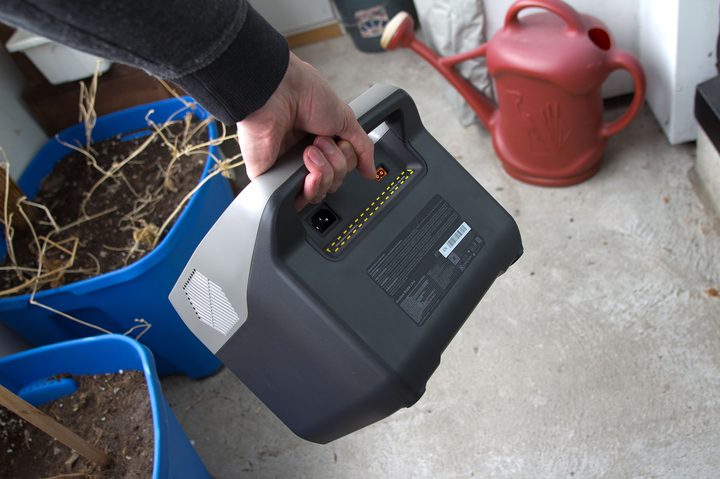
For one, the hardware layout is sensible. A flat top is important for stacking and packing, which was a significant pain point with the Anker model I reviewed last year. Common power inputs in the back make it easier to have stuff charging through the outputs in the front at the same time. The AC outlets are well-spaced, raised, and flap-free, making them accessible for plugs of various sizes.
Almost completely mobile-friendly
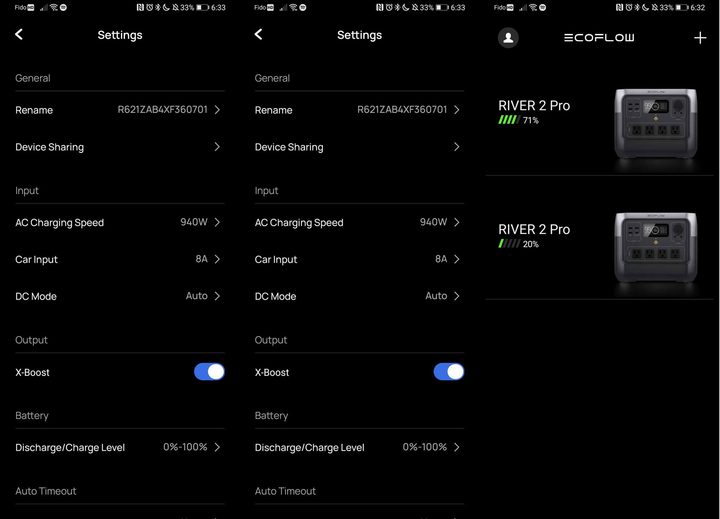
EcoFlow has a slick mobile app. Many power stations don’t, and the few I’ve tried have been janky as heck. Setup over Wi-Fi and Bluetooth was painless, and the interface is uncluttered. Settings like minimum and maximum charge levels and activity timeouts are useful for maintaining battery health. Wireless charging on the top of the hardware and maybe one more high-speed USB-C slot would have made the EcoFlow River 2 Pro even more mobile-friendly.
Need for (unnecessary) speed
A major selling point on this model is its charging speed. I’m used to waiting around three hours to charge batteries in this class. By contrast, I was able to top up the EcoFlow River 2 Pro in about an hour. Our Emporia smart plug clocked around 600 Wh between a few full charges and discharges, which is shy of the 768 Wh rating on the box. It’s a small enough discrepancy that I’d be willing to chalk it up to a safety buffer or inconsistency in the smart plug.
Now, given that speedy charging is cool, I’m not often in a spot where I’m on the clock and I have to charge a large battery pack as quickly as possible. I bump into those demands far more often with phones and laptops. I’m sure the battery management system on the River 2 Pro mitigates the risk caused by the extra heat of quick charging. Still, I would trade in that speed for a few more cycles if the stress of fast charging reduces the battery’s overall lifetime. As it stands, the five-year warranty affords some long-term peace of mind.
Better outdoors
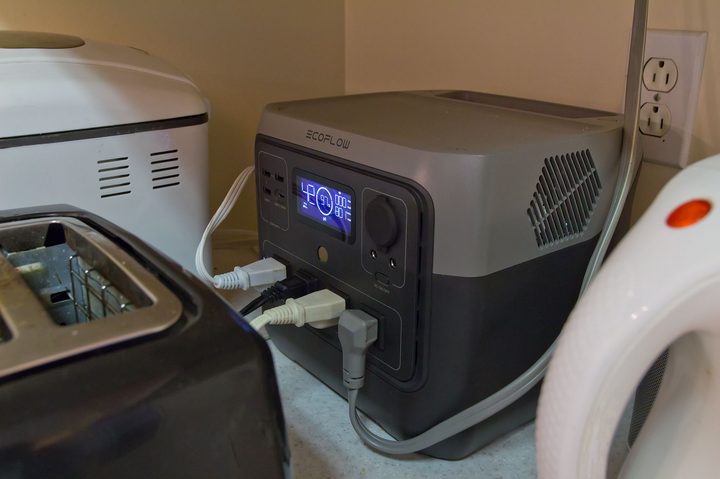
Let’s dig into use cases a bit. This pack isn’t really built for home power backup, although there is a handoff feature that can quickly kick in battery power when the lights go out. The EcoFlow River 2 Pro failed to run my microwave, contrary to some of the marketing. It was able to get the electric kettle to a boil using about 10% of the battery’s charge. EcoFlow’s Delta family is better-suited to the task of home power backup thanks to higher output and capacity.
I think framing the River 2 Pro as a camping companion makes a lot more sense. It’s small enough to be portable, and big enough to keep everyone’s phones and drones powered for a few days while out in the boonies. It’s got an IP68 waterproof rating and a degree of independent security certification, which gives some confidence in its outdoor performance.
Solar-ready
Solar compatibility gives the EcoFlow River 2 Pro additional outdoor chops, especially if you intend on staying out for more than a few days. It’s easy to see a portable solar setup like this working in an RV situation. EcoFlow does have a bundle that includes a 220W portable solar panel, though I didn’t get to test it.
I was able to connect another brand’s solar panel to it without any issue, however. Solar charging times in general vary wildly depending on the size of your panel, direct sunlight coverage, how much you’re willing to babysit and reposition the panels, and whether Mercury is in retrograde. It’s black magic all around, so I won’t dare to provide charging time estimates, but if you’re going to bother, make sure you get panels that are a decent size.
The LCD display covers all the bases, including estimated charge and empty time, input and output rates, and warning messages. It would be nice to have an audio alert when the battery is about to die, but otherwise, there aren’t any complaints about the hardware interface.
The EcoFlow River 2 Pro is using a lithium iron phosphate (LiFePO4) chemistry, which is common enough in this category. It’s a bit less energy dense than the batteries you’ll find in phones and laptops, but LiFePO4 batteries have the benefit of avoiding problematic cobalt supply chains. EcoFlow tells us that it holds their suppliers to “high environmental protection standards,” and that it encourages suppliers to get ISO 14001 certification. Unfortunately, the doesn’t tell us much about specific environmental benchmarks. For a brand with “eco” in its name, I was hoping for a bit more information on sustainability. On the upside, EcoFlow does have a trade-in program to handle products at the end of life.
I’m eager for the snow to finish melting so I can get outdoors more. When that happens, I could easily find room in my trunk for the EcoFlow River 2 Pro. A polished and useful mobile app combined with a sensible layout help it stand out from other power stations in this class. Fast charging is definitely cool, but only useful to a small group that’s on a tight schedule and has high remote power demands.