  1. Home
  2. Social Media
  3. News

Google Messages gets a Trash folder for your unimportant chats to simmer in

Deleted the wrong chat? Google Messages now has a Trash folder

Add as a preferred source on Google
AI-generated Google Messages with a Trash Bin
Nadeem Sarwar

Google Messages is getting a small but genuinely meaningful feature that can help with cleanups and accidental inputs. The app now has a proper trash folder to let you get back to conversations you recently got rid of.

Why this is a handy new feature

The company’s official support documentation revealed the new Trash folder that lets users recover deleted conversations within 30 days. This adds a buffer that should help cut down on accidental message loss. But after this month-long window ends, the conversation is permanently deleted.

Recommended Videos

Though, the feature is still very useful. Instead of a deleted conversation vanishing for good right away, it goes into Trash first, similar to Google Drive‘s Bin folder. From there, users can restore individual chats, restore all of the deleted chats, or permanently wipe selected conversations. Google says that each trashed conversation shows an individual countdown indicating how many days remain before they are truly removed.

There’s more than one way to send chats to Trash
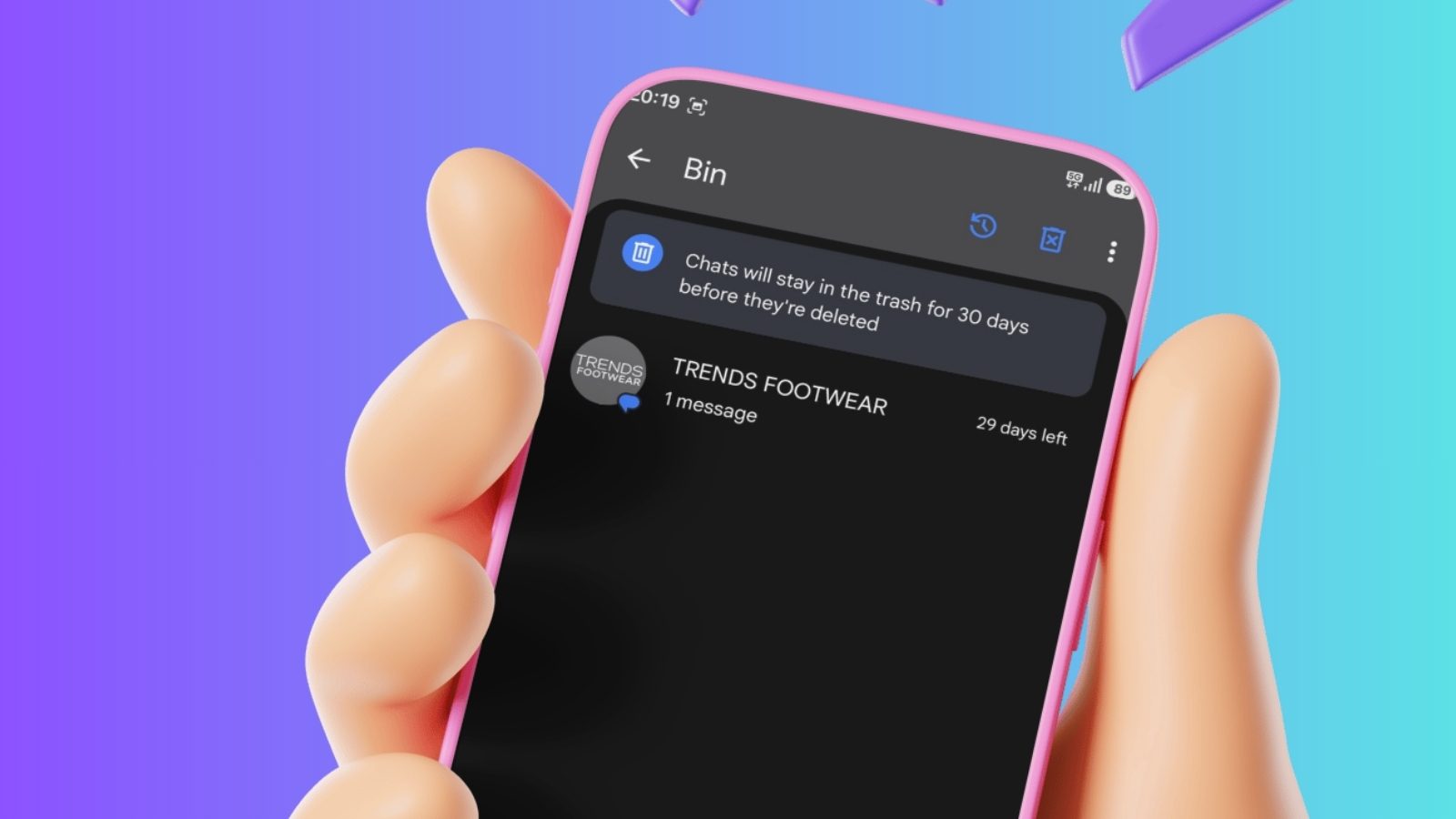
Google built this feature to be easily accessible. Users can move conversations into Trash either by setting up a swipe action or by touching and holding one or more chats and tapping the Trash icon. To enable the swipe shortcut, users need to head into Messages settings, open Swipe actions, and assign Trash to either the left of right swipes.

There is also one small catch.

If you receive a new message in a conversation that is currently in Trash, that incoming message can appear as a new conversation in your inbox. So Trash is not necessarily a holding area for chat threads you are trying to avoid.

Vikhyaat Vivek
Vikhyaat Vivek is a tech journalist and reviewer with seven years of experience covering consumer hardware, with a focus on…
The best life advice I ever followed was deleting Instagram, and it soothed my frustrated soul
Instagram

I won’t lie, I got addicted to Instagram. And for a long time, I didn’t even realize how much it was messing with my head. It sounds dramatic when you say it out loud, but it really crept up on me. I got so used to watching Instagram reels all the time that my brain just stopped having patience for anything longer. A full YouTube video felt like a commitment, and reading something without checking my phone in between felt impossible. And the worst part was, I knew exactly why it was happening.

I tried fixing it the usual ways — set app timers, try apps that stop you from doomscrolling, and tell myself I’d cut down. Some days it worked, most days it didn’t. I’d still find myself opening Instagram without even thinking about it. So one day, I stopped trying to control it and just deleted the app from my iPhone. And honestly, that one small decision did more for me than everything else I had tried.

Read more
Internet’s favorite app Vine is back from the dead, and it’s called Divine
The six-second videos that launched a thousand creators are back, and this time, they're here to stay.
Divine app open on iPhone

Vine is back, and if you're already feeling nostalgic, you're not alone. Divine, a Vine reboot backed by Twitter co-founder Jack Dorsey, is now available on the App Store and Google Play. The app brings back roughly 500,000 archived Vine videos and lets creators post new six-second looping videos once again.

As reported by TechCrunch, Dorsey's nonprofit, "and Other Stuff," financed the project. He's not looking for a return on his investment here. His goal is simpler: to undo the mistake he made when he shut down Vine back in 2017.

Read more
Social media scams caused over two billion dollars in losses to consumers last year
Facebook scams led consumer losses as social media fraud surged in 2025
cyberscam-romance-scam

Social media is now America's most expensive scam hotspot. According to the Federal Trade Commission (FTC), consumers reported $2.1 billion in losses from platform-based fraud in 2025, a number that has grown eightfold in five years. Nearly one in three fraud victims said the con started on a social platform.

Why is Facebook such a big target?

Read more