
An American astronaut has shared a wonderfully unique image of Earth taken from the International Space Station (ISS).
Three-time space visitor Don Pettit, who currently has his feet on terra firma, posted the remarkable photo on his Twitter account on Monday.
It may not be obvious at first glance — or even second — but the long-exposure image (below) shows Earth through the windows of the space station’s Cupola module. If you look carefully toward the bottom left of the picture, you’ll also see some beautiful star trails.
“Fish-eye lens long-exposure view of the Earth from the Cupola, aboard the ISS,” the astronaut wrote in his tweet. “Below, city lights flow as orange streaks, and faint star trails that show the Earth’s rotation are visible in the lower left. Astrophotography can find exciting ways to combine both science and art!”
Fish-eye lens long-exposure view of the Earth from the Cupola, aboard the @iss. Below, city lights flow as orange streaks, and faint star trails that show the Earth's rotation are visible in the lower left. #astrophotography can find exciting ways to combine both science and art! pic.twitter.com/JwrFeZMl7v
— Don Pettit (@astro_Pettit) September 11, 2022
In recent days, another of Pettit’s images showing Earth lights and star trails caused quite a stir online.
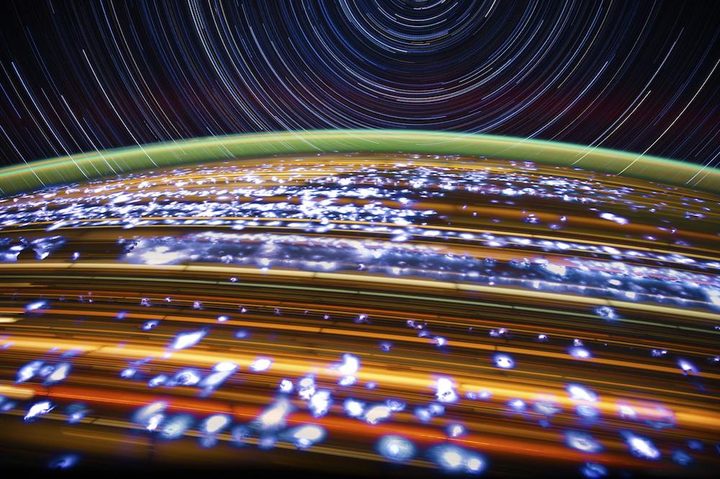
Pettit’s most recent space trip was in 2012, so space fans must be delighted that the experienced astronaut and keen astrophotographer is sharing some of the extraordinary images that he captured so many years ago.
While Pettit’s work can be beautifully surreal, more recent ISS inhabitants have been sharing Earth images that show more clearly various features of the land and sea.
French astronaut Thomas Pesquet, for example, is a keen photographer and during his most recent mission captured some fabulous shots of our planet. And if you think the enviable viewpoint 250 miles above Earth would make it easy to capture such shots, then think again. It actually takes a great deal of planning.
With its seven windows, the Cupola module offers the best views of Earth and beyond from the confines of the space station. This makes it a popular spot for astronauts to go and relax during their downtime.
But the largely unobstructed views also make the Cupola an important work location as astronauts can use it to monitor and assist not only spacewalks but also the arrival and departure of spacecraft.


