Get straight to the top tech—no junk, just the best.
Tech doesn’t have to be all about smartphones, tablets, and other devices that connect us to one another. There’s a whole other world out there, in fact, and a great piece of tech to connect one to the rest of the universe is a star projector. A star projector uses lasers or other forms of light to project a map of the night sky onto a wall, ceiling, or entire room. They may not be the same experience as getting lost in the best space photos of all time, but the best star projectors can be educational, fun, or create a great atmosphere for sleeping. We’ve scoured the market and have tracked down what we feel are the best star projectors. You’ll find selections for the best star projector for kids and the best star projector if you have a lot of money to spend, among others. Read onward for our selections, and to learn a little bit about which star projector is best for you.
We feel the Sega Homestar Flux is the best star projector on the market because of its great value. There are more expensive star projectors out there and they’ll offer quite a bit when it comes to projecting the sky, but the Sega Homestar Flux offers nearly as much and manages a reasonable price point. It utilizes LED technology for projection and includes and adjustable timer, angle, and focus. It comes with two realistic discs and a poster, with more than 30 optional discs available for purchases separately.
The Dark Skys DS-1 is the star projector for you if you’re looking to get serious with your at-home astronomy. In fact, the DS-1 is more than a star projector. It’s an entire home planetarium. It projects more than four million high definition stars onto your rooms, ceiling, or wall. It even has a random shooting star feature for a realistic viewing experience.
Kids can get in on the night sky fun with the Burnnove Astronaut Galaxy star projector. It’s designed like a little astronaut that can sit or stand on a bookshelf, desk, or bedside table. It has two control methods — by buttons on the back of the astronaut or with an included remote control. Two starry sky modes and five different nebula colors come alongside 17 different light modes. The Astronaut Galaxy star projector even has five different levels of brightness, which can turn it into the perfect night light as well.
National Geographic is a big name when it comes to the natural world, and it brings some of that world indoors with the National Geographic Astro Planetarium. In fact, it actually will allow you to take it anywhere, as it’s powered by AA batteries. This is the most accurate star projector we could find when it comes to time and day accuracy, and it makes a great option for learning and self-teaching. It has an integrated motor that can show falling stars, and projects the stars onto the ceiling with true time and day accuracy.
With the BlissLights Starport USB you can take a representation of the night sky anywhere with you. It’s simply a thumb drive with a projector on the end of it, and it allows you to light up your car, office, or other distant destination. It comes with a flexible extender so you can position it perfectly every time you use it. It doesn’t need a power outlet, and can shine from laptops, phone chargers, and anything else with a powered USB port.
We love a starry night as much as the next explorer, and we even have experience with several different star projectors. Additionally, a lot of the technology found in star projectors is similar to the tech we cover regularly. Being in the know about smart home devices and products like the best projectors for home theaters gives us some good insights when it comes to nailing down the best star projectors. We’ve made our selections for the best star projectors with the use cases mentioned above at the forefront, with a some weight leaning toward star projectors we know to be accurate and to hold up over time.
This article is managed and created separately from the Digital Trends Editorial team.
Andrew has been writing professionally for more than 20 years and has been writing about tech for three of them. His focus at Digital Trends is on deals writing and covering the year’s major sales events. His work in the tech realm also includes contributions to Sporting News, Pocket-lint, and Android Police. In his spare time Andrew enjoys skateboarding, road tripping, and moonlighting as a fiction writer and independent filmmaker.
Getting to Mars may require a pit stop in orbit, and NASA just tested the nozzle to make that happen
A gas pump nozzle for spacecraft sounds simple. It is not, and that's what makes this test worth paying attention to.
Getting a spacecraft to Mars or beyond requires an enormous amount of fuel, most of which has to be hauled from Earth, adding to the overall cost and weight of the spacecraft. NASA has been working on a different approach, one that could be more efficient and effective.
It wants to refuel a spacecraft in orbit before heading out for the mission. What’s even more interesting is that the space agency just finished testing a component that could make that possible: a cryocoupler.
Elon Musk’ Starlink could soon offer mobile services as a US carrier
Elon Musk’s Starlink has already changed how millions of people access the internet, especially in places where traditional broadband struggles to reach. Now, the satellite internet service could be preparing for an even bigger leap — becoming your mobile carrier.
According to a Financial Times report, SpaceX has told investors it’s considering launching a retail Starlink mobile service in the US. Instead of simply partnering with wireless carriers, the company could begin selling mobile plans directly to consumers, putting it in direct competition with Verizon, AT&T, and T-Mobile.
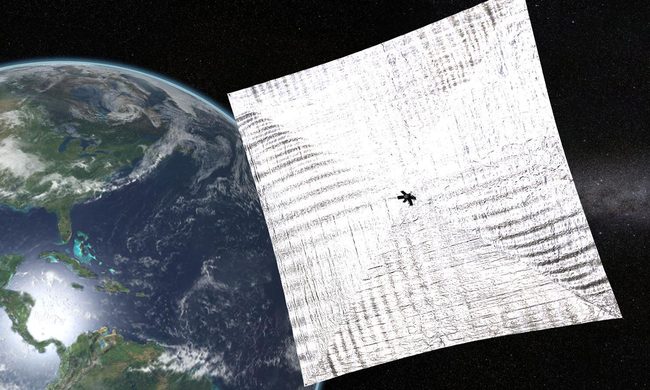
Lightsails have hit another speed bump on the road to interstellar travel
The coolest interstellar travel idea may get betrayed by the light pushing it
Laser-powered lightsails are one of the coolest answers to spaceflight. It might not be as sci-fi-sounding as a warp drive, but now, its practicality has also come under question. Using lightsails, a spacecraft could unfurl an ultra-thin reflective sail and let a powerful laser push it toward another star, without relying on fuel.
The tech was simple and elegant--except it's also more complicated than it sounds. A new preprint from researchers Chao Shen and Jiaze Li of the Harbin Institute of Technology suggests that relativistic lightsails may run into a hidden propulsion problem once they start moving extremely fast.