1. Home
  2. Space
  3. News

Getting to Mars may require a pit stop in orbit, and NASA just tested the nozzle to make that happen

A gas pump nozzle for spacecraft sounds simple. It is not, and that's what makes this test worth paying attention to.

Add as a preferred source on Google
Architecture, Building, Factory
NASA Marshall / X

Getting a spacecraft to Mars or beyond requires an enormous amount of fuel, most of which has to be hauled from Earth, adding to the overall cost and weight of the spacecraft. NASA has been working on a different approach, one that could be more efficient and effective.

It wants to refuel a spacecraft in orbit before heading out for the mission. What’s even more interesting is that the space agency just finished testing a component that could make that possible: a cryocoupler.

For @NASA’s next generation of deep space exploration missions, spacecraft may need to refuel in Earth orbit before pushing farther into the solar system.

Engineers from #NASAMarshall and L3Harris are testing a technology vital for in-orbit refueling: https://t.co/oeqGBtvzpj pic.twitter.com/4w6HErAIAq

— NASA Marshall (@NASA_Marshall) June 26, 2026

So what exactly is a cryocoupler, and why does it matter?

Think of it as the nozzle of a gas pump, except for a spacecraft. A cryocoupler allows a rocket or deep-space probe to dock with an orbiting fuel station, refueling it with cryogenic propellants such as liquid hydrogen and liquid oxygen before pushing the craft into the depths of the solar system.

Recommended Videos

The cryocoupler has been developed by American defense and technology company L3Harris. The team at NASA’s Marshall Space Flight Center in Huntsville, Alabama, tested it by running liquid nitrogen through the coupler at -321 degrees Fahrenheit, analyzing its performance at extremely cold temperatures in both connected and disconnected configurations.

They also ran misaligned docking simulations as the device is designed to accommodate off-axis coupling (via Engadget).

Does this mean in-orbit refueling is almost here?

Unfortunately, not yet. As cryocoupler project manager Travis Belcher puts it, “in-orbit cryogenic refueling between two spacecraft has yet to be done and remains one of the toughest engineering challenges in spaceflight.” 

The encouraging part, however, is that this coupler is fully automated with no spacewalk needed. Furthermore, it can attach and detach multiple times.

Even so, these are early-stage tests, and future evaluations will be tailored to specific conditions and missions. If the engineering holds, spacecraft could one day top up in orbit rather than carrying all the possible fuel from the ground. 

Shikhar Mehrotra
For more than five years, Shikhar has consistently simplified developments in the field of consumer tech and presented them…
Elon Musk’ Starlink could soon offer mobile services as a US carrier
Showcase of T-Mobile Starlink service on an iPhone.

Elon Musk’s Starlink has already changed how millions of people access the internet, especially in places where traditional broadband struggles to reach. Now, the satellite internet service could be preparing for an even bigger leap — becoming your mobile carrier.

According to a Financial Times report, SpaceX has told investors it’s considering launching a retail Starlink mobile service in the US. Instead of simply partnering with wireless carriers, the company could begin selling mobile plans directly to consumers, putting it in direct competition with Verizon, AT&T, and T-Mobile.

Read more
Lightsails have hit another speed bump on the road to interstellar travel
The coolest interstellar travel idea may get betrayed by the light pushing it
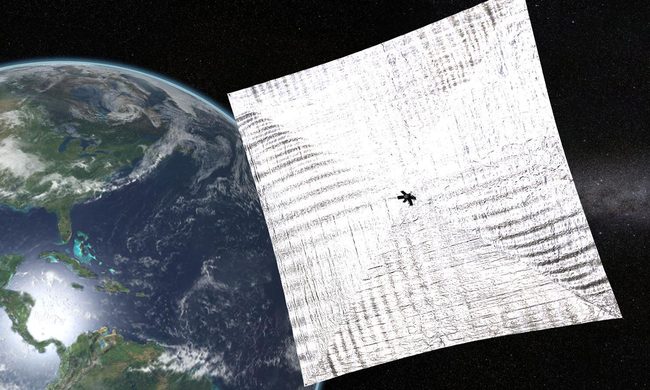
LightSail in Earth orbit

Laser-powered lightsails are one of the coolest answers to spaceflight. It might not be as sci-fi-sounding as a warp drive, but now, its practicality has also come under question. Using lightsails, a spacecraft could unfurl an ultra-thin reflective sail and let a powerful laser push it toward another star, without relying on fuel.

The tech was simple and elegant--except it's also more complicated than it sounds. A new preprint from researchers Chao Shen and Jiaze Li of the Harbin Institute of Technology suggests that relativistic lightsails may run into a hidden propulsion problem once they start moving extremely fast.

Read more
The galaxy has an exoplanet size mystery, and NASA’s EVE mission wants to solve it
This planet-hunting mission wants to catch baby worlds before they grow up
Artist’s Illustration of Exoplanets Orbiting Barnard’s Star

Mankind venturing into space ended up creating more questions than it answered, and one of the dilemmas is related to the planet sizes. Astronomers have found plenty of rocky super-Earths and plenty of puffier sub-Neptunes, but far fewer planets with a radius of about 1.8 times Earth’s.

That gap is known as the radius valley, and a proposed mission called the Early eVolution Explorer, or EVE, wants to figure out why it exists. NASA has a simple plan: look at planets while they are still young. The mission concept, detailed in a new arXiv preprint and covered by Phys.org, would focus on newly formed star clusters to see what small planets look like before billions of years of evolution.

Read more