
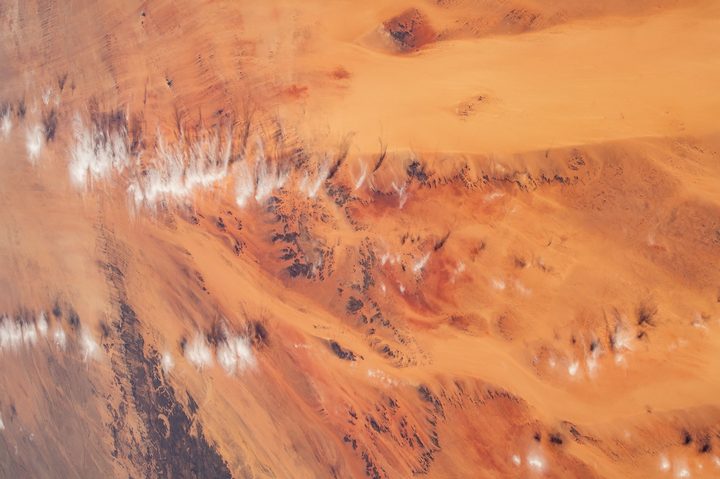
After offering some fresh perspectives of the inside of the International Space Station (ISS), private astronaut Marcus Wandt pointed his camera the other way and captured some stunning images of Earth.
“Isn’t she pretty?” Wandt wrote on Monday in a social media post that included the pictures.
Isn't she pretty?#Earth #NoFilter #Muninn pic.twitter.com/thVHkniUHC
— Marcus Wandt (@astro_marcus) February 4, 2024
When it comes to aerial photography, you really can’t beat the incredible vantage point offered by the space station some 250 miles above Earth. Some astronauts are more interested than others when it comes to capturing imagery of our beautiful planet. French astronaut Thomas Pesquet, for example, made a name for himself as a particularly skilled Earth photographer and even released a book featuring his best images. But capturing the amazing photos actually takes a great deal of research and planning, according to Pesquet.
In another post shared on Monday, Wandt included images that showed Earth and large parts of the space station, including its solar arrays and various modules that make up the large orbital facility.
“This is how I see the International Space Station from the inside,” Wandt wrote. “My working station is an incredible piece of spacecraft engineering. On it I travel about 400 km above your heads at 28,000 km per hour, circling Earth approximately 16 times every day.”
He added: “The Space Station is the largest object ever built in orbit, a place that has brought humankind together to live and work in space continuously for more than two decades.”
This is how I see the International @Space_Station from the inside. My working station is an incredible piece of spacecraft engineering.
On it I travel about 400 km above your heads at 28 000 km per hour, circling Earth approximately 16 times every day.
The Space Station is… pic.twitter.com/So9QMKtztI
— Marcus Wandt (@astro_marcus) February 5, 2024
Wandt arrived at the space station with three other crewmembers on January 20 for a two-week stay that’s seen him conducting science research, taking part in outreach events, and, yes, taking impressive Earth images. His mission, Axiom-3, has been organized by Texas-based Axiom Space and is the third private astronaut mission to the ISS to be overseen by NASA.
Wandt and his three fellow travelers are set to undock from the space station at 9:05 a.m. ET on Tuesday, February 6. They’ll travel home aboard the same vehicle that they arrived in, a SpaceX Crew Dragon.


