  1. Home
  2. Space
  3. Emerging Tech
  4. News

NASA to launch SPHEREx mission to investigate the origins of our universe

Add as a preferred source on Google

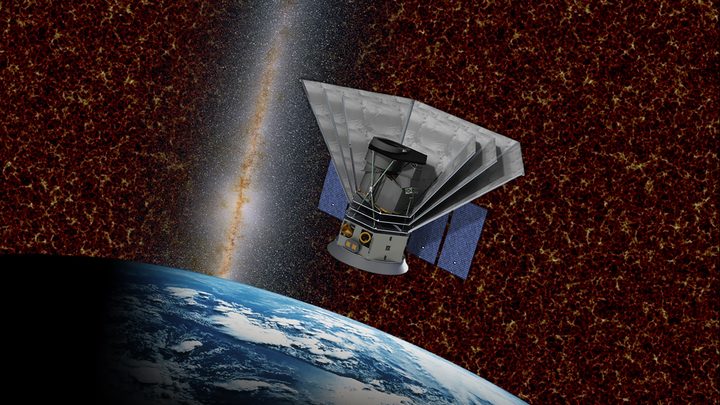
NASA’s Spectro-Photometer for the History of the Universe, Epoch of Reionization and Ices Explorer (SPHEREx) mission is targeted to launch in 2023. SPHEREx will help astronomers understand both how our universe evolved and how common are the ingredients for life in our galaxy’s planetary systems. Caltech

NASA is launching an ambitious new mission: To map the entire sky in order to understand the origins of the universe. The Spectro-Photometer for the History of the Universe, Epoch of Reionization and Ices Explorer (SPHEREx) mission will launch in 2023 and is planned to last for two years, surveying hundreds of millions of galaxies both close to us and far away.

Recommended Videos

SPHEREx will use optical and near-infrared light to survey the sky, capturing data on over 300 million galaxies and the more than 100 million stars within our own galaxy. Its primary goal is to learn about how our universe evolved and how common the essential ingredients for life are in planetary systems in our galaxy. It will map the entire sky every six months to create a map in 96 color bands, and will be searching for water and organic molecules like methanol or acetone in regions where stars and being born and new planets are forming.

“This amazing mission will be a treasure trove of unique data for astronomers,” Thomas Zurbuchen, associate administrator for NASA’s Science Mission Directorate, said in a statement. “It will deliver an unprecedented galactic map containing ‘fingerprints’ from the first moments in the universe’s history. And we’ll have new clues to one of the greatest mysteries in science: What made the universe expand so quickly less than a nanosecond after the big bang?”

A further function of SPHEREx will be to identify targets which can be studied in more detail by future missions such as the long-awaited James Webb Space Telescope, which will be the world’s most powerful telescope when it launches — 100 times as powerful as Hubble.

The cost of the SPHEREx project is a hefty $242 million, which does not include launch costs. But NASA is confident that the mission will be worth it: “I’m really excited about this new mission,” said NASA administrator Jim Bridenstine. “Not only does it expand the United States’ powerful fleet of space-based missions dedicated to uncovering the mysteries of the universe, it is a critical part of a balanced science program that includes missions of various sizes.”

Georgina Torbet
Georgina has been the space writer at Digital Trends space writer for six years, covering human space exploration, planetary…
Scientists have found a hidden galaxy inside the Milky Way, and they’re calling it Loki
A lost dwarf galaxy may be hiding inside the Milky Way.
milky-way-hidden-galaxy-loki

Our home galaxy has a secret buried inside. A new study published in the Monthly Notices of the Royal Astronomical Society suggests that the Milky Way swallowed an ancient dwarf galaxy billions of years ago, and its stellar remains are still embedded within ours.

Researchers have named this lost galaxy Loki, after the Norse trickster god, and the name is quite fitting because it remained hidden in plain sight for a very long time.

Read more
NASA aims September launch for Roman space telescope and it’s going to be a huge shift
An earlier target for Roman means one of NASA’s most ambitious observatories is getting close, with the potential to open a huge new era in space discovery
Machine, Wheel, Astronomy

NASA is now aiming to launch the Nancy Grace Roman Space Telescope as soon as early September 2026, a faster timeline than its earlier commitment to fly no later than May 2027. That alone makes this one of the agency’s most important missions to watch over the next few months.

The reason is simple, Roman is built to scan vast parts of the sky with sharp infrared vision.

Read more
Blue Origin successfully re-uses a New Glenn rocket for the first time ever
Blue Origin achieves first New Glenn reflight despite payload setback
Blue Origin

Blue Origin has achieved a major milestone in its spaceflight ambitions by successfully reusing a booster from its heavy-lift New Glenn rocket for the first time. The historic launch, conducted on April 19, marks a significant step forward for Jeff Bezos’ space company as it seeks to compete with rivals like SpaceX in the rapidly evolving commercial launch market.

A Milestone With A Mixed Outcome

Read more