  1. Home
  2. Space
  3. News

When is the next total solar eclipse?

Add as a preferred source on Google
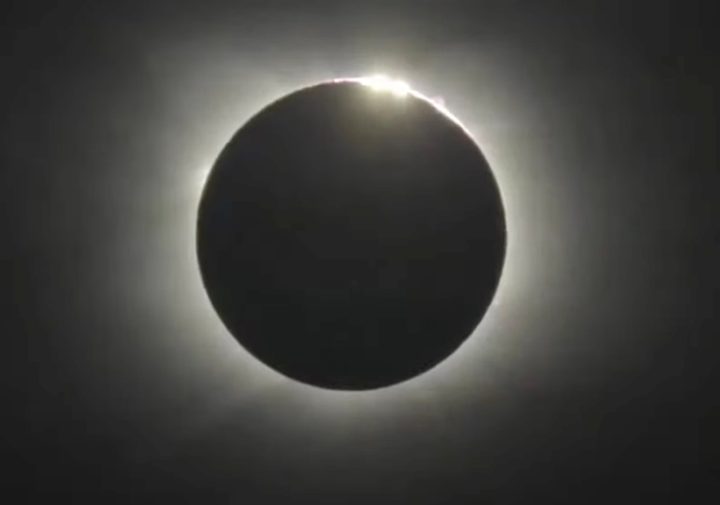
A total solar eclipse.
NASA

The highly anticipated total solar eclipse on April 8 has been and gone. The fleeting moment when the moon came between the sun and Earth, causing a giant shadow to sweep across a part of the U.S., Canada, and Mexico, sent millions of people into a frenzy of excitement on Monday afternoon.

Some of those folks will already be wondering about the date of the next solar eclipse as they consider traveling to the ends of the Earth to witness this spectacular celestial phenomenon again. Plenty of people in countries around the world who could not make it to North America to witness Monday’s total solar eclipse will be keen to know the next one in the hope that it might be easier to get to.

So, here’s what you need to know.

Recommended Videos

The next total solar eclipse will take place on August 12, 2026, with the path of totality sweeping across eastern Greenland, the west coast of Iceland, Spain, a little bit of Portugal, and Russia.

There will be another total solar eclipse a year later, on August 2, 2027, when the path of totality will cross southern Spain, Gibraltar, and north Africa.

This decade will also see a total solar eclipse on July 22, 2028, in Australia, while in the 2030s, there will be eight opportunities to witness a total solar eclipse in various parts of the world.

However, the next one to occur in the U.S. won’t be until 2044, when the path of totality will touch several states in the north of the country, as well as Canada.

In the years ahead, there will also be partial solar eclipses, where the moon covers only part of the sun’s disk, and annular eclipses when the moon is too far from Earth to completely block out the sun’s light. Check the Time and Date website for detailed information on times and locations.

Trevor Mogg
Contributing Editor
Not so many moons ago, Trevor moved from one tea-loving island nation that drives on the left (Britain) to another (Japan)…
Stunning close-up footage shows NASA’s moon rocket roaring to space
On its first crewed flight, NASA's lunar rocket displays its awesome power.
NASA's SLS rocket roars skyward at the start of the Artemis II mission on April 1, 2026.

As NASA’s Artemis II astronauts journey back to Earth following their breathtaking close encounter with the moon earlier this week, the space agency has just shared some stunning footage (below) of the rocket launch that sent the crew on its way on April 1.

The close-up tracking shot shows the awesome power of the Space Launch System (SLS) rocket’s four core RS-25 engines together and its two solid rocket boosters as the 98-meter-tall vehicle roars away from the launchpad at the Kennedy Space Center in Florida.

Read more
How to watch NASA’s moon crew splash down at end of historic mission
The Orion spacecraft's final moments before splashdown will be the most perilous of the entire mission.
Earth and the moon as seen from the Orion spacecraft during the Artemis II mission in April 2026.

The Artemis II astronauts have looped around the moon, captured some extraordinary imagery (above), set a slew of records, and are now on their way back to Earth.

The 10-day mission will reach its climax on Friday, April 10, during a dramatic homecoming that will see the Orion spacecraft enter our planet’s atmosphere at a speed of nearly 25,000 miles per hour.

Read more
Notable firsts of the Artemis II moon mission … so far
The Artemis II crew are now on their way home, so let's take a look at the mission's achievements so far.
The moon as seen from the Orion spacecraft during the Artemis II mission.

Having just looped around the moon in a historic flyby of our nearest neighbor, the Artemis II crew are now on their way back to Earth.

NASA’s Victor Glover, Reid Wiseman, and Christina Koch, along with the Canadian Space Agency’s Jeremy Hansen, launched aboard the Orion spacecraft from the Kennedy Space Center on April 1, lifted to space by the mighty SLS rocket.

Read more