
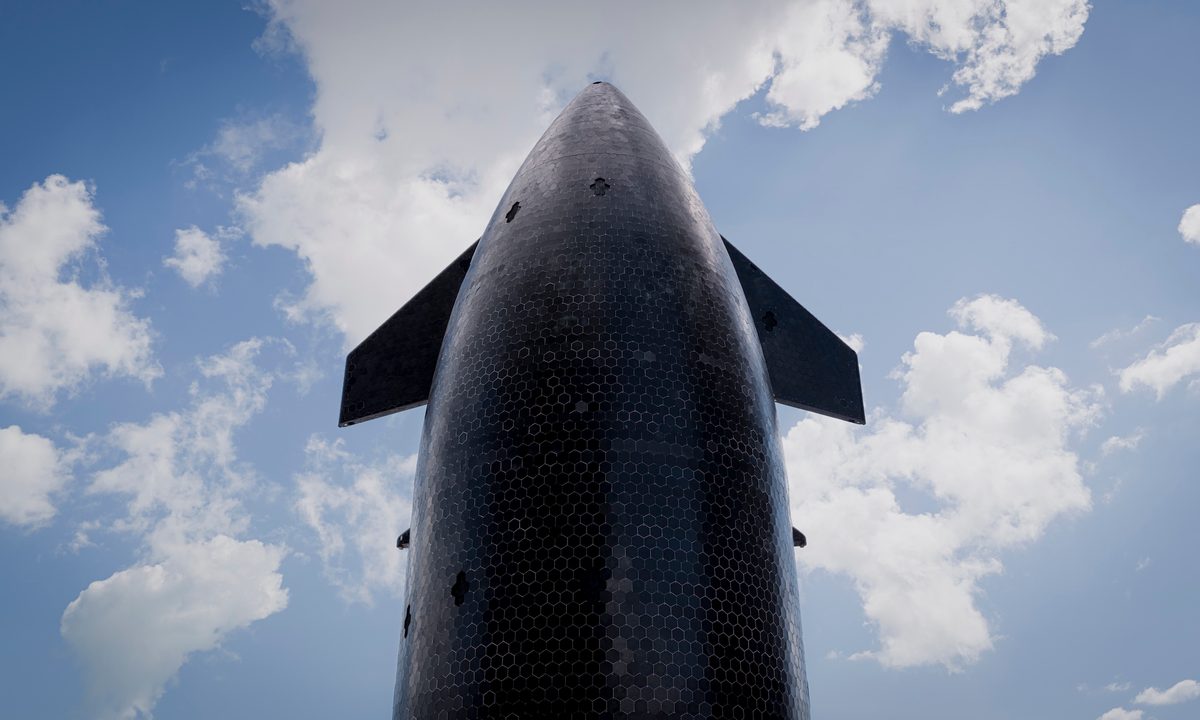
SpaceX is targeting this month for the 12th launch of its gargantuan Starship rocket, which comprises the first-stage Super Heavy booster and upper-stage Ship.
While much has rested on each and every one of its previous 11 test flights, the first of which took place in April 2023, the next launch is a big deal for the Elon Musk-led spaceflight company.
That’s because the mission involves a new version of the rocket, with its design based closely on the one that’s destined for future flights to the moon and possibly even Mars.
Version 3 of Starship incorporates structural refinements, more powerful engines, and a raft of lessons learned from earlier mishaps and failures. The entire vehicle is a little taller, too, at 124.4 meters compared to 123.3 meters, and features considerably larger grid fins for improved flight control.
The new design represents a shift from experimental prototype toward something closer to an operational system, with the redesigned rocket the first Starship capable of orbital flights.
The upcoming 12th flight will aim to demonstrate structural and systems upgrades across the vehicle, validate the performance of its latest Raptor engines, execute a clean stage separation and controlled ascent profile, and gather critical data on booster recovery systems that move the rocket closer to routine reuse, among other goals.
The Starship won’t need to perform a perfect flight, but it will need to convince NASA and its partners that progress is accelerating.
That’s because rival spaceflight company Blue Origin, led by Amazon founder Jeff Bezos, is knocking at the door.
Blue Origin is also competing for NASA contracts and could even provide the spaceflight hardware for the recently revamped Artemis III mission in low‑Earth orbit in 2027, putting extra pressure on SpaceX to demonstrate measurable progress with the Starship.
SpaceX currently has the contract for the Artemis III and Artemis IV missions (the latter of which will put astronauts back on the moon, possibly in 2028), but should Starship development falter, Blue Origin could step in.
Clearly there’s a lot to play for, though it’s worth noting that Blue Origin has far less flight experience with its New Glenn rocket and its untested Blue Moon lander, leaving SpaceX well-positioned to prove Starship’s reliability first.
SpaceX has yet to announce a specific target date for the Starship’s 12th flight. We’ll share news of it just as soon as we know.


