
I used to think watches weren’t for me. Why would I need a lump of metal strapped to my wrist when I could just use the position of the sun (or, you know, my iPhone) to tell the time of day like a real man? That is, until someone let me borrow their old Apple Watch.
Now I’m hooked. My Apple Watch is utterly indispensable to me, whether I’m simply checking the time, responding to notifications, or tracking my workouts. But it’s that last thing that has highlighted to me a real problem with Apple’s wearable — and something the company still hasn’t fixed close to a decade after first revealing the device.
No time for recovery
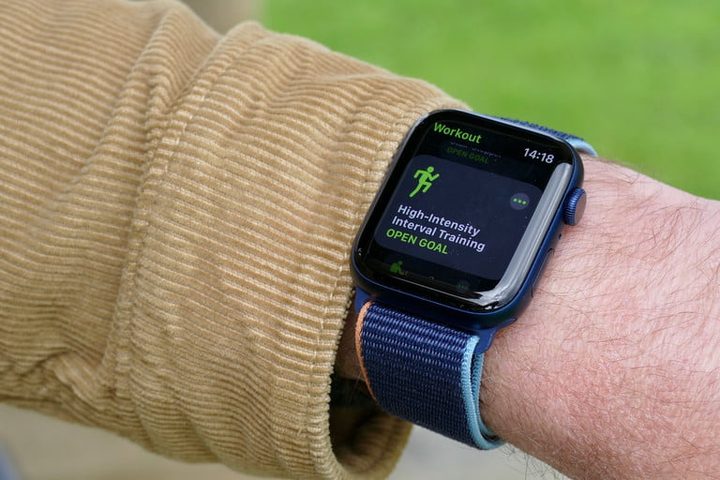
The Apple Watch encourages you to be active by closing three separate rings every day: one for exercising, one for moving, and one for standing. As you hit these targets day after day, you build up a streak that Apple encourages you to maintain as time goes on.
The problem is that there is simply no let-up in your streak. It’s all or nothing, use it or lose it, regardless of minor inconveniences like illness, injury, or an act of god.
This is a problem for two reasons. The first is that it’s way too inflexible for the vagaries of everyday life. What if you’re struck down by an illness and bed-bound for a few days? There goes your streak, you lazy good-for-nothing.
I know how that feels. Earlier this year I had a bad bout of food poisoning and spent half the night and the following morning throwing my guts up. But by the evening I was being strenuously nagged by my Apple Watch, and my overly competitive side just couldn’t let my streak end. So I got up and shuffled around outside for half an hour to close my exercise ring, even though I really should have stayed in bed. My Apple Watch (and, yes, my own competitiveness) just didn’t understand that sometimes I’m not in a fit state to exercise.
The second problem is that this relentless approach goes against what we know is best for the body. A period of rest and recovery is important after doing strenuous exercise, both to avoid injury and to consolidate the gains of exercise. Yet your streak is broken if you try to do that with the Apple Watch.
Gentler Streak offers a better way
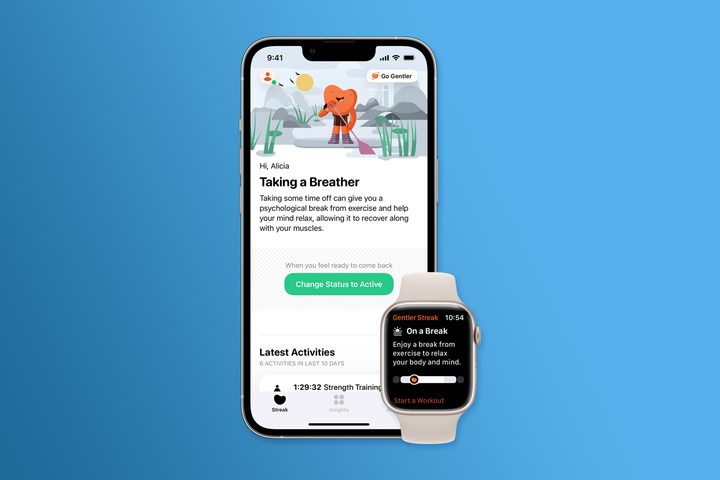
I recently came across an app that shows how Apple could do things differently. It’s called Gentler Streak, and the name really is appropriate. While it also uses exercise streaks like Apple’s Workouts app, Gentler Streak allows you to have recovery days.
In fact, it actively encourages you to rest. Your activities are measured along a green horizontal bar called the Activity Path, with the app learning what you can do over time. If an exercise takes you too high on this bar, it’s a sign that you’re pushing your body too far. After that, the app suggests you take a day off to let your body recuperate.
Compare that to Apple’s Workouts app, which commends you for beating your daily targets, but never considers that you might be overdoing things. It’s like Apple’s solution is an excited puppy blinded by its own tunnel vision.

The key to Gentler Streak is that rest days do not break your exercise run. There’s no more nagging you to work out again and again if your body isn’t ready. The app’s developer says it’s trying to challenge “the unrealistic mainstream mindset of always pushing harder.”
Better yet, you can tell the app when you’re sick, injured, or taking a vacation, at which point the Activity Path is hidden so you don’t even have to think about it.
Yet despite all that, I’m still trying to close my rings every day, even now that I use Gentler Streak. That’s because while it recognizes rest days, Apple’s Workouts app does not, so I still get pestered every day that I don’t go for a walk or pump some iron.
Apple really needs to rethink this one
My competitive nature won’t spare me the guilt of losing my streak (currently at 572 days, so it’s not nothing), but I wish my Apple Watch would cut me some slack, even if my brain won’t. Sure, I could manually add spoof workouts to the Health app to close my rings when I’m not able to physically exercise, but I shouldn’t have to cheat just to satisfy my Apple Watch.
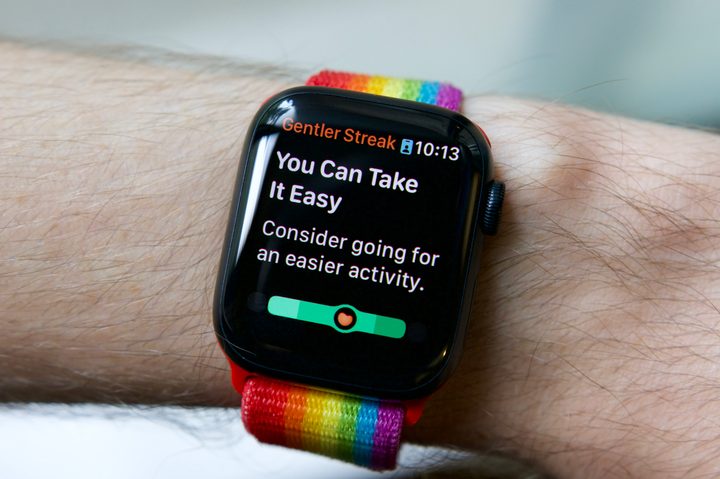
Gentler Streak isn’t perfect, but it goes a long way toward showing Apple what it could be doing with its Workouts app. I’m not an unyielding cyborg, ceaselessly able to exercise every day without fail on a quest to become one with my hiking boots.
Some days I’m going to need to rest, and some days I’m going to be away on vacation. Apple needs to be more realistic without pressuring and penalizing its users for being sensible with their health.


