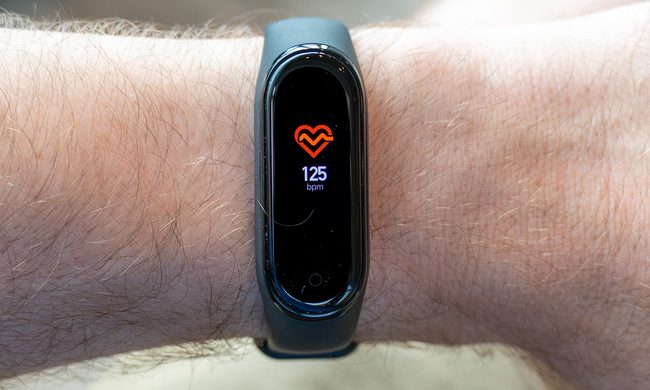
Wearables are more than gadgets you slap on your wrist — we’ve seen the tech move to the ear, our shoes, and even our clothing. Smart clothing is a trend we saw growing at CES 2016, where products like Hexoskin and the OMbra, made quite a splash.
Right now, most of these options offers to track your biometric fitness data, which can only tell you so much. But Enflux’s Smart Clothing shows you a 3D avatar of your body, allowing you to see where you need improvement to fix your form. It just launched on Kickstarter, and has already made $45,105 of its $100,000 goal.
Like most fitness wear, it’s skin-tight and made of a flexible polyester and Spandex blend. It has 10-embedded motion sensors that track your 3D movement, which is then sent to your smartphone via Bluetooth. Those motion sensors create a 3D avatar of yourself that tracks your movement when you exercise, so that you can review your form afterwards, and see if it needs improvement. You can also enable an audio assistant to give you real-time feedback while you’re exercising.
The sensors in the shirt and pants track your heart rate, and there’s also an O2 reader. There are buttons on the chest area of the shirt and on the waist of the pants that you press to activate the sensors and connect the app automatically. From there you can preload your own routine, go into “freestyle” mode, or choose a workout to track.
“It’s really analyzing the form, it’s what we specialize in.”
Upon launch, the iPhone and Android app will focus on weightlifting, plyometrics, and running — activities that are “common across athletes in training,” according to the Kickstarter. Doug Hoang, founder of Enflux, tells Digital Trends that eventually more sports and activities will be supported through app updates after product is released, which will be in March of 2017. It can still do the basic fitness wearable functions like counting your steps.
“It’s really analyzing the form, it’s what we specialize in,” Hoang said.
There’s a ghost animation that sits on top of your avatar when you perform exercises like pushups, so to improve you can check where exactly you’re differing from the ghost animation and try to line it up better. While its launch is a while away, the product has already been tested it on 500 people, some of whom were fitness world-record holders, Hoang said.
It’s odd to say, but yes, you will be able to charge your shirt and pants through via USB, just as you would your smartphone. The battery will last around two weeks, and while it is anti-odor, it’s good to hear that the shirt and pants are machine washable.
Enflux’s Smart Clothing will retail for $400, but there are a few Kickstarter bundles that offer the fitness gear for as low as $250. There are various sizes and multiple colors to choose from.
It’s a pricey fitness tool, and it’s certainly not the first smart clothing offering to improve your form — there are other devices like Lumo Run’s smart shorts that offer to improve your running form. With relatively accurate 3D model created by the sensors though, it’s easy to see various other use-cases for Enflux — which is something the company addresses in the Kickstarter.
“We are remaining focused on fitness applications as we get started, but we eventually see the Enflux Smart Clothing you are purchasing today becoming a hardware platform for physical therapy, video games, dance, virtual and augmented reality (especially mobile), and more,” according to the Kickstarter website.
The company is on track to successfully fund its campaign, but we’ll have to wait a while to see how Enflux Smart Clothing performs ourselves.