1. Home
  2. Wearables
  3. Mobile
  4. News

Google teases Pixel 7’s new chip, recycled aluminum design

Add as a preferred source on Google

During today’s Google I/O event, the company gave us a quick teaser of what we can expect from its next revolutionary smartphone: The Pixel 7.

Although the focus was primarily on the Pixel products that are coming now — the Pixel 6a, Pixel Watch, and Pixel Buds Pro — Google also wants to make sure it’s whetting our appetites for the next big entry in its smartphone lineup.

Recommended Videos

While it’s not launching until later this year, we’d already heard enough to know not to expect any significant design changes, so today’s teaser didn’t include any real surprises. The Pixel 7 that Google showed off looks nearly indistinguishable from the Pixel 6, suggesting that Google has settled on this design as the look for its smartphones.

However, that doesn’t mean that Google isn’t enhancing the design in some exciting ways. At today’s event, it shared that the rear of the Pixel 7 and Pixel 7 Pro will move to a 100% recycled aluminum finish across the entire rear casing, including the camera bar. The polished and aluminum glass design promises to deliver an even classier look for Google’s flagship smartphone.

A man stands on stage in front of a Pixel 7 and 7 Pro graphic.
Google

As expected, the Pixel 7 will be powered by Google’s next-generation Tensor chip, the second version of Google’s own silicon that builds on the original Tensor introduced with the Pixel 6. While this is being referred to as the “Tensor 2,” Google hasn’t announced its name just yet. The company did offer up that the Pixel 7 Pro will set a new standard for photography, performance, and design thanks to the powerful new chip that will power more heavy artificial intelligence processing for photography and video.

There have also been some indications that the Google Pixel 7 could adopt an under-display selfie camera for the first time, but the leaked renders we’ve seen have cast some doubt on that. Google didn’t mention this when it teased the new Pixel 7 at today’s event, and it conspicuously avoided showing us any images of the front of the Pixel 7.

The new Pixel 7 and Pixel 7 Pro will ship with Android 13 standard. Google confirmed that it will arrive this fall, but hasn’t shared any pricing or other details on it just yet, so we’ll have to wait and see what else it has up its sleeve for its next major smartphone release.

Jesse Hollington
Jesse has been a Mobile Writer for Digital Trends since 2021 and a technology enthusiast for his entire life — he was…
Apple wants you to verify your identity before you get Education discount on products
Apple moving the US Education Store off the honor system also seems about making a globally consistent verification infrastructure that could eventually support more aggressive Education Store expansion.
Computer, Electronics, Laptop

Getting an Apple Education discount in the United States used to be as simple as claiming you’re a student or a teacher; it didn’t need a formal verification. That era is officially over. 

Starting May 8, 2026, Apple now requires formal identity verification for all Education Store purchases in the US, ending the informal honor system that was in place for years (via MacRumors). 

Read more
You can finally avail an education discount on the Apple Watch
It's Apple broadening its ecosystem play into a segment that previously had no wearable entry point, and that could meaningfully accelerate Apple Watch adoption among younger first-time buyers.
Side view of Apple Watch Series 11.

Apple’s Education Store has always been a reliable shortcut to cheaper Macs and iPads for students and teachers. However, for years, Apple Watch wasn’t allowed into the story, making people wait for third-party sales or discounts to get their hands on the smartwatch. 

That’s changing, with effect from May 8, 2026. Apple has quietly added the Apple Watch to its Education Store for the first time. The Watch Series 11, SE 3, and the Ultra 3 are now available at discounted education pricing across 21 markets, including the US, UK, India, Canada, and Australia. 

Read more
Whoop’s response to Fitbit Air and Google Health is real doctors, not just an AI chatbot.
In the race to own your health data, Google chose an AI, and Whoop chose a doctor. That single decision may define which fitness tracker serious health users reach for in 2026 and beyond.
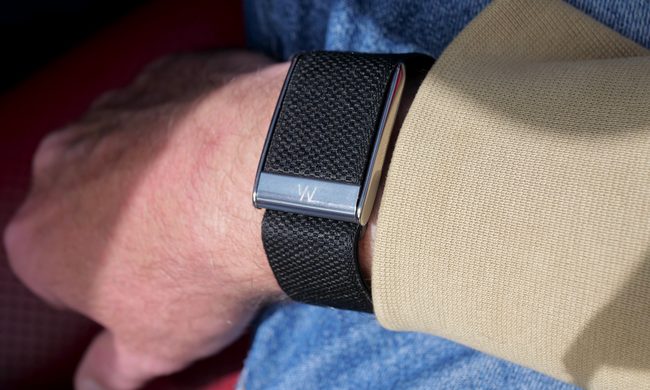
A person wearing the Whoop 5.0.

Recently, Google launched the Fitbit Air as a direct rival to the Whoop screenless fitness band, rebranded the Fitbit app to Google Health, and released a Gemini-powered AI coach. Exactly one day later, Whoop has responded with on-demand video consultations with licensed clinicians for US users. 

The contrast is hard to ignore. While Google is betting on AI as your general health advisor, Whoop is doubling down on real, licensed doctors, and making the case that they can serve its fitness-focused users considerably better (via CNBC).

Read more