1. Home
  2. Wearables
  3. News

Meta’s Horizon OS isn’t coming to third-party headsets anytime soon

Asus and Lenovo's Horizon OS headsets now face an uncertain future.

Add as a preferred source on Google
Meta Quest 3
Unsplash

Meta has hit the brakes on its plans to open up the operating system that powers its Quest headsets to third-party manufacturers. First announced last year alongside the Horizon OS rebrand, the initiative now hangs in limbo as the company shifts focus to building “the world-class first-party hardware and software needed to advance the VR market.”

When it initially pitched the idea, Meta aimed to democratize Horizon OS and create a new ecosystem of devices powered by its operating software. The company had even named Asus and Lenovo as early partners, with Asus developing a gaming VR headset and Lenovo focusing on a productivity model. With the latest announcement, these devices are effectively canceled.

Recommended Videos

According to Road to VR, Meta hasn’t completely abandoned the plan, with a spokesperson quoted saying the company is “committed to this for the long term and will revisit opportunities for the 3rd-party device partnerships as the category evolves.”

Android XR may have thrown a wrench in Meta’s plans

This shift in Meta’s approach could be influenced by the arrival of Android XR, Google’s software platform for mixed reality headsets. As Android XR gains momentum, it has the potential to steal the spotlight from Horizon OS and lead third-party manufacturers to favor Google’s platform over Meta’s.

By focusing on first-party hardware, Meta appears to be sidestepping a direct clash with Google while ensuring Horizon OS remains competitive in a rapidly evolving XR market. The company’s ecosystem ambitions are on hold for now, and its broader vision of an open, cross-device platform may have to wait until the market stabilizes.

It remains to be seen how Horizon OS adapts in response to Android XR and Apple’s Vision Pro. Meta is already betting big on entertainment as the next step in its evolution, having recently released a dedicated Disney+ app for its Quest headsets that lets users seamlessly transition from gaming to enjoying movies and TV shows in an immersive environment.

Pranob Mehrotra
Pranob is a seasoned tech journalist with over eight years of experience covering consumer technology. His work has been…
Apple Watch could soon enable a new blood pressure sensing feature
Apple's new blood pressor notification feature under FDA review
Apple Watch Series 11 brings new insights like sleep score and signs of hypertension.

Apple Watches already have hypertension notifications, but the Cupertino giant may be working on another blood pressure-related feature that goes further than the alert system available today.

According to Digitimes, Apple has a new high blood pressure notification feature under review by the U.S. Food and Drug Administration. That wording is a little tricky because Apple already released hypertension notifications in September 2025 with watchOS 26. The feature works on Apple Watch Series 9 and later, and Apple Watch Ultra 2 and Watch Ultra 3, in supported regions.

Read more
Meta’s Ray-Ban Display now types messages from your finger movements
Neural Handwriting is a really cool feature, but Meta opening the Ray-Ban Display to developers is the quiet announcement that turns a clever wearable into a platform with immense possibilities.
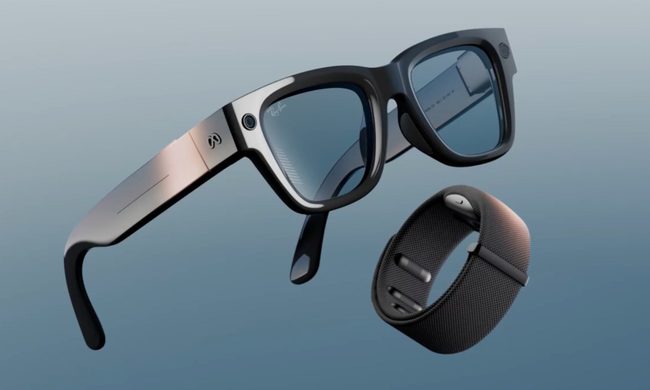
Meta Ray-Ban Display and EMG Band.

Six months into its life, the Meta Ray-Ban Display is starting to look less like an experiment, thanks to what is arguably the most significant update Meta has ever pushed for the device. 

The headline feature is Neural Handwriting, which is now available to every Ray-Ban Display owner, having spent its early months in limited access for Messenger and WhatsApp users. 

Read more
Forget smart glasses, these earbuds can see, hear, and remember everything for you
Electronics, Headphones

Smart glasses have always felt a little awkward to me. Sure, they can play music, take calls, snap photos, and even throw notifications in front of your eyes, but at the end of the day, they’re still just tiny screens sitting on your face. Now imagine removing the screen entirely.

That’s exactly what this new pair of AI-powered earbuds is trying to do. Instead of showing you information, these earbuds are designed to quietly hear, see, remember, and respond to the world around you. And honestly, this might be one of the more interesting directions wearable AI has taken so far.

Read more