

“Serious gamers seeking a budget-friendly headset should find the PDP Afterglow is about as good as it gets in this price segment.”
- Wide stereo sound
- Big, well-defined bass
- Good clarity and balance
- Affordable
- Feature packed
- Lack of depth and definition
- Some distortion issues
- Strange fit for some head shapes
“Why you can trust Digital Trends – We have a 20-year history of testing, reviewing, and rating products, services and apps to help you make a sound buying decision. Find out more about how we test and score products.“
Performance Design Products is one of those tech companies that makes cool stuff for your cool stuff. That includes cases for smartphones and e-readers, and a variety of other products under the umbrella of huge brands like Disney and Energizer, among others. Under its Afterglow brand, it sells a variety of illuminated, see-through console controllers for Xbox 360, PlayStation 3 and Wii console systems, a line of phosphorescent gaming headphones, and now the gleaming blue Afterglow Universal Wireless headset.
Loaded with features and accessibly priced at $89.95, the Afterglow headset presents an attractive choice. But can the Afterglow deliver a sonic experience that rises above the fray, even at such an affordable price? We sat down with the headset for some serious gaming to find out.
Out of the box
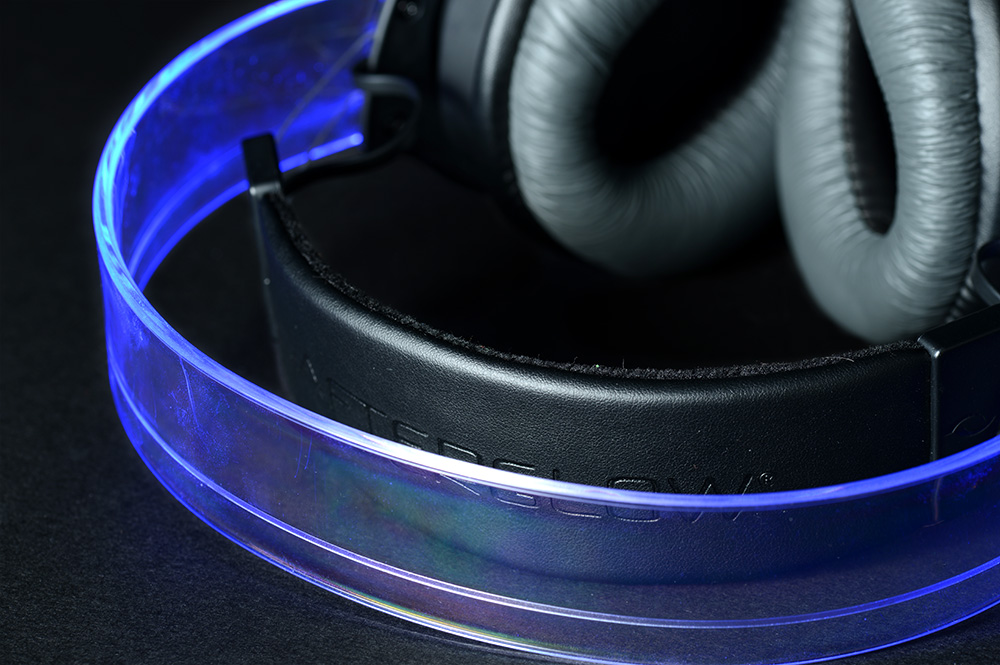
Inside its box, the Afterglow comes seated in thick grey foam, alongside a variety of connecting cables, and a small booklet of instructions. Pulling the headset from the foam, we got our first glimpse of the futuristic headset and its huge Plexiglas-like halo that arcs above the padded headband like a rainbow.
Features and design
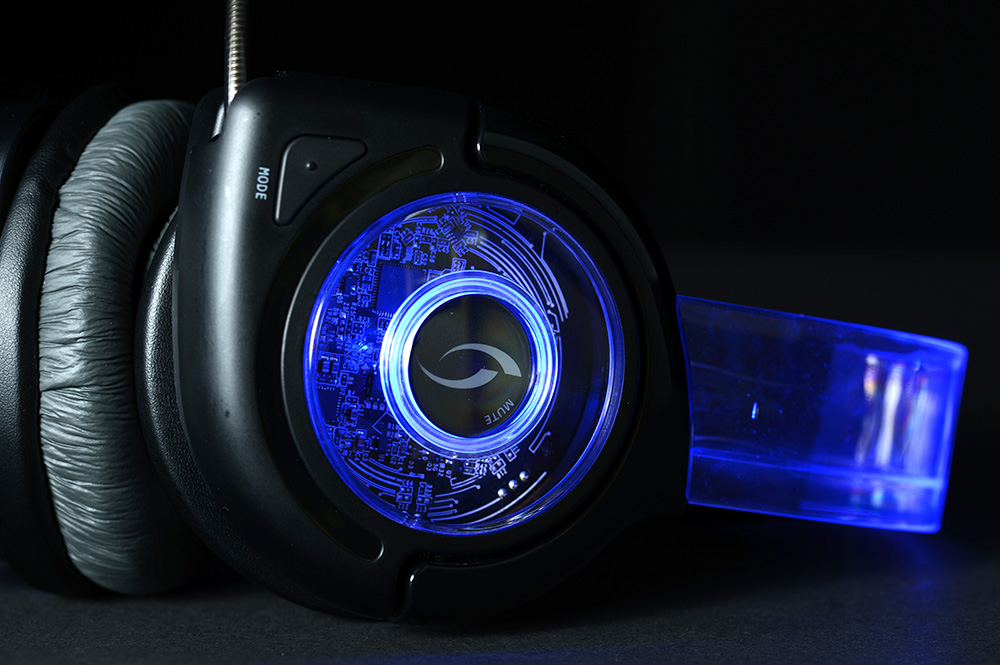
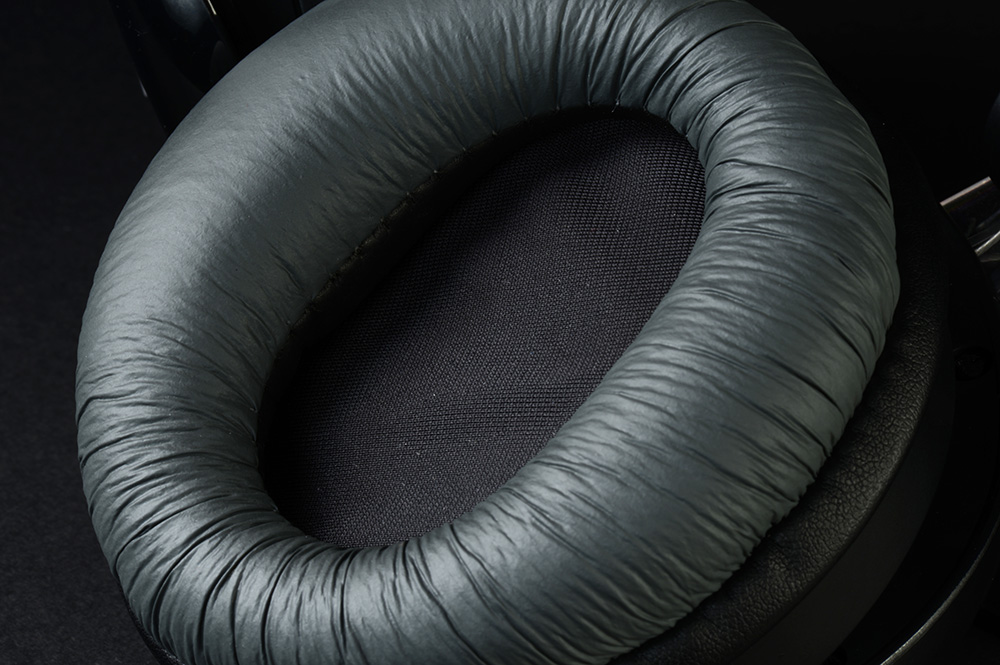
The Afterglow certainly makes a strong initial impression. Powering up the headphones illuminates the massive unit’s earpieces and headband in electric blue, resembling something straight out of Tron. Each ear cup’s illuminated “window” reveals the headphones’ internal circuitry, further reinforcing a futuristic, super-technical look. The rest of the ear cups are layered in thick black plastic, with cushy leatherette ear pads in gunmetal grey.
Hovering below the illuminated plastic headband is a band of black fabric, which is where the ‘phones actually make contact with the head. Thin, tension-mounted metal cables suspend the headband to adjust for varying head sizes – a smart ergonomic move on PDP’s part, and one of our favorite features.
For those who aren’t into the whole sci-fi theme, the lighting can be dimmed or turned off entirely using a mode button on the left earpiece. We can see adults and even older teens opting for this, while younger users will probably love the bright, attention-getting glow.
 |
 |
 |
 |
Aside from dimming the lighting, the mode button also toggles the headset between three different EQ settings. The options include a “raw audio” mode, which employs no processing, a bass-boost option and an “immersive” setting, which is meant to expand the virtual sound space without mucking up directional sound effects which are so important in first-person shooters. Somewhat surprisingly, we preferred the immersive setting for almost all applications.
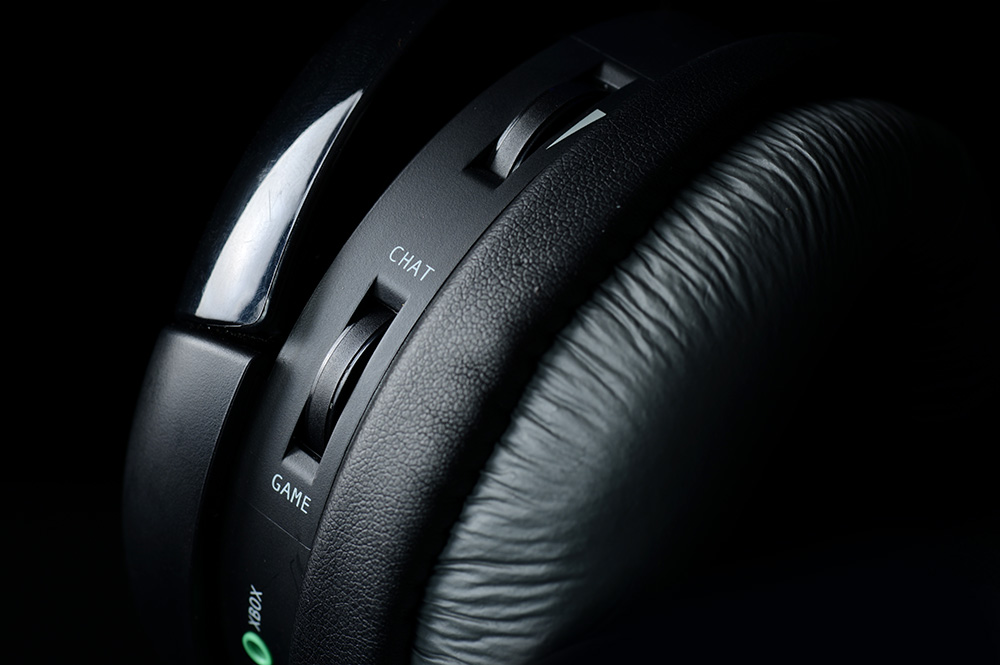
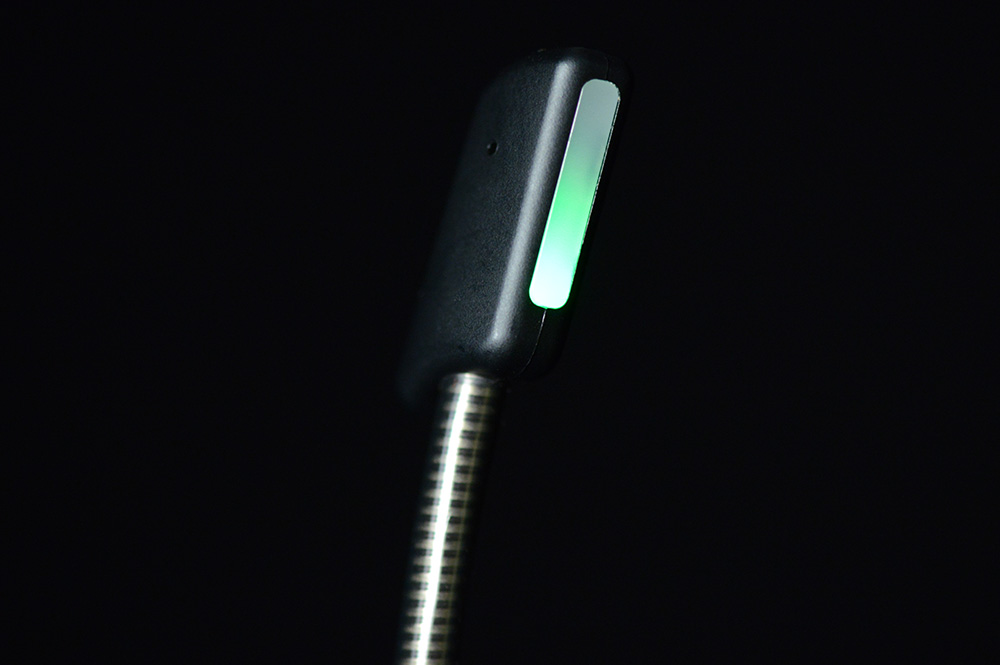
The rest of the Afterglow’s onboard controls and features are also crammed into the left earpiece. This includes a volume dial, a knob to adjust the volume balance between game noise and chat, an extendable microphone, a mini-USB input for charging, an Xbox chat cable input, and a line-in jack for connecting external devices such as smartphones and MP3 players.
Setup
In order to function as universally as possible, the Afterglow connects to consoles and PCs by way of analog stereo RCA connections. For Xbox 360 owners, this means using the provided break-out cable, purchasing an aftermarket break-out cable to work in conjunction with an HDMI output, or tapping a television’s analog audio outputs.
 The Afterglow’s RCA piggyback cables are attached to a pre-paired wireless transmitter, which looks like a translucent USB flash drive, and plugs into an available USB port on a console or computer. The Afterglow only accepts a stereo analog connection, which might be perceived as a disadvantage since many competing headsets feature a digital connection and tout 5.1 or 7.1 surround sound. However, very few of those headsets make any use of surround information embedded in a digital signal when creating surround effects, since surround sound from a two-speaker setup winds up being a virtual endeavor, and is usually based on the main left and right signal anyway. What really matters is how a headphone creates a sense of space within a game – an issue we tackle later in this review.
Comfort
Comfort was our biggest issue with the Afterglow. We had a hard time getting the fabric headband to adjust enough to fit just right, and though the cushions were very soft, the earpieces pinched sharply against the frames of this reviewer’s glasses. Without glasses on, the Afterglow felt much more comfortable, but it was still a pretty tight fit. Those with larger ears and wider heads may have a hard time getting the Afterglow to fit at all. And our poor-sighted compatriots may have to resort to using contacts, which can dry out the eyes during those long, late-night gaming sessions.
Audio performance
We tested the Afterglow on several different Xbox 360 game titles, beginning with Call of Duty Black Ops. As we first donned the headset, we found ourselves missing the spherical space that 7.1 surround simulation can offer. It’s hard for stereo-only headsets to compete with the dazzling, immersive surround effect offered by premium (and much more expensive) headsets like the Astro A50. With that said, we were quite impressed with the Afterglow’s ability to render a convincing sound field as we began to move through our game’s virtual environment. The Afterglow’s well-balanced sound, smoothly panned sound effects, and convincing, expansive stereo field created a realistic landscape that soon had us forgetting about a “stereo vs. 7.1” debate. We simply enjoyed the ride.
We found the Afterglow yielded fairly limited detail and depth – a trait which was especially evident when we paid close attention to fine details. Background effects like raindrops striking the surface of a pond, or footfall along stone pavement were audible, but lacked the sort of character that makes them seem real. But the Afterglow’s execution of powerful, deep, and defined bass, along with smooth, present midrange and treble were anything but ho-hum. In fact, the Afterglow’s bass output is some of the deepest we’ve heard recently, rumbling with visceral intensity as we were pounded by the game’s chaotic explosions. The upper end of the spectrum showed great brilliance as well, bringing startling clarity as we battled through some of the more intense gaming moments involving the whiz of strafing bullets or careening vehicles.
 Occasionally, we found ourselves longing for more definition from the Afterglow. In heated gun battles, the rattling of multiple machine guns firing simultaneously tended to muddy things up and overwhelm any coinciding game audio.
We also noticed a bit of distortion from time to time. This issue first reared its head when our character boarded an SR-71 in Black Ops, and the voice of the pilot coming over the radio started to break-up a bit. We noticed the distortion again while playing NBA 2K13, when the huge response of an erupting crowd tangled with the chaos of the arena seemed to push the Afterglow out of its comfort zone. We noticed the problem cleared up when we switched the EQ to the bass-boost mode, though we lost some of the clarity and presence in doing so.
Conclusion
The Afterglow Universal Wireless headset is an impressive gaming accessory. It’s packed with features, connects to almost anything that puts out sound, and envelopes the listener with a wide stereo field that is well balanced throughout the frequency spectrum. We’re not wild about this headset’s aesthetic (though we think that the Afterglow’s target audience will beg to differ) and we took issue with some distortion and lack of detail, but the Afterglow sounds better and costs less than many of the non-gaming over-the-ear headsets we’ve tested, nevermind its wireless capability. Serious gamers seeking a budget-friendly headset should find the PDP Afterglow is about as good as it gets in this price segment.
Highs
- Wide stereo sound
- Big, well-defined bass
- Good clarity and balance
- Affordable
- Feature packed
Lows
- Lack of depth and definition
- Some distortion issues
- Strange fit for some head shapes


