  1. Home
  2. Wearables
  3. Mobile
  4. News

Samsung’s smart glasses could arrive next year, but a surprising rival has beaten it to market

Samsung and Google will have some ground to make up in 2026

Add as a preferred source on Google
A woman wearing the HTC Vive Eagle smart glasses
HTC

Samsung’s much-rumored smart glasses will enter the market in 2026 according to a new report, but the South Korean giant has just been beaten to market by a Taiwanese rival, HTC.

Yes, HTC. The company which for several years brought us beautiful phones including the HTC One, One M8 and One M9, before withdrawing from the market to focus on its Vive VR headset, is now making a splash in the AI smart glasses arena.

Recommended Videos

With Meta and Snapchat having somewhat popularized the smart glasses form factor with products like the Ray-Ban Meta and Snapchat Specs, serious competition is beginning to come to the fore.

Samsung isn’t alone

According to a report from Korean publication SE Daily (via GSMArena), Samsung will announce its first set of smart glasses in late 2026, meaning we’re likely still a year off an eyewear launch from the brand.

The report claims Samsung’s glasses will be similar in design to the Ray-Ban Meta specs, and will feature speakers, a microphone and a camera.

It also notes that these glasses are separate to the AR specs (with a display) which Samsung is said to be working on in partnership with Google.

And Samsung isn’t the only brand tipped to make a smart glasses splash in 2026, after Google demoed its own Android XR glasses during the IO 2025 keynote earlier this year – the first of which, made by partner Warby Parker, could arrive next year.

But here comes a new set of smart glasses from an established (if not slightly forgotten) brand in 2025.

Meet the HTC Vive Eagle

Billed as ‘AI smart glasses’, HTC Vive Eagle feature a 12MP ultra-wide camera with LED indicator, 235mAh battery and magnetic fast charging in a 49g frame. There are speakers too, but the open-ear design means you won’t have anything in or covering you ears.

You also get HTC’s Vive AI voice assistant, which supports LLM platforms including ChatGPT and Google’s Gemini, allowing you to control features such as the camera and music playback with spoken commands, as well as ask more complex questions.

There’s also support for real-time translation in 13 different languages; Arabic, Traditional Chinese, English, French, German, Greek, Italian, Japanese, Portuguese, Spanish, Korean, Thai and Turkish.

HTC says the Vive Eagle glasses can deliver 4.5 hours of continuous music playback on a single charge, and last up to 36 hours on standby.

There is a catch though, the HTC Vive Eagle are only available in Taiwan, where pre-orders are now open, with a release date set for September 1. There are four colors to choose from – Berry, Coffee, Grey, and Black – and they’re priced at NT$15,600 (around $500).

There’s currently no word on whether we’ll see the smart glasses launched in more countries, but watch this space as the market starts to hot up. Oakley dipped its toe in the smart glasses water only a couple of months ago.

John McCann
John has been a consumer technology & automotive journalist for over a decade.
Apple wants you to verify your identity before you get Education discount on products
Apple moving the US Education Store off the honor system also seems about making a globally consistent verification infrastructure that could eventually support more aggressive Education Store expansion.
Computer, Electronics, Laptop

Getting an Apple Education discount in the United States used to be as simple as claiming you’re a student or a teacher; it didn’t need a formal verification. That era is officially over. 

Starting May 8, 2026, Apple now requires formal identity verification for all Education Store purchases in the US, ending the informal honor system that was in place for years (via MacRumors). 

Read more
You can finally avail an education discount on the Apple Watch
It's Apple broadening its ecosystem play into a segment that previously had no wearable entry point, and that could meaningfully accelerate Apple Watch adoption among younger first-time buyers.
Side view of Apple Watch Series 11.

Apple’s Education Store has always been a reliable shortcut to cheaper Macs and iPads for students and teachers. However, for years, Apple Watch wasn’t allowed into the story, making people wait for third-party sales or discounts to get their hands on the smartwatch. 

That’s changing, with effect from May 8, 2026. Apple has quietly added the Apple Watch to its Education Store for the first time. The Watch Series 11, SE 3, and the Ultra 3 are now available at discounted education pricing across 21 markets, including the US, UK, India, Canada, and Australia. 

Read more
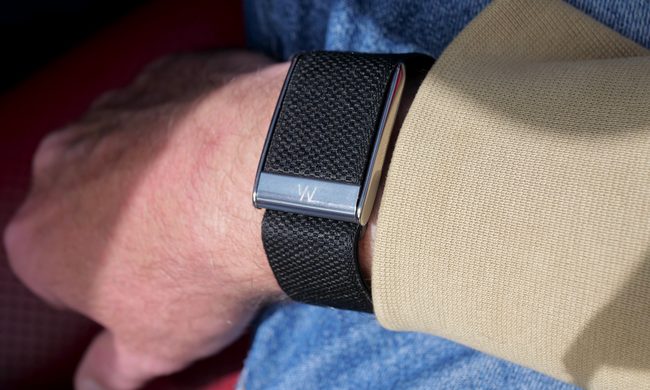
Whoop’s response to Fitbit Air and Google Health is real doctors, not just an AI chatbot.
In the race to own your health data, Google chose an AI, and Whoop chose a doctor. That single decision may define which fitness tracker serious health users reach for in 2026 and beyond.
A person wearing the Whoop 5.0.

Recently, Google launched the Fitbit Air as a direct rival to the Whoop screenless fitness band, rebranded the Fitbit app to Google Health, and released a Gemini-powered AI coach. Exactly one day later, Whoop has responded with on-demand video consultations with licensed clinicians for US users. 

The contrast is hard to ignore. While Google is betting on AI as your general health advisor, Whoop is doubling down on real, licensed doctors, and making the case that they can serve its fitness-focused users considerably better (via CNBC).

Read more