  1. Home
  2. Audio / Video
  3. News

Yamaha ditches the wires with new MusicCast Surround receivers and speakers

Add as a preferred source on Google
Image used with permission by copyright holder

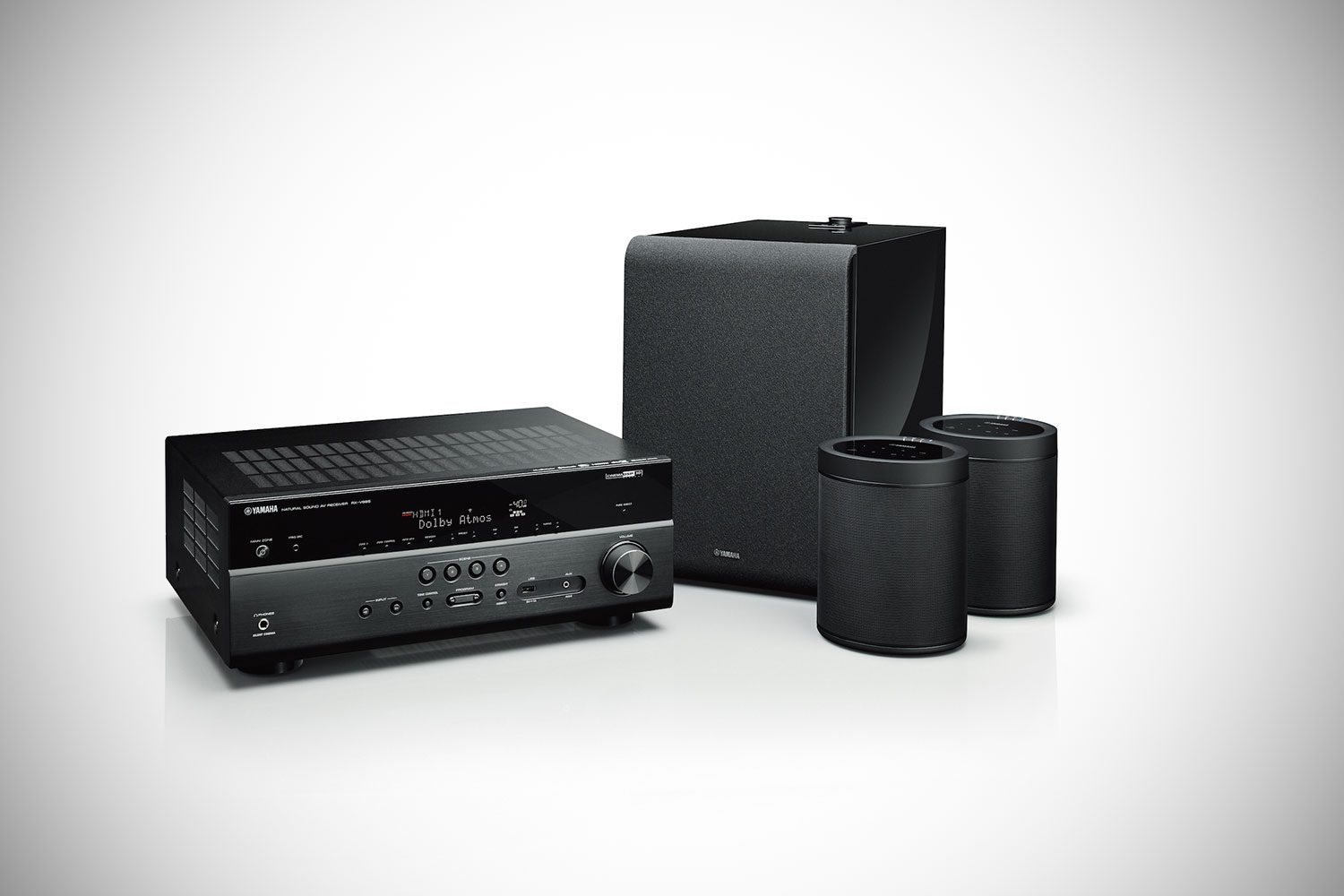
Yamaha’s MusicCast impressed us when the company first introduced the technology, leading us at the time to declare it the best multiroom solution since Sonos. MusicCast continues to make its way into the company’s products, but now the company is taking it in a different direction. On Monday, April 23, Yamaha announced MusicCast Surround, a new spin on the technology that saves you from having to run speaker cables all over your living room.

MusicCast Surround is similar to the approach that Sonos takes, letting you use wireless speakers as surround satellite speakers. Not only is this a lot easier than running cable everywhere, but the software can calibrate timing automatically to make sure that the sweet spot in your room sounds better than ever before.

Recommended Videos

With the debut of this technology, Yamaha has also released a salvo of new products: Three new A/V receivers in the 5.1-channel RX-V485 and the 7.2-channel RX-V585 and RX-V685; two new speakers in the MusicCast 20 and MusicCast 50; and the MusicCast Sub 100 subwoofer. All of these feature MusicCast Surround and can be used together to put together a 5.1-channel surround sound system.

An example system might use wired speakers for the front surround and center channels, while the rear surrounds and subwoofer could be wireless. In the case of the MusicCast 20 and MusicCast 50 speakers, these can be used alone or as part of a multiroom audio setup. They can also be used in stereo pairs for better performance.

All three A/V receiver models support the latest TV technologies like 4K and high dynamic range, including HDR10, Dolby Vision, and Hybrid Log Gamma. In the case of the RX-V585 and RX-V685, Dolby Atmos and DTS:X object-based surround sound are supported as well, allowing for sounds that seem to come from above you when used with special ceiling-mounted or upward-firing speakers.

The receivers will go on sale in May, with the RX-V485 priced at $450, the RX-V585 at $550, and the RX-V685 at $650. The MusicCast speakers will go in sale in July in both black and white finishes, with the MusicCast 20 selling for $230 and the MusicCast 50 going for $500. Finally, the MusicCast Sub 100 subwoofer will launch in September for $550. For more information on setting up your home theater on the audio front, be sure to check out our guide to all things surround sound.

Kris Wouk
Former Contributor
Kris Wouk is a tech writer, gadget reviewer, blogger, and whatever it's called when someone makes videos for the web. In his…
Roku is reportedly exploring a sale, and its 100 million users are the biggest prize
The company is reportedly weighing a sale amid interest from media and tech players.
Roku on TV

Roku may not stay independent for much longer. According to a Reuters report citing people familiar with the matter, the streaming platform company is exploring strategic alternatives that include a full sale, with at least one U.S. media company already involved in preliminary discussions.

Roku is reportedly weighing a sale amid growing industry interest

Read more
Spotify removed tens of thousands of fake podcasts tied to online drug sales
Spotify is cleaning up thousands of fake podcasts linked to scam websites
spotify

Spotify has spent the past year quietly removing tens of thousands of fake podcasts that were allegedly being used to promote illegal online pharmacies and scam websites. Now, a new congressional report is raising questions about how the scheme was able to flourish on one of the world's largest audio platforms in the first place.

According to the Wired report, bad actors created thousands of fake podcasts that were never intended to attract real listeners. Instead, they were designed to manipulate Spotify’s search rankings and boost the visibility of websites selling prescription drugs without prescriptions, including opioids, stimulants, and benzodiazepines.

Read more
I tried Acer’s new 5K MiniLED Gaming monitor, and OLED kept popping into my head
After seeing it in action at Computex, I finally understand where MiniLED shines and where OLED still wins.
MiniLED vs OLED Hands On Computex 2026

If Computex 2026 taught me one thing, it's that monitor makers are no longer interested in building one-trick ponies. They want displays that can wear multiple hats, seamlessly switching between work and play without making users choose. Acer's new Nitro XV345CKR P is perhaps the best example of that philosophy, and after spending time with it on the show floor, I walked away impressed by its ambition while also questioning whether MiniLED is really the future for gaming monitors.

I've always had a slightly complicated relationship with MiniLED. On a massive living room TV, it works wonders because you're sitting several feet away, and the local dimming zones blend beautifully. Put the same technology on a monitor that's sitting barely two feet from your face, however, and suddenly you're no longer admiring the display, you're inspecting the physics behind it.

Read more