  1. Home
  2. Computing
  3. News

Intel 9th-generation CPUs are refreshes with slight clock speed bumps

Add as a preferred source on Google
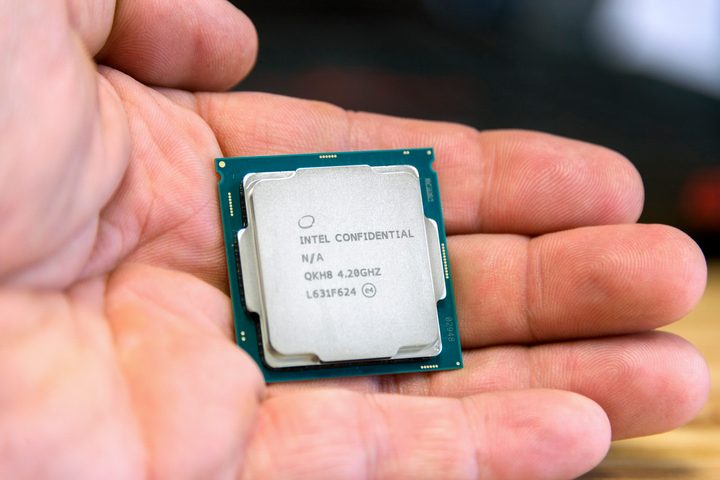
Intel Core i7 8th Gen hand scale
Image used with permission by copyright holder

The next-generation of Intel CPUs isn’t going to be its long-awaited Cannon Lake design, which drops the die size to 10nm, but instead will be a refresh of the 8th-generation. New leaked details suggest they will be a little faster than their predecessors, with a slight increase to clock speed. The absence of details on top end chips does suggest Core i7 CPUs could have a higher core-count than previous processors.

AMD’s launch of the Ryzen CPU line in 2017 lit a fire under Intel like we haven’t seen in a long time. It increased core counts in its mainstream CPUs for the first time in years and even rushed out a (bogus) supercooled 28-core chip showcase at Computex to try and steal AMD’s Threadripper 2 thunder. It may be that the 9th-gen refresh is another attempt to combat AMD, which launched a Zen+ version of its Ryzen CPUs earlier this year.

Recommended Videos

Although Intel hasn’t made any kind of official announcement about its 9th-gen chips, it did leak a couple of documents which were rather revealing. The first showed up in a microcode revision document for Spectre vulnerabilities. It has since been edited, but as with everything that lands on the internet, someone grabbed a screenshot of it — this time it was Videocardz.

The CPUs listed under Coffee Lake S (6+2) includes the i5-9400, i5-9400T, i5-9500, i5-9600, and i5-9600K. The i3-9000 and i3-9100 were listed under the Coffee Lake S (4+2) category. The lack of mention of any Core i7 CPUs suggests that it’s possible that the higher-end mainstream CPUs will offer eight-cores, but that’s pure speculation at this point.

Another document leaked by Intel and since removed, is a much more detailed specifications document. Once again grabbed by Videocardz, it confirms that the Intel 9th-gen chips are refreshes of existing 8th-gen hardware. It also tells us that we can expect slight clock speed boosts because of that, with base clocks at the low end being nudged up by 100MHz, while turbo clocks at the top end saw a slightly more impressive 200MHz increase.

Core counts, power draws, and cache sizes all stay the same across generations, so it may be that the Intel 9th-generation CPUs don’t offer a huge performance improvement over existing CPUs from the 8000 series.

Jon Martindale
Jon Martindale covers how to guides, best-of lists, and explainers to help everyone understand the hottest new hardware and…
OpenAI is bringing in the mighty Codex tool to the ChatGPT app on your phone
The ChatGPT mobile app now has Codex so you can manage coding tasks anywhere.
openai-codex-chatgpt-app-remote-monitoring-feature

If you have ever wanted Codex to work through your bugs and pull requests while you grab coffee or commute, OpenAI just made that possible. Codex, the company's AI-powered coding agent, is now available in the ChatGPT mobile app on iOS and Android.

The feature is currently rolling out in preview across all plans, including Free and Go, in all supported regions. For now, mobile support works with the macOS Codex app. Windows support is coming soon.

Read more
Your next free Google account might only come with 5GB of storage
Google's free storage has been a competitive advantage over Apple's 5GB iCloud limit for years, but that’s changing.
Electronics, Mobile Phone, Phone

Google has quietly altered one of the most reliable promises in consumer tech: 15GB of free cloud storage. For years, signing up for a Google account meant getting 15GB of free storage, shared across Gmail, Drive, and Photos. However, that’s changed. 

New accounts are now defaulting to 5GB (same as iCloud), with the full 15GB available only if you have entered your phone number during setup. The prompt users are seeing reads: “Your account includes 5GB of storage. Now get even more storage space with your phone number.”

Read more
Sony shows off AI-touched Xperia 1 VIII camera samples. It’s an epic self-own that I can’t digest
Sony built the Xperia 1 series for people who know what a histogram looks like. Xperia Intelligence appears to have been built for everyone else, and the sample images make that tension impossible to ignore.
Sony aggressive AI photography featured.

Sony has a camera legacy that most brands, regardless of whether they make cameras or smartphones, dream of. The company rewrote what full-frame sensors could do with its Alpha series. 

That particular rendering of skin tones, that restraint with saturation, the commitment to accurate white balance; the company’s color science is precisely why cinematographers, videographers, and photographers like me, in the consumer tech space, swear by its color science and camera hardware. 

Read more