  1. Home
  2. Cars
  3. News

Google Maps now shows EV owners which charging stations are occupied

Add as a preferred source on Google
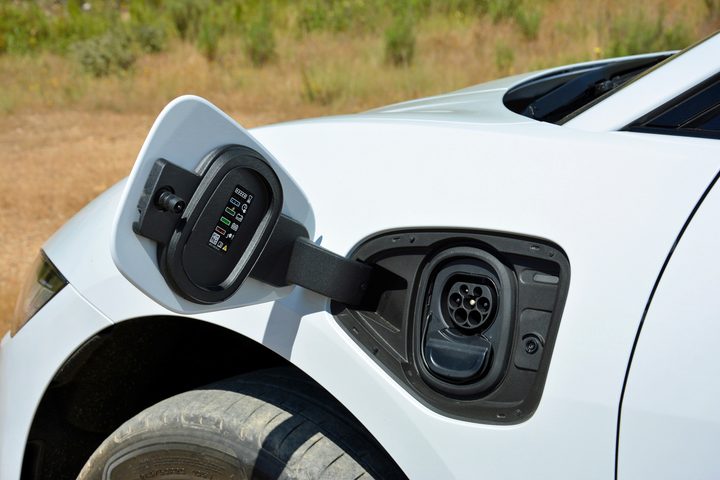
2019 Jaguar I-Pace First Drive
Ronan Glon/Digital Trends

The work of a Google Maps developer is never done. The app began showing users the location of electric car charging stations in 2018, and an update released in April 2019 tells motorists in real time how many spots are free at a given location. It’s all part of the tech giant’s mission to make owning an electric car as convenient as driving one powered by gasoline or diesel.

The app provides useful information such as the number and types of ports available at each location, their charging speeds, and notes about the business where a station is located. You’ll know whether it’s near a Starbucks, or five miles away from the exact middle of nowhere. You’ll also find reviews from drivers who’ve already used the station, giving you the opportunity to choose the best one in the area — so long as you have enough juice left in your battery pack, that is.

Recommended Videos

To access the new Maps data, start by tapping in a few keywords such as “EV charging” or “EV charging stations.” The map will then populate with stations close to your current location, though you can search the map to find more further afield.

Many networks already have their own apps showing the locations of their charging stations, but Google Maps offers additional convenience by bringing many of the providers under the same roof — perfect if Google Maps is your go-to navigation app.

Globally, Google Maps offers data for Supercharger facilities operated by Tesla, and for stations run by Chargepoint. In the United States, you can add SemaConnect, EVgo, and Blink to the list. For England-based drivers, charging locations also show up for Chargemaster and Pod Point, while in Australia and New Zealand you’ll find information for Chargefox stations. Maps only provides availability information for stations in the United States and in England, however.

The new feature for Google Maps is available now for Android and iPhone devices, with desktop support launching in the coming weeks. In the meantime, if you’re looking to purchase your first electric car, check out Digital Trends’ guide for a comprehensive look at how to ditch gasoline.

Updated April 23, 2019: Added Maps’ newest features.

Trevor Mogg
Contributing Editor
Not so many moons ago, Trevor moved from one tea-loving island nation that drives on the left (Britain) to another (Japan)…
Tesla FSD update adds a new dialog that previews your car’s parking plan
Version 14.3.4 surfaces the car's intended parking method on screen before it begins the maneuver, a change that makes supervised autonomy feel more predictable.
Tesla FSD Supervised featured

Tesla has started rolling out Full Self-Driving (Supervised) version 14.3.4, and one of its standout additions makes the end of a trip feel notably more polished. The update introduces a new dialog box that appears as the car approaches its destination, showing the driver exactly how it plans to park before it begins the maneuver.

A robotaxi-style arrival experience

Read more
This tiny sensor could help self-driving cars and robots see better in the dark
Penn State researchers have developed a light-adaptive photomemristor modeled on the human eye that achieves over 95% visual accuracy in shifting light conditions.
Waymo Jaguar I-PACE sensors close up

Penn State researchers have developed a light-adaptive sensor component that could make autonomous vehicle cameras and robots far more reliable in shifting lighting conditions. The work, published Monday in Nature Communications, takes direct cues from how the human eye adjusts between bright and dark environments.

Biology as a blueprint

Read more
Rivian R2 first drive: A mid-sized EV game-changer punching above its budget
Smart engineering meets real-world performance in a surprisingly premium $50K electric SUV
Rivian R2 First Drive Impressions

Rivian has officially launched the R2, a smaller, more affordable two-row electric SUV. Despite the lower price point, the company does not seem to have cut any corners on the new vehicle. Instead, many of the savings seem to have been achieved through more efficient engineering.

Examples of that efficiency can be seen in things like the vehicle’s wiring, which has ditched around two miles of cable when compared to the R1. A lot of the vehicle’s systems and chipsets have been compacted and condensed too.

Read more