
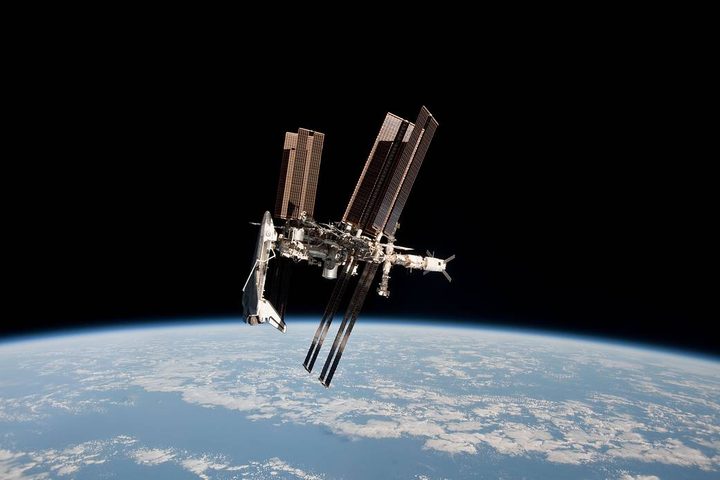
If you’ve ever wanted to visit space and you have a few million dollars to spare, now’s your chance: The International Space Station (ISS) will soon begin accepting space tourists. But not just anyone will be allowed on board — there will be a strict set of training requirements for potential astronauts, NASA told Digital Trends.
“NASA will work with commercial companies to identify minimum training requirements with safety as a top priority,” Gary Jordan of the NASA Johnson Space Center told Digital Trends.
He explained that the training would be provided by a commercial company and would focus on the particular training needs that a business would choose for its astronauts, with NASA’s oversight.
Set to begin as early as 2020, the trips would be run by two companies, Boeing and SpaceX, which will ferry both NASA and private astronauts to and from the ISS in the companies’ Dragon capsule and Starliner craft, respectively.
The price for a stay will be around $35,000 per night, and that is just for staying at the ISS. It does not include the bill for the trip to and from the station, which will cost an additional $58 million for a return ticket. Although like all the best hotels, the ISS does cover breakfast, Wi-Fi, and use of the gym, with the price including expenses relating to food, exercise equipment, and the all-important data downlink.
The station could host up to two short private astronaut missions per year, each up to 30 days long. That means a full stay would cost more than $1 million.
If it sounds concerning that private citizens will be sent into space where something could go wrong, don’t worry, NASA has considered this. If there is a problem and a private astronaut should be injured, they will have the infrastructure of NASA to back them up. “Every astronaut receives basic medical training to operate in the event of an injury, and will have support from 24/7 mission control operation on the ground,” Jordan said.
In addition to space vacations for curious citizens, the ISS will also host private companies’ activities aboard the ISS laboratories. Apparently, NASA is open to suggestion for what these commercial activities could be. Performing scientific experiments in microgravity? Publicity stunts for brands? Sending influencers into space?
“The announcement of the new commercial and marketing policy by NASA is essentially an invitation for private companies to suggest these ideas — something they would suggest as a viable commercial opportunity worth consideration,” Jordan explained. “NASA’s goal is to stimulate a low-Earth orbit economy by enabling these activities through this new policy.”


