
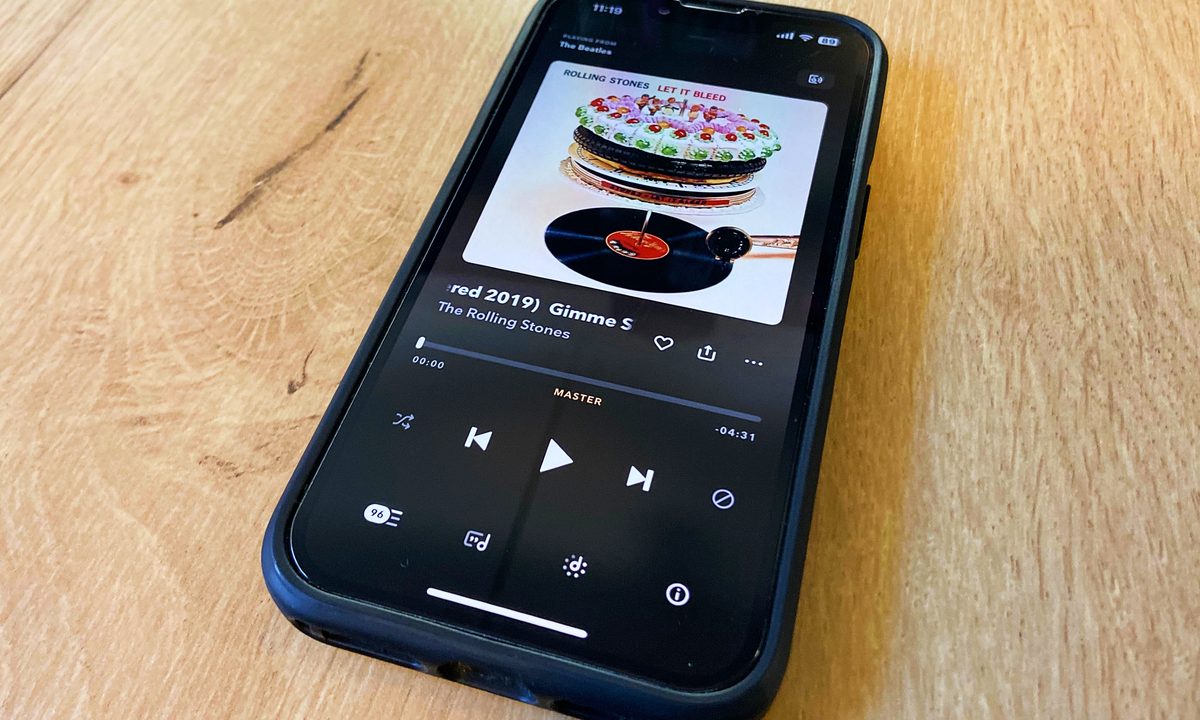
Have you grown tired of Apple Music or Spotify? There is another solution worth considering. Tidal has carved a distinct niche within the crowded landscape of music streaming services, primarily by emphasizing high-fidelity audio and artist-centric values.
Unlike many competitors, Tidal has focused on delivering a premium listening experience, offering lossless audio quality that appeals to audiophiles and those who demand the best sound. Furthermore, its history, marked by artist ownership and a commitment to fair royalties, has set it apart in an industry often scrutinized for its compensation models. Still, there have been some challenges.
Here’s more about Tidal and why it might be your streaming service.
What is Tidal?
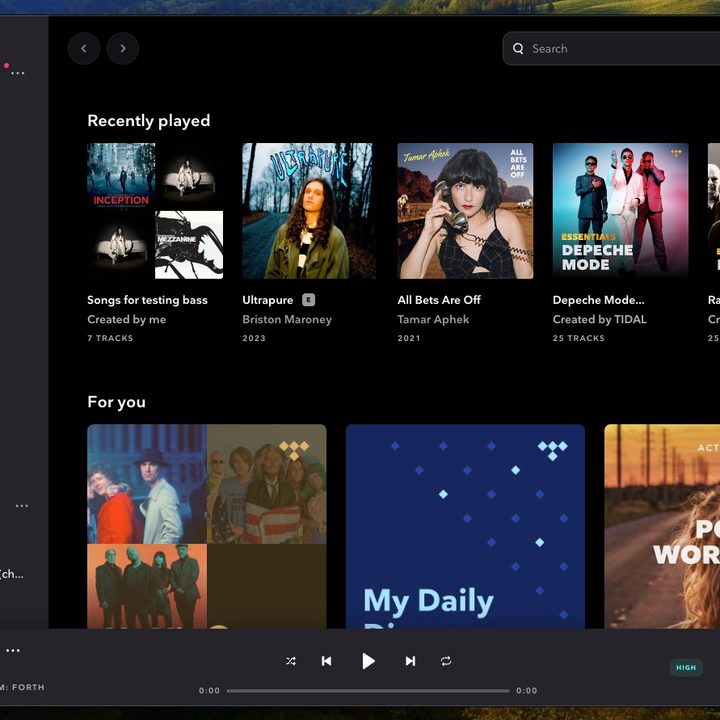
Tidal is a music streaming subscription service with a catalog of tens of millions of songs, which includes exclusives. It also has a variety of podcasts, music videos, live concert recordings, and professionally curated playlists. As with most streaming services, it’s accessible on a wide variety of devices, including computers, smartphones, tablets, smart speakers, and platforms like Apple TV and Android TV. However, Tidal has a couple of different focuses that help it stand out.
Tidal was originally owned by a group of musicians, including Alicia Keys, Beyoncé, Jack White, Kanye West, Madonna, Rihanna, Daft Punk, and Chris Martin of Coldplay, among others. In 2021, Block (formerly known as Square) purchased Tidal for approximately $300 million, ending the artist-based ownership, although its influence is still felt. In late 2024, Block initiated a partial withdrawal from Tidal as it shifted its focus towards Bitcoin mining initiatives, which resulted in layoffs at Tidal. The long-term implications of this shift for the service remain uncertain.
Tidal provides users access to high-fidelity audio, ensuring a minimum of CD-quality tracks and offering a selection of hi-res music. Their hi-res offerings include Hifi and Max tracks, which can reach an impressive 24-bit/192kHz resolution using high-resolution FLAC files. This level of detail in sound reproduction is particularly appealing to audiophiles and anyone seeking an enhanced listening experience. Additionally, Tidal supports spatial audio through Dolby Atmos, allowing listeners to experience music more immersively, as sounds can be placed and moved in a three-dimensional space.
Compared to other music streaming services, Tidal continues to excel in audio quality, even for casual listeners. For instance, while services like Apple Music and Qobuz also offer lossless audio, Tidal’s focus on high-quality streaming makes it a go-to option for those prioritizing sound excellence.
Recently, Tidal made a notable shift in its offerings by discontinuing support for MQA (Master Quality Authenticated) and Sony’s 360 Reality Audio. This transition signifies a strategic reorientation towards more accessible and cost-effective audio formats—particularly FLAC and Dolby Atmos—making high-quality music more available to a broader audience. This change aims to simplify the user experience while still delivering top-notch audio quality, aligning with the evolving preferences of music fans. Tidal continues to focus on streamlining its services to retain its reputation as a leading platform for high-quality music streaming.
How much does Tidal cost, and what’s included?
In 2024, Tidal updated its subscription pricing to simplify its offerings and better compete with rivals like Apple Music and Amazon Music. The HiFi and HiFi Plus plans were discontinued and replaced with new plans that provide lossless audio, high-resolution FLAC, and Dolby Atmos Music. The current plans are:
- Individual: $11 per month
- Family: $17 per month (for up to 6 family members)
- Student: $5.49 per month
- Tidal for DJs: $9 per month (this is an add-on to the individual plan, not its own plan)
Each subscription gives you access to more than 110 million tracks in lossless, hi-res FLAC, and Dolby Atmos. The ad-free service provides offline listening, personalized mixes, editorial playlists, and live sessions.
If you’re new to Tidal, you can enjoy a 30-day free trial. With Tidal’s free trial, you can access its entire ad-free lossless catalog and streaming features without any cost.
What happened to MQA?
For a long time, Tidal offered tracks in the high-resolution MQA format, but that changed in 2024 when the service officially removed support for the closed format as well as support for Sony’s 360 Reality Audio.
Currently, Tidal’s preferred streaming hierarchy is as follows, from highest to lowest quality: hi-res FLAC, FLAC, and AAC. It’s important to note that achieving true hi-res audio quality depends significantly on the last components of the audio delivery chain, which include the digital-to-analog converter (DAC), the amplifier, and the speakers or headphones. If any of these elements are not of high quality or are incompatible with hi-res audio, you won’t experience the full benefits of high-resolution sound.
What is Dolby Atmos Music?
Dolby Atmos Music is the same object-based audio system used in cinemas and home theaters to create incredibly immersive sound experiences, but it’s been adapted for studio-recorded and live music.
Dolby Atmos is not available on all songs, but you can access the format wherever it is available. You should be able to find suggested Dolby Atmos content in the Explore tab when logged in. To hear Dolby Atmos Music tracks at their full quality, you need an Atmos-compatible streaming device, such as an Apple TV 4K, Amazon Fire TV devices, Nvidia Shield and Shield Pro, or Chromecast with Google TV, and an Atmos-compatible AV receiver, TV, soundbar, or wireless speaker.
Which speakers, devices, and software work with Tidal?
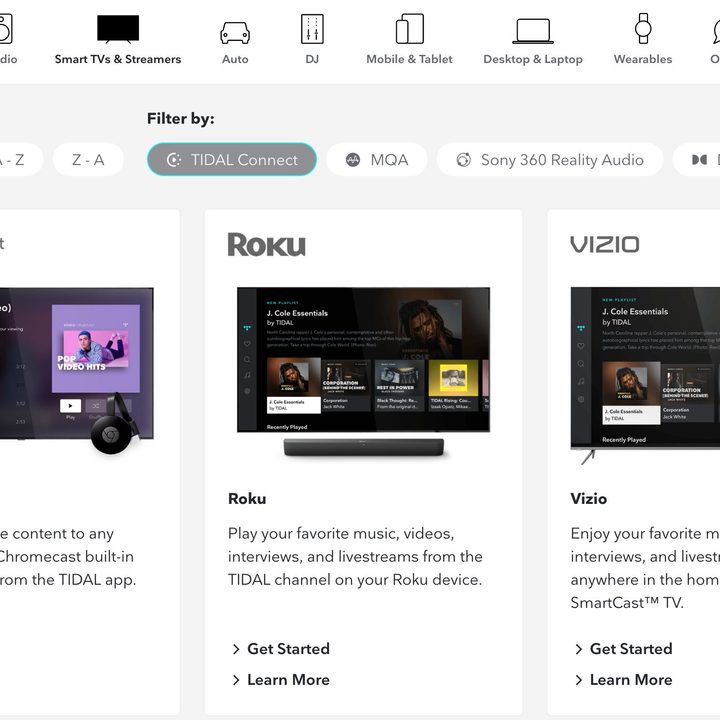
With an active Tidal subscription, you have many choices when listening to or watching Tidal content. Unfortunately, some platforms no longer support Tidal, including newer Samsung TVs, Roku, and others.
Tidal’s availability spans various devices, catering to diverse listening preferences. Here’s a breakdown (as of March 2025):
- Tidal offers dedicated applications for iOS and Android smartphones and tablets, as well as desktop applications for Windows and macOS computers.
- Integration with smart home ecosystems supports Amazon Alexa, Android TV, Apple TV, and Chromecast.
- Tidal is also compatible with various network players and Hi-Fi systems, such as those from Naim and Marantz that have HEOS built-in.
Tidal is also accessible via Apple Watch and Bluetooth connections. Various portable music players also offer Tidal support.
There’s extensive support for the Tidal music service on third-party sound systems, like Sonos, Denon HEOS, BlueSound, Yamaha MusicCast, and many more. Within the dedicated apps for these systems, Tidal can be added as a streaming music source using your Tidal account login email and password.
You can also integrate Tidal content into popular media player/server software, like Roon, plus there’s a Tidal add-on for Kodi and lots of other software.
You may have also heard of Tidal Connect, a popular way of casting Tidal audio to compatible wireless speakers. Using the Tidal app as a controller, you can select a specific speaker for playback and send it the highest-quality stream possible, whether it’s lossless FLAC or even Dolby Atmos. Tidal Connect is similar to Chromecast or AirPlay, but these casting protocols do not support Connect’s higher-quality audio streams. Here’s a look at the devices that currently support Tidal Connect.
Then, there is voice assistant compatibility to play music on Tidal via voice command, which is a bit more limited. Tidal has added support for Alexa and Google Assistant in past years, but Siri support is limited. While Tidal works with Siri on iPhones, the only way to play Tidal on Apple’s HomePod Mini is via AirPlay from your iOS device. The same is true for Google’s Home line of smart speakers — you can cast Tidal to them from a mobile app, but there’s no native support for Tidal, so you won’t be able to say, “Hey Google, play Nipsey Hussle on Tidal.”
Certain Sonos smart speakers are compatible with voice assistants like Alexa and Google Assistant. However, not all Sonos speakers support both assistants. For instance, only Alexa is supported on the Sonos Era 300. Also, some speakers, such as the Sonos Ray soundbar, are not classified as smart speakers. It’s important to note that you cannot directly add Tidal to Google Assistant. Instead, you need to add it to the Sonos app, which can then be controlled by Google Assistant.
Tidal extras


Beyond its extensive music catalog, Tidal also offers some noteworthy extra features.
Playlists
You can create, edit, and delete your playlists from Tidal tracks. Using either Tune My Music or Soundiiz, you can import your playlists from other music services like Apple Music, Spotify, Pandora, Soundcloud, YouTube, Google Play Music, and more. Tidal also publishes and maintains its own collection of playlists organized by mood and genre. Moods are often activity-oriented, like driving, focus, relax, or party, while genres are the more traditional categories like dance, metal, jazz, and rap.
If you want a playlist created for you, Tidal’s My Mix feature uses an algorithm to build playlists based on your favorite music. You’ll need to listen to music for a while so that My Mix can get an accurate read, but otherwise, it’s very effective at building instant playlists and making new suggestions. While Tidal used to provide playlists curated by experts like Jay-Z, this effort has dwindled in recent years, although you can find older curated lists from various artists.
Tidal Magazine
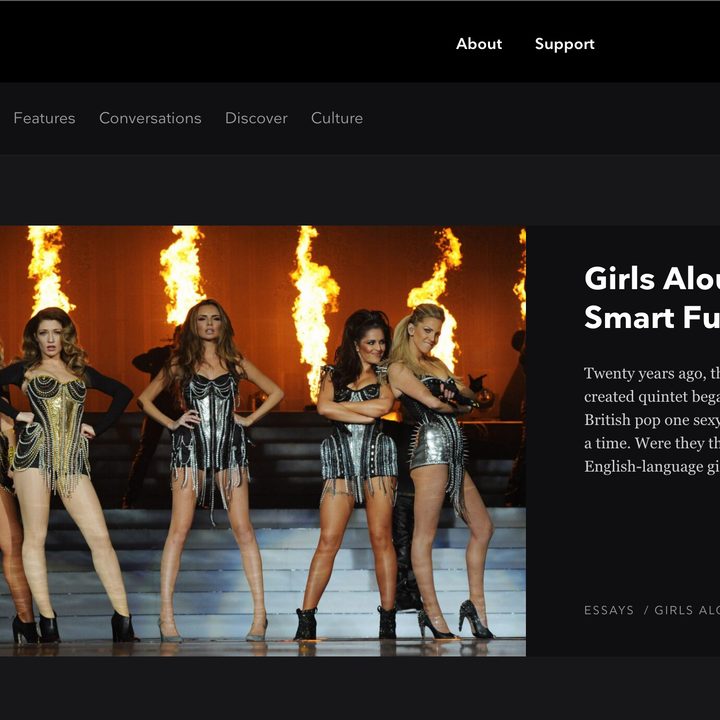
Just as impressive as the human-curated playlists are Tidal’s collection of articles and interviews found in its Magazine section. These range from album reviews like Patterson Hood’s take on Bruce Springsteen’s Western Stars to Alan Light’s deep dive into the forces that shaped Prince’s obsession with perfection. These aren’t just hot takes on the latest trends — they’re considered posts by those who know music best: musicians, producers, and expert journalists.
Podcasts
While Tidal’s collection of podcasts doesn’t match that of Spotify or other platforms, it has an eclectic library with various topics, especially podcasts that examine new music or books and interview artists and authors.
Videos
Speaking of videos, this is one area where Tidal really shines. With over 450,000 music videos, live concert recordings, and special shows like In Praise of Prince, Rough Draft, and Fresh Cuts, it’s worth downloading the Tidal app to a video device like Apple TV or Android TV to experience these videos on the big screen. However, videos are not available on the free version of the service — you’ll need to pay for a subscription to access them. You can also access live-streaming concerts thanks to Tidal Rising, which spotlights rising artists via a partnership with Horizon Worlds, a Meta virtual venue project.
Tidal Beta Program
Want early access to brand-new Tidal features before they’re released to the general public? Consider signing up for the Tidal Beta Program, which is available for iOS and Android versions of the Tidal mobile app.
The Beta Program used to be called Early Access, requiring you to download the TestFlight app to your smartphone. Fortunately, new Beta Program enlistees just need to download the latest version of the Tidal app. Then, head into Settings, tap Join Beta, and toggle Beta on.


